Mikim Floating Fish Feed Extruder Machine Operation And Maintenance Techniques
Leave a message
Operational control must revolve around "fine shaping and nutrient retention." Raw material pretreatment is fundamental. High-protein raw materials such as shrimp meal and fish meal need to be pulverized to at least 80 mesh using an ultrafine pulverizer. During mixing, 2% starch should be added as a binder, and the mixing time should be no less than 8 minutes to ensure a uniformity variation coefficient ≤7%. Pellet machine fish feed parameters must be precisely set, with the screw speed controlled at 220-250 rpm to avoid excessive speed damaging nutrients. The barrel temperature should be stabilized at 85-90℃, monitored in real-time using an infrared thermometer. If the temperature is too high, the feed rate should be increased to lower the temperature; if it is too low, the feed rate should be decreased to raise the temperature, ensuring a starch gelatinization rate of over 85% while preventing vitamin loss due to high temperatures.
Anti-clogging is a critical operation in shrimp feed production. Shrimp feed particles are small (2-3mm), easily clogging the ring die orifices. An electromagnetic vibrator (50Hz frequency) should be installed at the feed inlet to prevent bridging. A "small amount, multiple times" feeding mode should be adopted, using a variable frequency feeder, with the feeding speed controlled at 70%-80% of the equipment's rated capacity. Every hour of operation, add 5kg of corn flour to the feed inlet and run it idle for 2 minutes, using its fluidity to clean the ring die orifices. If blockage occurs, immediately stop the machine and use a special cleaning needle to unclog it. Do not use a hammer to strike the ring die, as this may damage the orifices.
Maintenance should focus on "component protection and hygiene control." After each shutdown, use a high-pressure water gun to rinse the screw, barrel, and ring die, paying particular attention to cleaning any residual high-protein feed in the crevices to prevent mold growth. Check the ring die aperture wear weekly; if the aperture enlarges by more than 0.2mm, replace the ring die immediately to ensure accurate pellet size. Sterilize the equipment monthly by irradiating the feed pellet machine for fish with ultraviolet light for 30 minutes or wiping feed-contacting parts with 75% alcohol to prevent bacterial contamination that could affect shrimp larvae health. Furthermore, operators must wear sterile gloves to prevent sweat from contaminating the feed and further ensure feed hygiene.
Why choose us?
The MIKIM's floating fish feed extruder machine is constructed entirely of food-grade 304 stainless steel, fully complying with food processing hygiene standards. It is corrosion-resistant, easy to clean, and eliminates potential contamination at the source. The core screw is made of high-quality alloy steel through special heat treatment, offering outstanding wear resistance and corrosion resistance. Combined with its integrated structural design, this significantly extends its service life. The entire machine has passed CE and ISO international authoritative certifications, aligning with global quality standards and ensuring safer and more reliable processing.
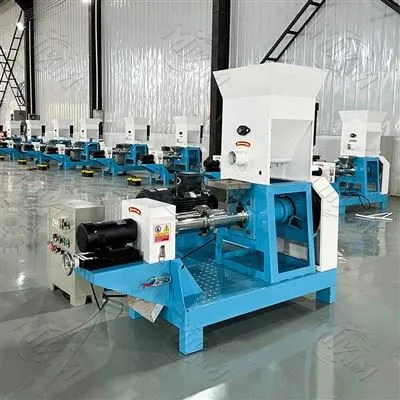
Our equipment


Our Services
We offer:
One-Year Whole Machine Warranty Service
On-site Installation, Commissioning, and Technical Guidance
24/7 Online Technical Support
Qualifications and Honors

Customer visit

FAQ
1. What is the price of the fish feed making machine floating?
The price ranges from approximately $1,500-$50,000
2. How do you deliver to customers?
MIKIM Machinery's machinery delivery follows a complete process of "customized preparation - safe and fast delivery - precise handover - after-sales extension", with 3-day fast delivery, multi-layer protective packaging, global logistics tracking and 1-year warranty + on-site technical service to ensure that the equipment is delivered efficiently and in good condition and put into use smoothly.