

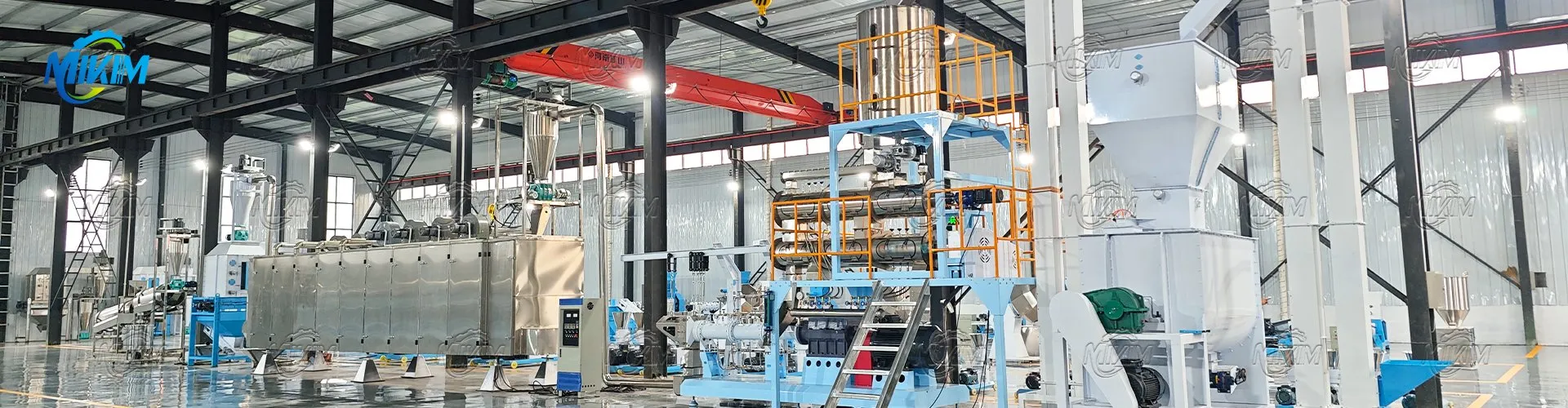
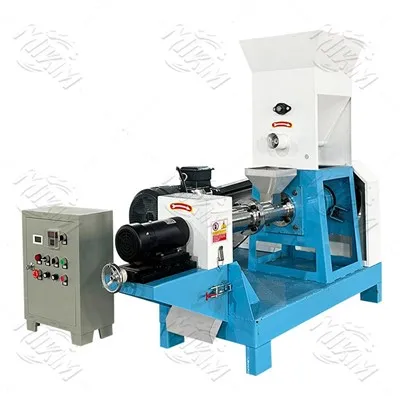
The Operation Of A Floating Fish Food Pellet Maker Determines The Feed's Resistance To Water Seepage.
Leave a message
Influencing Factors
Influencing Factors: The core of all parameter issues points to "starch gelatinization rate"-only when starch is fully gelatinized can it form a sticky network that firmly binds the feed pellets together. Insufficient starch gelatinization rate is mainly caused by three parameter problems:
First, the temperature of the floating food making mill is too low. When the temperature is below 80℃, the starch molecules in the raw material cannot fully expand and break down, just like uncooked rice, lacking stickiness and unable to form a stable structure.
Second, insufficient pressure. When the pressure inside the floating fish food pellet machine is below 6MPa, the raw material cannot be fully compressed, resulting in numerous voids inside the pellets, allowing water to easily penetrate and damage the structure.
Third, excessive extrusion. Some fish farmers excessively increase the extrusion rate to make the feed float on the water surface, causing too many large air pores to form inside the feed. These pores act like "water absorption channels," allowing the feed to quickly absorb moisture and disperse, especially in turtle feed and sinking shrimp feed, where excessive extrusion has a more significant impact on water stability. It is worth noting that shrimp feed is particularly sensitive to temperature. Temperatures exceeding 90℃ will destroy the viscous proteins in the raw materials, causing the particles to become loose. This is why many people encounter problems when making shrimp feed at high temperatures.
Solution
Precise parameter adjustment is key; different aquatic feeds require tailored solutions. When making regular fish feed (such as grass carp and silver carp feed), the extrusion temperature should be controlled between 85-95℃. This temperature range allows for starch gelatinization of over 80% without damaging nutrients.
The pressure should be adjusted to 8-10 MPa to ensure the raw material is compacted with minimal internal voids in the pellets. When making shrimp and turtle feed, the temperature should be slightly lower, controlled at 80-90℃ to avoid damaging the sticky proteins. The pressure can be maintained at 8-10 MPa to ensure pellet density. The degree of puffing in small fish food machines should be controlled according to the aquatic animals' habitat depth. Floating fish feed can have a slightly higher degree of puffing by slightly reducing the feeding speed and increasing the residence time of the raw material in the machine. Sinking shrimp and turtle feed should have a lower degree of puffing and a higher feeding speed to reduce the chance of puffing.
In addition, after each adjustment of the parameters of the small fish food making machine, mass production cannot be carried out directly. It is always necessary to first make a sample of about 500 grams for a soaking test, and observe whether the feed falls apart within 3-5 minutes. Only after passing the test can formal production begin. One aquaculture cooperative improved the water resistance of fish feed from 2 minutes to 5 minutes by standardizing parameter adjustments, increasing feed utilization by 30% and saving nearly 2,000 yuan in feed costs per acre of fishpond per year.


about Us
We offer a one-year warranty on all machines. MIKIM's feed pellet mills, charcoal briquetting machines, and other equipment all come with a one-year warranty. During the warranty period, if any quality issues arise due to materials, design, or manufacturing defects, we will replace the damaged parts free of charge and perform repairs and adjustments. However, easily damaged parts are unlikely to be covered under the free warranty, thus ensuring stable operation of the equipment throughout its core lifespan.
On-site installation, commissioning, and technical guidance: For complex complete sets of equipment such as feed production lines and extruders, we will dispatch professional technicians to the customer's location to handle on-site installation and commissioning, ensuring the equipment can be smoothly integrated into the customer's production process and meet preset production standards. Our technicians will also visit regularly to resolve various technical malfunctions and provide long-term on-site guidance on equipment operation and routine maintenance.
Qualifications and Honors

Customer visit

FAQ
1. What is the price of the small fish food pellet machine?
The price ranges from approximately $5,500-$30,000
2. Do you provide maintenance services for your customers?
Yes, we offer comprehensive after-sales maintenance services to our customers.


