

What Does A Fully Automatic Pellet Feed Production Line Have?
Leave a message
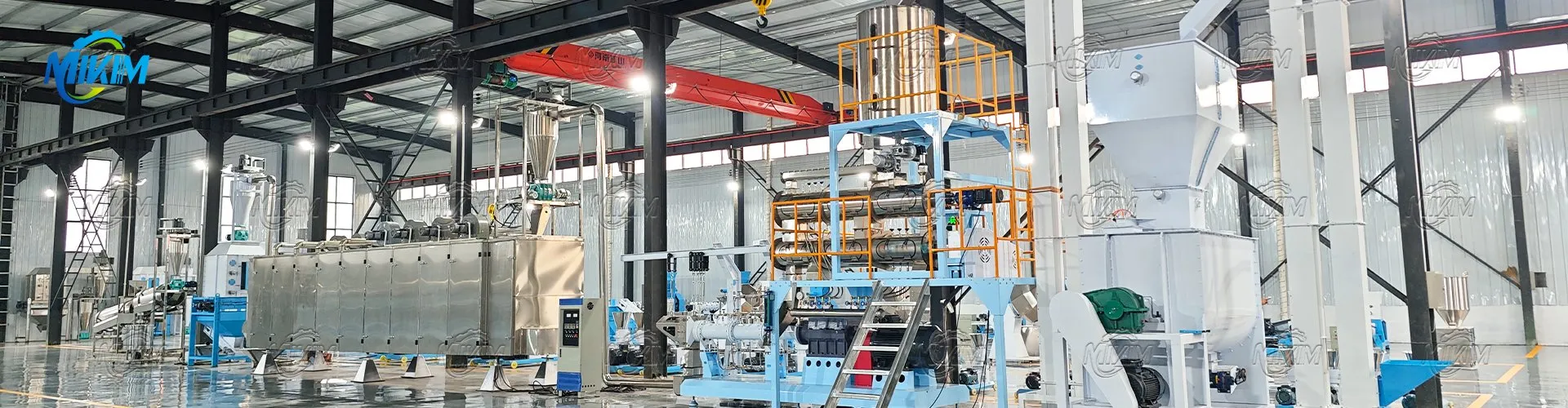
In the process of feed processing, in addition to family farms using self-mixed ingredients, feed processing plants and large-scale farms will also make the required feed by themselves, and even build another plant area to directly place a fully automatic pellet feed production line. In order to meet the requirements of different livestock and poultry for pellet feed, there are usually many specifications and molds for the pellet feed production line. Today, let's talk about what configurations are available in a fully automatic pellet feed production line.
The feeding system generally refers to the use of self-suction pipes, soft auger and other grain feeding equipment to transport the feed raw materials that need to be crushed to the feed grinder. Of course, if there are feed raw materials that do not need to be crushed and mixed directly, they can be loaded into the batching scale through another soft auger for direct weighing and mixing.

| Model | Capacity(t/h) | Power(kw) | Screw Diameter(mm) | Weight |
| 75-B | 0.3-0.4 | 22 | 80 | 1000 |
| 85-B | 0.5-0.6 | 30 | 90 | 2000 |
| 90-B | 0.6-0.7 | 37 | 100 | 2100 |
| 100-B | 0.7-0.8 | 55 | 120 | 2200 |
| 135-B | 1-1.5 | 75 | 135 | 3200 |
| 145-B | 2-3 | 90 | 145 | 4000 |
The crushing system can choose different feed grinders according to its own production needs. Generally, it is more common to choose a water drop feed grinder because its crushing force is more uniform, and its output is larger, and its configured hammer material is better and has a long service life.
The batching system generally chooses a batching scale. Both the crushed materials and the feed raw materials that do not need to be crushed need to be weighed and mixed. The ring die feed pellet machine is generally used for pelleting. The model of the ring die feed pellet machine selected is different according to its model. If there are more lighter materials in the feed raw materials, a forced feeder is also required.
The last step is packaging and sorting. Generally, the prepared pellet feed can be stored for a long time, and the nutrition is locked without loss. The sweet taste can also promote the feed intake of livestock and poultry.


