

What Impacts Pellet Quality in Portable Floating Fish Feed Extruder?
Leave a message
The wear and tear of core components in a dry-type floating fish feed extruder significantly impacts feed quality. The screw and barrel are the core components of the extruder, with their clearance typically controlled between 0.1-0.3 mm. Over time, wear occurs between the screw thread and the inner wall of the barrel, increasing the clearance, reducing the pressure of the raw material within the barrel, leading to incomplete starch gelatinization, and resulting in loose feed pellets with lower density. Die wear also affects feed quality; increased die diameter leads to deviations in pellet size, and a lower compression ratio results in insufficient pellet compaction. One feed mill reduced pellet density fluctuations from ±0.1 g/cm³ to ±0.03 g/cm³ by regularly checking the screw-barrel clearance and promptly replacing worn components.
The precision and stability of a professionally manufactured fish feed extruder machine are fundamental to ensuring feed quality uniformity.
Insufficient precision in the equipment's transmission and control systems can cause parameter fluctuations, such as inconsistent screw speeds and inaccurate temperature control, leading to batch-to-batch variations in feed quality. For example, a malfunctioning temperature control system can cause temperature fluctuations exceeding ±5℃ in different sections of the barrel, resulting in some feed starches being fully gelatinized while others are under-gelatinized, leading to inconsistent product quality. Furthermore, the equipment's sealing performance is crucial; poor barrel sealing can cause steam leakage, affecting temperature and pressure stability; cooling system failures can lead to incomplete feed cooling, excessive moisture content, and compromised storage stability.
Daily maintenance and upkeep of farm floating fish feed pelleting extruder machines are key to maintaining optimal performance. Establishing a maintenance log is essential, including daily checks of the screw, barrel, and die for wear, weekly cleaning of residual raw materials inside the equipment to prevent carbonization and subsequent production disruptions, regular calibration of temperature and pressure sensors to ensure accurate parameter readings, and adding lubricating oil as required to ensure stable operation of the transmission system. One feed mill, by establishing a comprehensive equipment maintenance system, reduced equipment failure rates from 5 times per month to 1 time per month and increased feed quality compliance rates from 88% to 98%.
Why choose us?
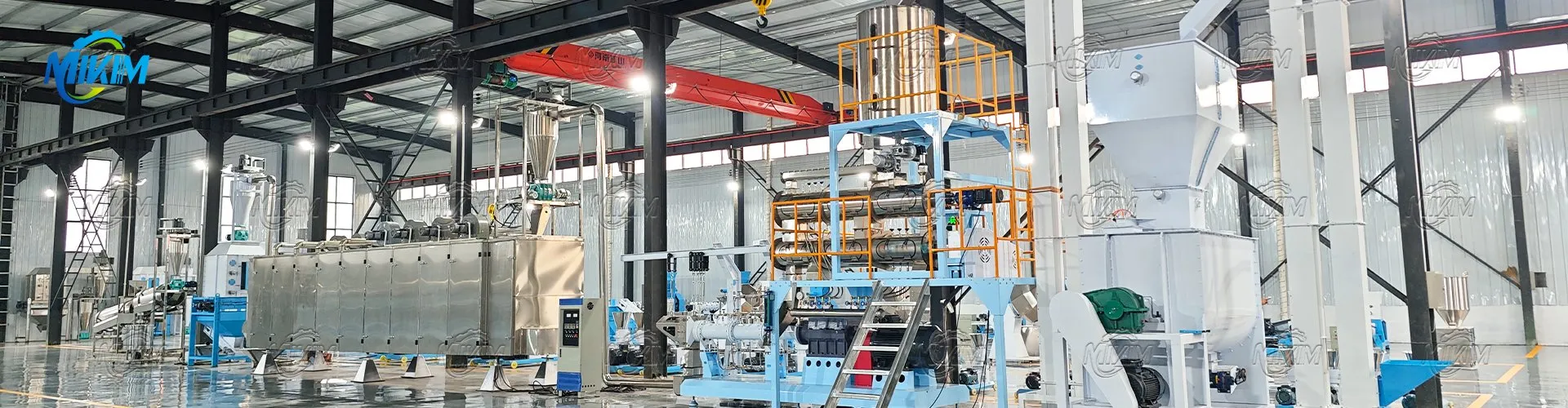
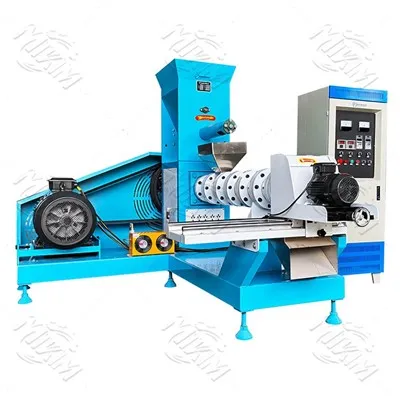
The MIKIM's floating fish feed extruder machine is constructed entirely of food-grade 304 stainless steel, fully complying with food processing hygiene standards. It is corrosion-resistant, easy to clean, and eliminates potential contamination at the source. The core screw is made of high-quality alloy steel through special heat treatment, offering outstanding wear resistance and corrosion resistance. Combined with its integrated structural design, this significantly extends its service life. The entire machine has passed CE and ISO international authoritative certifications, aligning with global quality standards and ensuring safer and more reliable processing.
Our equipment


Our Services
We offer:
One-Year Whole Machine Warranty Service
On-site Installation, Commissioning, and Technical Guidance
24/7 Online Technical Support
Qualifications and Honors

Customer visit


