

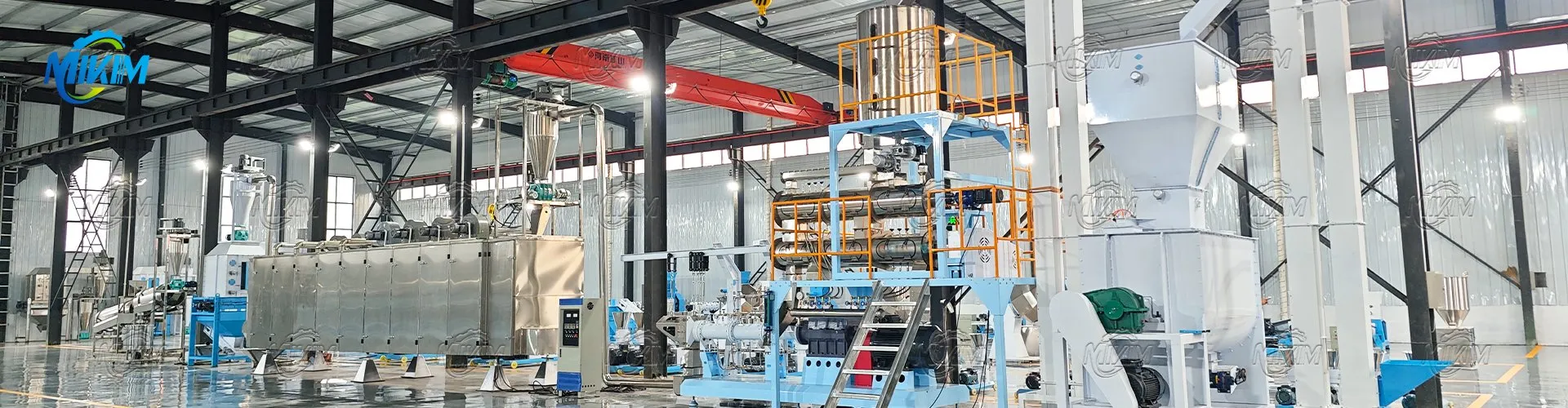
Key Factors Influencing Pellet Quality in Fish Feed Pellet Machine Extruder?
Leave a message
The extrusion temperature of a fish feed extruder is a key parameter affecting feed nutrition and pelleting. The temperature during extrusion is typically controlled between 110-130℃, with different raw materials and product types having different temperature requirements. High temperatures promote starch gelatinization, increasing the gelatinization rate from 60% in ordinary pelleted feed to over 90%, thus improving feed digestibility and absorption. Simultaneously, high temperatures can kill harmful microorganisms in the raw materials, such as Salmonella and E. coli, ensuring feed safety. However, excessively high temperatures can lead to excessive protein denaturation, reducing its nutritional value and destroying heat-sensitive components such as vitamins; excessively low temperatures result in insufficient starch gelatinization, leading to loose feed pellets that easily crumble. For example, the suitable temperature for piglet feed is 115-120℃, ensuring sufficient starch gelatinization while minimizing protein denaturation.
The coordinated control of screw speed and feed rate in wet-type fish feed extruders directly affects the physical quality of the feed. The screw speed determines the shear strength and residence time of the raw material in the barrel. High speeds (300-350 r/min) enhance shearing, making feed pellets crisper, suitable for pet treat production; low speeds (180-220 r/min) extend the residence time, ensuring thorough compaction, suitable for high-density livestock feed. The feed rate must be precisely matched to the screw speed. Overfeeding leads to equipment overload, a sudden increase in barrel pressure, and cracked feed pellets; insufficient feed results in low barrel pressure, loose pellets, and low density. One feed mill, by adjusting the ratio of screw speed to feed rate, controlled the hardness fluctuation of feed pellets within ±5N, significantly improving product stability.
Moisture control is crucial throughout the entire processing. The moisture content of the raw material after conditioning needs to be controlled between 15% and 18%. Excessive moisture causes feed to stick to the barrel and easily mold after molding; insufficient moisture results in poor flowability, high processing resistance, and dust generation in the feed. Extruded feed needs to undergo a cooling process to reduce the moisture content to below 12%, otherwise it will affect storage stability. In addition, the die aperture and compression ratio also affect the feed pellet size and density. The die aperture determines the pellet size, while the compression ratio affects the pellet compaction. Precise selection is required based on the breed and age of the farmed animals.
Why choose us?
The MIKIM's floating fish feed extruder machine is constructed entirely of food-grade 304 stainless steel, fully complying with food processing hygiene standards. It is corrosion-resistant, easy to clean, and eliminates potential contamination at the source. The core screw is made of high-quality alloy steel through special heat treatment, offering outstanding wear resistance and corrosion resistance. Combined with its integrated structural design, this significantly extends its service life. The entire machine has passed CE and ISO international authoritative certifications, aligning with global quality standards and ensuring safer and more reliable processing.
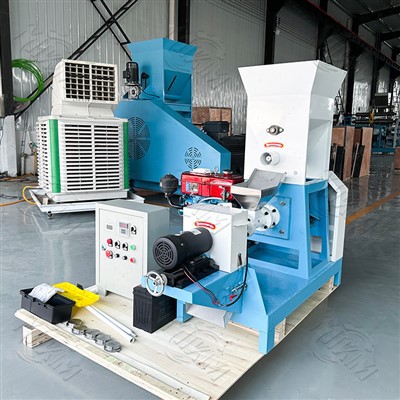
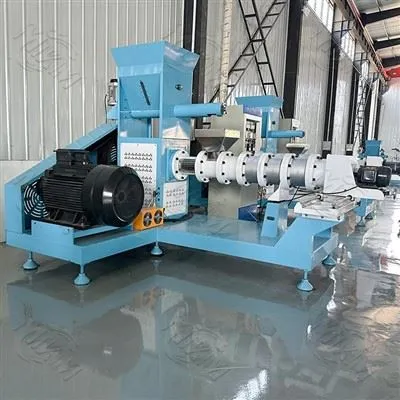
Our equipment


Our Services
We offer:
One-Year Whole Machine Warranty Service
On-site Installation, Commissioning, and Technical Guidance
24/7 Online Technical Support
Qualifications and Honors

Customer visit


