

What Factors Affect The Quality Of Pellets From A Small Floating Fish Feed Extruder?
Leave a message
The rationality of the types and proportions of raw materials is crucial to the nutritional quality of feed. Different farmed animals have significantly different nutritional needs; for example, broiler feed requires high energy and high protein, while beef cattle feed requires high fiber. The nutritional components of core raw materials such as corn, soybean meal, and fishmeal differ: corn provides carbohydrates, soybean meal provides plant protein, and fishmeal provides animal protein. Their proportions must be precisely matched to the growth stages of the farmed animals. Insufficient soybean meal in broiler feed will lead to low protein content and slow broiler growth; poor-quality fishmeal in aquatic feed will affect palatability and reduce fish feed intake. Simultaneously, the functionality of the raw materials must also be considered. Wheat flour, containing gluten protein, can improve pellet binding, while sweet potato flour can enhance the crispness of the feed. A proper combination can optimize the physical quality of the feed.
The quality of raw materials is a prerequisite for ensuring feed safety and stability. The purity, freshness, and impurity content of raw materials directly affect feed quality. Moldy corn contains aflatoxin, which can cause poisoning in farmed animals; soybean meal mixed with sand reduces the effective protein content and increases the feed conversion ratio; oxidized fishmeal produces an off-flavor, affecting palatability. A fish feed factory in Shandong achieved a 90% feed intake rate for extruded feed produced using fresh fishmeal, while feed using fishmeal stored for more than 6 months saw a feed intake rate drop to 65%. Furthermore, the moisture content of raw materials is crucial, typically needing to be controlled between 12% and 14%. Excessive moisture can lead to clumping and mold growth, affecting extrusion processing; insufficient moisture increases the difficulty of grinding, reducing production efficiency.
The standardization of raw material pretreatment also significantly impacts feed quality. Raw materials must undergo pretreatment processes such as grinding, mixing, and conditioning. The particle size must be uniform (usually 40-60 mesh). Overly coarse particles result in uneven nutrition and poor feed formation, while overly fine particles generate dust and increase wear on the extruder machine. The mixing process must ensure that all raw materials and additives are evenly distributed with a coefficient of variation ≤7%; otherwise, localized nutrient excess or deficiency may occur. The conditioning process uses steam heating to increase the moisture and temperature of the raw materials, preparing them for subsequent extrusion. Poor conditioning will directly affect the starch gelatinization rate and reduce feed digestibility and absorption.
Why choose us?
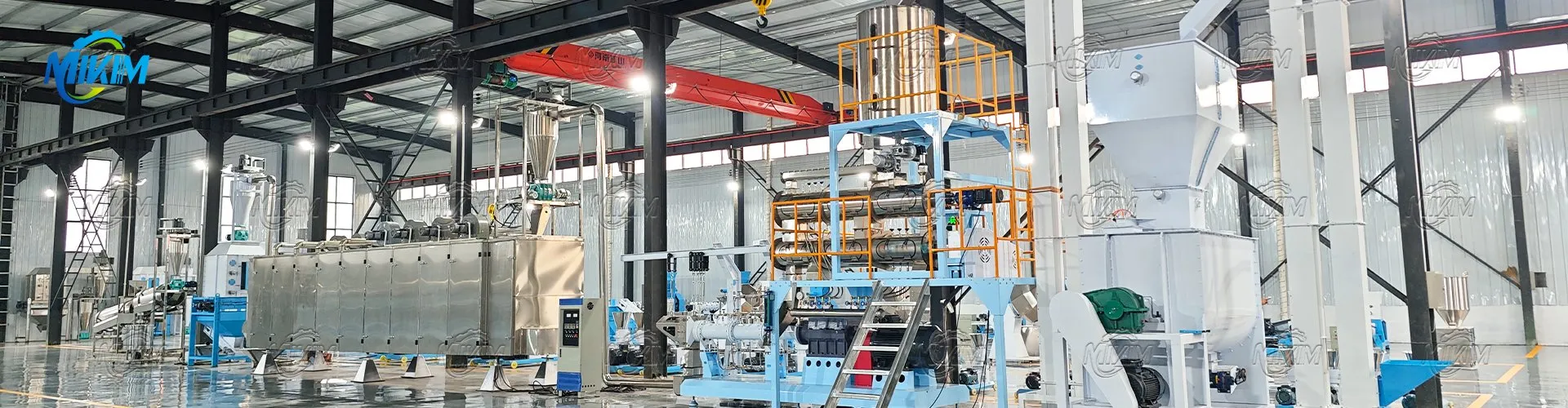
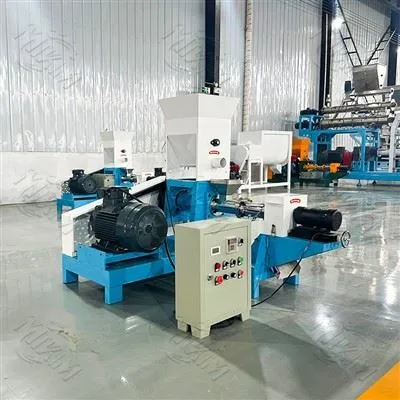
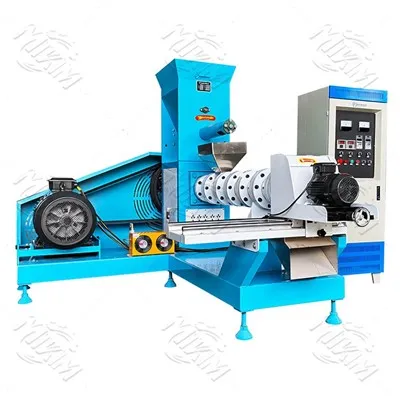
The MIKIM's floating fish feed extruder machine is constructed entirely of food-grade 304 stainless steel, fully complying with food processing hygiene standards. It is corrosion-resistant, easy to clean, and eliminates potential contamination at the source. The core screw is made of high-quality alloy steel through special heat treatment, offering outstanding wear resistance and corrosion resistance. Combined with its integrated structural design, this significantly extends its service life. The entire machine has passed CE and ISO international authoritative certifications, aligning with global quality standards and ensuring safer and more reliable processing.
Our equipment


Our Services
We offer:
One-Year Whole Machine Warranty Service
On-site Installation, Commissioning, and Technical Guidance
24/7 Online Technical Support
Qualifications and Honors

Customer visit


