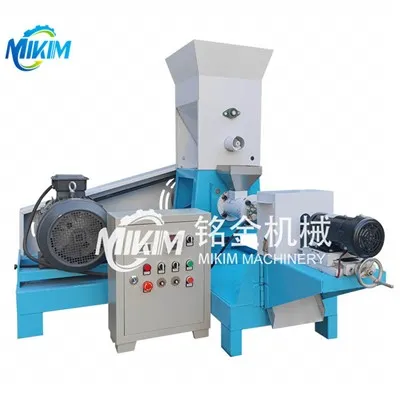
1000kg/h wet Type floating fish feed pellet mill testing before shipping
Leave a message
Why the 1000kg/h wet Type floating fish feed pellet extruder machine Was Tested Before Shipping
Before delivery, the 1000kg/h wet Type fish feed production equipment underwent a complete factory testing process to verify production stability, floating pellet quality, steam conditioning performance, and continuous operating reliability.
For commercial aquaculture feed production, testing before shipment is an important step that helps customers confirm whether the equipment can meet real industrial production requirements.
A full production test also helps reduce installation risks and unexpected operational problems after the machine arrives at the customer site.
What Is a wet Type fish feed pellet machine?
A wet type fish feed pellet maker machine uses steam conditioning together with high-pressure extrusion technology to produce floating aquatic feed pellets.
Compared with dry type extruders, wet type systems usually offer:
- Higher production capacity
- Better pellet cooking performance
- Improved feed digestion rate
- More stable floating effect
- Lower wear during continuous industrial production
Wet type production lines are widely used in medium and large aquaculture feed factories.
Main Equipment Included in the Production Line
The testing process usually involves the complete production system, including:
- Raw material crusher
- Feed mixer
- Steam conditioner
- Wet type fish feed extruder
- Dryer machine
- Cooling system
- Oil spraying machine
- Control cabinet
All machines must operate together smoothly for stable industrial production.
Key Testing Areas Before Shipment
1. Steam Conditioning Performance
The steam conditioning system is tested to ensure proper material softening before extrusion.
Stable steam conditioning helps improve:
- Pellet expansion
- Nutritional cooking effect
- Floating stability
- Pellet texture consistency
2. Extruder Operating Stability
Engineers monitor:
Screw pressure stability
Temperature control
Feeding consistency
Continuous output performance
Stable extrusion helps reduce machine wear and improve pellet quality.
3. Floating Fish Feed Pellet Quality Testing
The finished pellets are inspected for:
| Inspection Item | Purpose |
|---|---|
| Floating rate | Ensure pellets stay on water surface |
| Pellet uniformity | Improve feeding consistency |
| Water stability | Reduce feed waste |
| Pellet hardness | Prevent transport damage |
| Moisture content | Support long-term storage |
Stable floating performance is critical for commercial fish farming efficiency.
4. Drying and Cooling System Testing
After extrusion, pellets must pass through drying and cooling stages.
Testing ensures:
- Proper moisture reduction
- Stable pellet structure
- Reduced mold risks during storage
Incorrect drying may lead to pellet cracking or shortened storage life.
Raw Materials Used During Testing
The machine can process common floating fish feed ingredients such as:
- Fish meal
- Soybean meal
- Corn flour
- Wheat bran
- Rice powder
- Shrimp meal
- Vitamin premixes
- Mineral additives
Testing with real formulas helps customers evaluate production compatibility with their target fish species.
Why Pre-Shipment Testing Is Important for Buyers
Many customers want to confirm several key production questions before shipment:
Can the machine truly reach 1000kg/h capacity?
Will the pellets float consistently?
Is the steam conditioning system stable?
Can the line operate continuously for long working hours?
Is the machine suitable for local raw materials?
A real factory test provides practical production verification instead of relying only on technical specifications.
Common Problems Testing Helps Prevent
Without proper testing, feed production lines may face issues such as:
- Unstable pellet floating performance
- Material blockage
- Uneven pellet size
- Excessive powder generation
- Drying problems
- Production interruptions
Testing helps identify and correct these problems before delivery.
Suitable Applications for the 1000kg/h floating fish feed pellet making production line
This type of production system is commonly used for:
- Commercial aquaculture feed factories
- Tilapia feed production
- Catfish feed manufacturing
- Shrimp feed processing
- Large-scale floating fish feed businesses
It is suitable for industrial continuous feed production operations.
Conclusion
The 1000kg/h wet Type floating fish feed pellet processing machine testing before shipping process helps verify pellet quality, steam conditioning performance, extrusion stability, and continuous production reliability before equipment delivery.
For commercial aquaculture feed manufacturers, factory-tested production equipment helps reduce operational risks, improve feed consistency, and support stable long-term production performance.
Company Profile