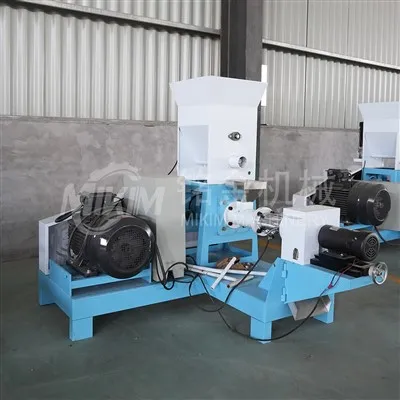
700kg/h diesel floating fish feed processing machine text in factory
Leave a message
1. What Is a 700kg/h Diesel Floating Fish Feed Processing Machine?
A 700kg/h diesel floating fish feed pellet maker machine is a mobile or factory-use fish feed production unit powered by a diesel engine. It is designed for producing floating fish feed pellets for aquaculture farms in areas without stable electricity supply. The machine can process raw materials such as maize, soybean meal, and fish meal into floating pellets with stable output capacity around 700kg per hour.
2. Why diesel floating fish feed extruder machine Is Important in Real Farms?
This section should focus on real-world pain points, not general marketing.
Key problems it solves:
- unstable electricity supply in rural farms
- high cost of grid connection
- need for mobile feed production
- remote aquaculture locations
- emergency production during power outages
In many fish farming regions, electricity instability directly affects feed production efficiency. A diesel-powered system solves this by allowing continuous operation without grid dependency.
3. What 700kg/h actually means in production
A 700kg/h output capacity means:
- about 5–6 tons per 8-hour working day
- suitable for medium-scale fish feed factories
- enough for multiple fish ponds or small commercial farms
This capacity is ideal for:
- tilapia farms
- catfish production zones
- regional feed supply businesses
4. Diesel vs Electric Fish Feed Machine
| Comparison Factor | Diesel Fish Feed Machine | Electric Fish Feed Machine |
|---|---|---|
| 1. Power Source Stability | Independent diesel engine system. No need for grid electricity. Works even during power outages and in remote areas. | Depends on grid or three-phase electricity. Stable in industrial zones but affected by voltage fluctuations or power cuts. |
| 2. Real Production Behavior | Acts like a self-contained power station. Suitable for outdoor or mobile production setups. | More suitable for fixed factory environments with stable infrastructure. |
| 3. Torque Performance in Extrusion | Strong adaptive torque. Handles raw material changes (moisture, density) better. Ideal for mixed ingredients. | Stable but limited by motor rating. May trigger overload protection under sudden feed changes. |
| 4. Raw Material Flexibility | High tolerance for inconsistent raw materials such as maize, bran, soybean meal mixtures. | Requires more controlled and consistent raw material formulation. |
| 5. Energy Cost in Operation | Fuel cost depends on local diesel price. Can be higher per hour but independent of electricity availability. | Lower energy cost per ton in most industrial regions. More economical for long-term factory production. |
| 6. Installation Requirements | Simple setup. Can run in farms, outdoor sites, or remote areas with minimal infrastructure. | Requires stable industrial power system, wiring, and control cabinet. |
| 7. Maintenance Reality | Requires engine maintenance (oil, filters, fuel system). Easier repair in rural areas. | Lower mechanical maintenance but requires skilled electrical technician for troubleshooting. |
| 8. Risk of Downtime | Less affected by power outages. Mechanical wear is main factor. | Sensitive to voltage instability. Power issues may stop entire production line. |
| 9. Best Application Scenarios | Rural farms, African aquaculture, mobile feed units, pond-side production. | Industrial feed factories, urban plants, large-scale continuous production lines. |
| 10. 700kg/h Production Stability | Stable under variable load; better tolerance to raw material inconsistency. | Highly consistent output and pellet quality under controlled conditions. |
5. Main Structure of 700kg/h diesel floating fish feed pellet extruder machine
Each part should be explained clearly but briefly.
1. Diesel Engine Power System
Provides stable mechanical energy to drive the whole production system.
2. Feed Crusher Unit
Grinds raw materials like corn and soybean into fine powder for extrusion.
3. Mixer Section
Ensures uniform distribution of protein, starch, and additives.
4. Floating Fish Feed Extruder
Core system that expands material under high temperature and pressure to form floating pellets.
5. Cutting System
Controls pellet length and uniformity.
6. Cooling & Drying Section
Reduces moisture to improve storage stability.
6. Factory Testing Process
Step 1: Raw Material Test
Corn, soybean meal, and fish meal are prepared and tested for moisture level.
Step 2: Diesel Engine Start-Up
Engine is tested for stable torque output and fuel consumption.
Step 3: Extrusion Test Run
Material is fed gradually to check:
extrusion pressure stability
pellet expansion
discharge smoothness
Step 4: Floating Test
Pellets are placed in water to check:
floating time
structural integrity
disintegration speed
Step 5: Continuous Operation Test
Machine runs continuously for 3–6 hours to verify stability.
7. Real Factory Test Data
| Item | Result |
|---|---|
| Capacity | 680–720kg/h |
| Power Source | Diesel Engine |
| Pellet Size | 1–8mm adjustable |
| Floating Rate | ≥95% |
| Continuous Running Time | 4–6 hours |
| Raw Materials | Corn, soybean meal, fish meal |
| Application | Tilapia, catfish feed |
Real numbers help Google understand credibility.
8. Suitable Application Scenarios
This machine is suitable for:
rural fish farms without electricity
mobile fish feed production units
small and medium feed factories
emergency feed production
remote aquaculture zones in Africa and Asia
9. FAQ
Can this machine work without electricity?
Yes. It is powered by a diesel engine and does not require grid electricity.
What fish feed can it produce?
It can produce floating feed for tilapia, catfish, carp, and other freshwater fish.
Is 700kg/h real or theoretical capacity?
It refers to real factory-tested output under standard raw material conditions.
Can pellet size be adjusted?
Yes. Different molds can produce different pellet diameters.
Company Profile