Advantages of Pet Feed Extruders in Dog Food Production
Leave a message
What a Pet Feed Extruder Does
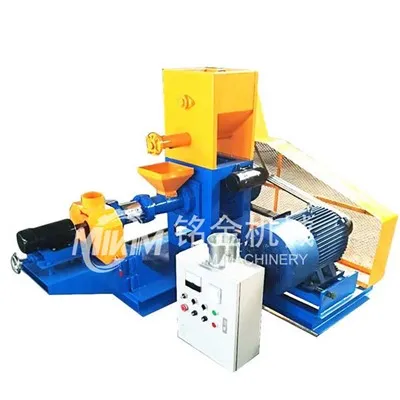
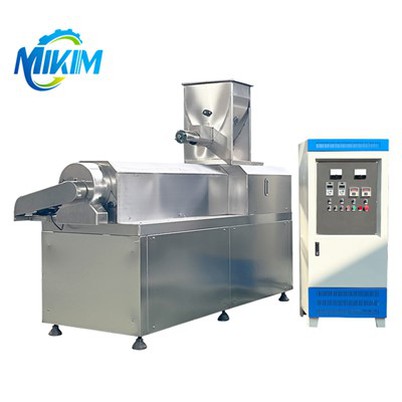
A pet feed extruder cooks, expands and shapes a blended dough into dry kibble in one continuous process. Flour, meat meal, fats, vitamins and mineral additives are metered together with water and live steam, then conveyed along the extruder barrel. Inside the barrel the material is held under elevated temperature and pressure, and when the cooked dough is forced through the die the sudden pressure drop lets the kibble puff and set into a light, crisp and dimensionally stable piece. Cooking, texturing and shaping therefore happen in a single machine instead of three separate operations, which shortens the process line and removes handling between stages.
Palatability and Kibble Texture
Puffed kibble is crisp and porous, which improves the chewing experience and encourages steady feed intake. The mechanical action of a firm piece against the teeth also gives a mild cleaning effect during eating. Because the die sets both the cross-section and the cut length, finished pieces can be matched to the jaw size and chewing habit of a particular breed, body weight or life stage, from small bite-size pieces for toy breeds to larger pieces for working and large-breed dogs.
Nutrition, Digestibility and Starch Gelatinisation
Many nutrients in cereal and protein meals must be heat-treated before an animal can use them efficiently. Extrusion gelatinises starch and denatures protein, and both changes raise the digestibility of the finished diet. Under-processed ingredients deliver less usable energy and can disturb the digestive tract. Controlled cooking also reduces anti-nutritional factors that occur naturally in some raw materials. Where a higher degree of cook is required, producers use a two-stage expansion sequence so that nutrients become more completely available to the animal.
Shape, Density and Storage Life
Extrusion and pelleting change the geometry of the feed, and they also change practical handling indicators. Lower residual moisture extends storage life, so owners can keep the product safely and feed it at any time. Higher bulk density makes the feed more compact, which simplifies packaging, procurement and transport and lowers logistics cost per kilogram. Consistent piece size and hardness also make automatic filling, weighing and bagging more reliable, and they reduce the amount of fines created during conveying.
Adjustable piece diameter and length for different breeds and life stages
Adjustable bulk density to balance bag fill weight against transport volume
Reduced residual moisture for longer storage under normal warehouse conditions
Uniform, stable texture that travels well through conveying and packing equipment
One barrel configuration able to serve several product families and pack sizes
Why Extrusion Became the Standard Route for Dry Pet Food
The combination of palatability, nutrition, digestibility, convenience and logistics efficiency explains why most commercial dry dog food is produced by extrusion. The same technology is applied to cat food and to other companion animal diets. Modern extruders allow producers to change formula and piece shape without rebuilding the line, so a single installation can cover several recipes, package sizes and market segments. For a manufacturer, that flexibility improves utilisation of the investment and shortens the time needed to launch a new product, because only the die and the conditioning settings have to be changed rather than the whole plant.
Frequently Asked Questions
Q: What raw materials can a pet feed extruder process?
Cereal flour, meat and bone meal, fish meal, vegetable protein meals, fats and oils, vitamins and mineral premixes are all used after grinding to a uniform particle size.
Q: Why is extruded kibble easier for a dog to digest?
The heat, moisture and shear inside the barrel gelatinise starch and denature protein, so the animal can break the feed down and absorb it more completely than raw or lightly cooked material.
Q: How is piece size controlled?
Piece diameter is fixed by the die openings and piece length by the rotating knife; both can be changed to suit small breeds, large breeds or different life stages.
Q: Does extrusion affect how long the feed can be stored?
Yes. The process drives off moisture, so the finished kibble is dry and stable and keeps well in a closed bag under normal warehouse conditions.
Q: Can one machine produce both dog and cat food?
The same barrel and drive can be used for both when the formula, die and conditioning parameters are adjusted, which is why extruders are common in multi-product pet food plants.
Q: What determines the density of the finished kibble?
Density depends mainly on the die design, the amount of steam and water added during conditioning and the temperature profile along the barrel, so it can be tuned without changing the machine.