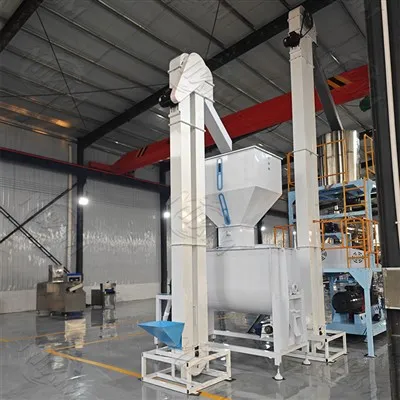
Pet Food Pellet Production Line for Fish and Animals: Models and Capacity
Leave a message
What a Pet Food Pellet Production Line Includes
A pet food pellet production line is an integrated processing system that converts feed ingredients into pelleted food for companion animals and aquatic species. One configuration can be adapted to produce food for dogs, cats, birds, monkeys, shrimp, crabs, and both floating and sinking fish feed. The purpose of the line is to deliver complete nutrition in a single pellet: high digestibility, a controlled formula, and consistent quality standards that support growth, health, and long-term well-being. Grinding, mixing, extrusion, cutting, drying, oil spraying, cooling, and packing are linked into one continuous flow, so output stays stable and repeatable shift after shift.
Raw Materials and Formula Flexibility
Pet food machinery accepts a wide range of raw materials, which lets a producer build formulas around local supply and price conditions.
Animal bones, offal, and fresh or frozen meat or fish
Cereal powder and other grain-based carriers
Milk powder and vitamin premixes
Chicken oil and cattle tallow as energy and palatability sources
Alternative formulations can be developed for a given species, breed, and age. A single line can therefore serve dog food and cat food producers as well as aquatic feed plants. Protein, fat, fibre, and mineral levels are fixed at the mixing stage, so the accuracy of the batching and mixing equipment has a direct effect on the feeding value of the finished pellet.
Model Parameters and Capacity
The table below lists the main parameters of six typical models of the production line. Capacity is quoted for a standard formula and a standard die; real output varies with the raw material mix, pellet diameter, and the way the line is run.
| Model | Capacity (t/h) | Main power (kW) | Cutter power (kW) |
|---|---|---|---|
| 65 | 0.3 | 22 | 0.75 |
| 70 | 0.5 | 37 | 1.1 |
| 80 | 0.8 | 55 | 1.5 |
| 85 | 1.0 | 75 | 2.2 |
| 90 | 1.5 | 90 | 3.0 |
| 120 | 2.0 | 110 | 3.0 |
Capacity should be matched to the target output of the plant. The 0.3 t/h model suits pilot or small-batch production, while the 2.0 t/h model serves commercial pet food and aquafeed plants. Because the cutter runs on its own motor, pellet length can be changed without touching the main drive setting, which keeps product changeover quick.
Production Advantages of an Automated Line
An automated pet food line produces premium, nutritious, and palatable pellets consistently. Swift and effective machinery operation keeps a high output of pet food pellets with fewer operators, and the low connected load per tonne of output keeps the energy cost per unit low. Three benefits matter most in daily operation.
Consistency: the formula is metered and mixed automatically, so pellet colour, hardness, and buoyancy do not drift between batches.
Flexibility: the raw materials used and the size and shape of the pellet can be tailored, which lets a producer differentiate products for different market segments.
Simple operation: the machinery is easy to use, which shortens the learning curve for line operators and reduces unplanned downtime.
Applications and Customization
Depending on the die and formula, the same line can produce floating fish feed, sinking fish feed, shrimp feed, crab feed, dog food, cat food, bird food, and even monkey food. Producers adjust the formula by species, breed, and age, and change pellet size and shape to match market demand. That flexibility makes the line a sensible investment for both pet food companies and aquatic feed mills, because one machine covers several product families instead of a single narrow range. For aquafeed in particular, floating or sinking behaviour is controlled by the extrusion parameters and the die, not by a separate machine.
Frequently Asked Questions
Q: What raw materials can a pet food pellet production line process?
Animal bones or offal, fresh or frozen meat and fish, cereal powder, milk powder, vitamins, chicken oil, and cattle tallow are all suitable, and formulas can be adjusted by species, breed, and age.
Q: What capacity range do the models cover?
The six standard models run from 0.3 t/h with a 22 kW main motor to 2.0 t/h with a 110 kW main motor.
Q: Can one line make both floating and sinking fish feed?
Yes. Floating or sinking behaviour is set by the die and the extrusion parameters, so the same line can produce both types as well as shrimp and crab feed.
Q: How is pellet length controlled?
Pellet diameter is fixed by the die hole, while length is set by the cutter, which has its own motor rated from 0.75 kW to 3.0 kW across the model range.
Q: Why is batching accuracy important in pet food production?
Protein, fat, fibre, and mineral levels are decided at the mixing stage, so metering accuracy directly determines the nutritional value and batch-to-batch consistency of the finished pellet.
Q: Is the line suitable for small farms as well as commercial plants?
Yes. The small models work well for pilot or small-batch production, while the larger models are sized for commercial pet food and aquafeed operations.