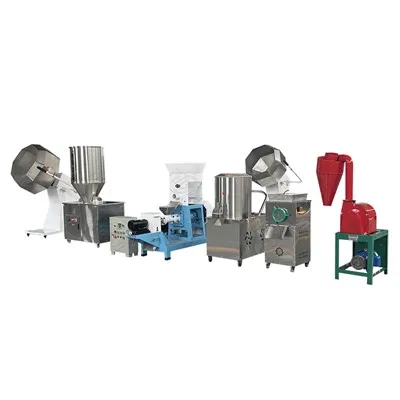
Feed Processing Equipment in Modern Animal Husbandry
Leave a message
The Role of Feed Processing Equipment in Modern Breeding
With the development of modern agriculture, animal husbandry plays an increasingly important role in food production. As a crucial component of the animal husbandry industry, feed processing equipment is more and more widely used. It not only improves feed production efficiency but also plays a key role in enhancing the nutritional content and digestibility of feed.
How Feed Processing Equipment Works
Feed processing equipment processes raw materials through a series of processes, including crushing, mixing, and granulating, to produce feed suitable for different animals. Crushing reduces grains and oilseed meals to the right particle size, mixing blends the formula ingredients into a uniform mash, and granulating compresses the mash into dense pellets that are easy to handle, transport, and feed.
Efficiency Gains over Traditional Methods
Compared with traditional feed production methods, modern feed processing equipment offers significant improvements in efficiency and quality. Traditional methods often rely on manual labor, resulting in high labor intensity and low production efficiency. Modern equipment, through automated control, enables continuous production, which significantly improves production efficiency and keeps output consistent from batch to batch.
Better Nutrition and Digestibility
Feed processing equipment can effectively enhance the nutritional value of feed. Through rational formulations and scientific processing techniques, it can fully utilize the nutrients of various raw materials. For example, the mixing and granulation processes allow animals to absorb and utilize the protein and vitamins in feed more effectively. This increases the nutritional value of the feed, promotes animal growth and development, and thereby improves the profitability of the animal husbandry business.
Configuration Reference for a Large Line
| Item | Specification |
|---|---|
| Capacity | 15-20 t/h |
| Range of application | Large commercial feed factories; chicken, sheep, cow and shrimp feed |
| Workers required | 4-5 people |
| Shipment requirement | 6 x 40 ft containers |
| Pellet size | 1-12 mm, selected by die configuration |
The line features fully automatic intelligent batching, a computer control system with stable output, efficient and continuous operation, labor savings, and direct packaging. The overall size of the line depends on the land size and layout of the factory.
Main Components of the Line
The hammer mill is a special piece of equipment used to process crop straw, grain, soybean meal, and other raw materials into powdered feed; it belongs to the crushing machinery category and is mainly used in feed processing, biomass energy, and straw comprehensive utilization. The screw conveyor conveys grain and powdery raw materials with a sealed structure that is reliable, clean, hygienic, and residue-free. The stainless steel mixer is suitable for mixing powdered raw materials with high efficiency and fast mixing speed. Feed pellet machines are widely used in large, medium, and small livestock and poultry farming, producing feed pellets of various specifications with simple structure, wide adaptability, small footprint, and low noise. The cooler adopts the countercurrent cooling principle so the pellets are cooled fully and evenly, running and discharging smoothly. The packer consists of an automatic weighing and packaging machine, a conveying device, and a sewing device, suitable for quantitative packaging of granular and granular-powder mixed materials.
FAQ
Why is crushing important in feed processing?
Crushing reduces raw materials to a uniform particle size, which improves mixing accuracy, increases the surface area for digestion, and prevents uneven pellet quality.
How does pelleting improve feed compared with mash feed?
Pelleting compresses the mash into dense pellets that are easier to store, transport, and feed, reduces dust and waste, and improves feed conversion by preventing selective eating.
How many workers does a large automated line need?
A 15-20 t/h automated line with computer control typically runs with 4-5 workers per shift.
What feed can a large line produce?
With the right formula and dies, it can produce chicken, sheep, cow, and shrimp feed, with pellet sizes selectable from 1mm to 12mm.
Why does mixing improve feed nutrition?
Uniform mixing distributes protein, vitamins, and minerals evenly through every pellet, so each animal receives a balanced ration instead of an inconsistent blend.