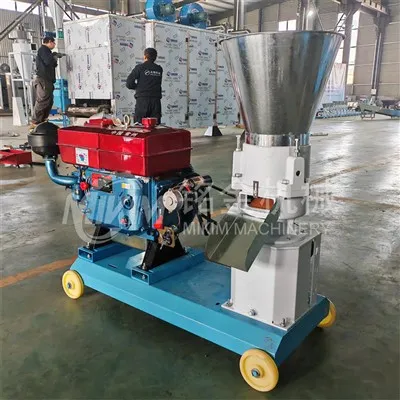
Does faulty functioning of the pellet mill for chicken feed cause the feed spraying problem?
Leave a message
Many material spraying problems are caused by improper human operation-for example, feeding material directly without preheating the machine, or suddenly increasing the feeding speed. The material cannot adapt in the barrel and will spray out. Many beginners are unaware of the correct operating procedures and easily fall into these traps.
Why is material being sprayed out without preheating?
In winter or after the machine has been idle for a long time, the barrel and screw temperatures are very low (like room temperature, such as below 10°C). If you add material directly, it will stick to the cold screw and barrel, like "ice stuck to your hand," preventing it from being pushed forward and causing it to pile up at the feed inlet and spray out. Solution: Preheat the machine before starting – turn on the barrel heating device to raise the barrel temperature to 50-60°C (check with a temperature gauge), and simultaneously let the motor idle for 5 minutes to warm the screw and barrel before slowly feeding material.
Why is the feeder spraying material when the feeding speed is too fast?
Suddenly increasing the feeder speed too much (e.g., from 20 rpm to 50 rpm) causes the raw material to enter too quickly. The screw in the barrel can't handle the load, causing the material to accumulate below the feed inlet and spray out. Solution: Feeding should be gradual. When starting the machine, first adjust the feeder speed to the lowest setting (e.g., 15 rpm). Once the raw material enters the barrel smoothly and the pellets come out normally, gradually increase the speed (increase by 5 rpm each time) until the required production capacity is reached.
Why is material spraying out the next time the machine is turned on if it's not cleaned after shutdown?
The barrel and ring die weren't cleaned after the last production run, and the hardened residual material got stuck inside. The next time the machine is started, the new material can't push the hardened old material out, causing it to spray out of the feed inlet. Solution: Always clean before shutdown – first turn off the feeder and let the material in the barrel run out completely. Then add a small amount of dry material (like cornstarch) to the feed inlet and run it idle for 5 minutes to carry away any remaining material. Finally, disassemble the ring die and clean the residue from the holes.
Summary of Correct Operating Procedures
Start-up: Preheat the barrel → Idle motor → Slow feeding → Gradually increase speed; During production: Maintain a stable feeding speed, avoid sudden increases; Shutdown: Clean raw materials → Clean the barrel → Clean the ring die.

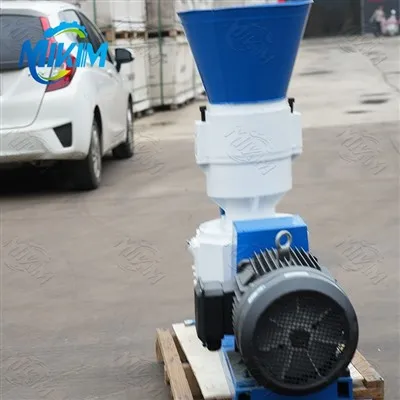


Why Choose Us
MIKIM boasts extensive experience in poultry feed pellet production lines, significantly reducing the incidence of poultry diseases. Its equipment is not only widely used across various industries domestically but also exported to Southeast Asia, Europe, Africa, and South America, earning a high reputation internationally. This global presence not only demonstrates the adaptability and competitiveness of its products, but also demonstrates the company's experience in adapting to diverse market standards and logistics conditions, enabling it to provide a stable supply chain for its overseas customers. Whether serving large domestic farms or cross-border feed companies, MIKIM can leverage its global service network to ensure a consistent, high-quality experience.
For more information on process flow design, equipment layout, factory construction plans, individual equipment pricing, or turnkey project proposals, please feel free to contact us!!!