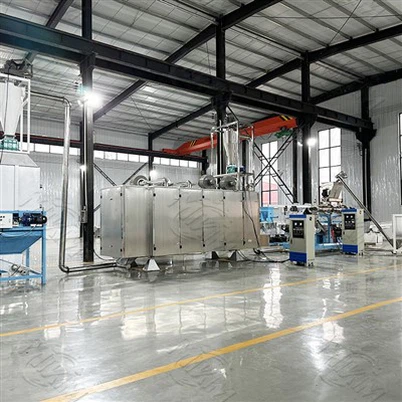
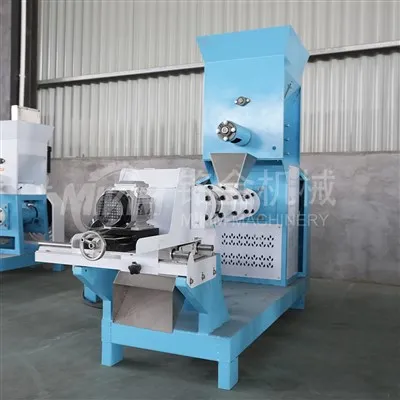
Could a malfunction in the auxiliary system be responsible for the feed spraying problem in the animal pellet machine?
Leave a message
Many people only focus on the feed machine itself, neglecting auxiliary systems such as the feeder and conveyor belt. If the feeder jams or the conveyor belt deviates, the raw material cannot enter the machine barrel steadily, sometimes too much and sometimes too little, which can also lead to material spraying. In fact, if the auxiliary system has a problem, repairing only the main machine is not enough.
Why is the feeder spraying material?
1. Feeder jamming: Large impurities (such as plastic bags or stones) have entered the feeder, jamming the screw and causing intermittent feeding. When feeding is interrupted, there is little material in the barrel, and the screw spins idly; when the jam is suddenly cleared, material rushes into the barrel, causing spraying.
Solution: Stop the machine and clean the impurities from the feeder. Install a screen (5mm aperture) at the feeder inlet to prevent large impurities from entering. Regularly check the feeder screw for wear and replace it if worn.
2. The feeder's frequency converter is faulty: The feeder speed fluctuates wildly (e.g., set to 30 rpm, but actually fluctuating between 10-50 rpm), resulting in uneven material feeding. When there's too much material, the barrel piles up and sprays out; when there's too little, the screw idles.
Solution: Have an electrician repair the frequency converter, or replace it with a new one (choose one that matches the feeder's power, e.g., a 1.5kW feeder with a 1.5kW frequency converter). After repair, measure the speed to ensure it's stable.
Why is the conveyor belt spraying material?
1. Conveyor belt misalignment: The conveyor belt tilts to one side, causing raw material to fall outside and only a small amount to enter the feeder. Sometimes there's too little material, and the drum runs idle; other times, when the conveyor belt straightens, there's a sudden surge of material, causing material buildup and spraying from the drum.
Solution: Adjust the conveyor belt rollers. If it's tilting to the left, adjust the left roller screw to push the roller to the right until the conveyor belt is straight and all the material enters the feeder.
2. Conveyor belt speed and feeder mismatch: The conveyor belt is too fast (e.g., feeding 100kg of raw material per minute), and the feeder is too slow (feeding only 50kg per minute). Raw material piles up at the feeder inlet and eventually overflows, appearing as spraying.
Solution: Slow down the conveyor belt speed (to match the feeder speed, e.g., if the feeder feeds 50kg per minute, the conveyor belt should also feed 50kg per minute), or increase the feeder speed to synchronize them.
Tips for checking auxiliary systems
Before each startup, turn on the feeder and conveyor belt first to check if the raw material can enter the feeder stably. If there is no jamming or deviation, then turn on the main unit. This can avoid many material spraying problems.



Why Choose Us
MIKIM boasts extensive experience in poultry feed pellet production lines, significantly reducing the incidence of poultry diseases. Its equipment is not only widely used across various industries domestically but also exported to Southeast Asia, Europe, Africa, and South America, earning a high reputation internationally. This global presence not only demonstrates the adaptability and competitiveness of its products, but also demonstrates the company's experience in adapting to diverse market standards and logistics conditions, enabling it to provide a stable supply chain for its overseas customers. Whether serving large domestic farms or cross-border feed companies, MIKIM can leverage its global service network to ensure a consistent, high-quality experience.
For more information on process flow design, equipment layout, factory construction plans, individual equipment pricing, or turnkey project proposals, please feel free to contact us!!!