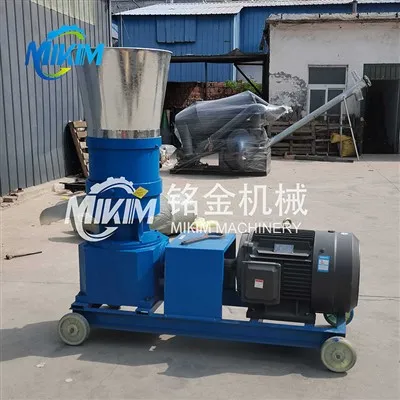
Dog Food Extruder machine Safety Guidelines for Compliance
Leave a message
Dust control is a crucial environmental and safety requirement for the operation of pet feed extruder machines, necessitating the establishment of a comprehensive dust collection system. Dust is easily generated during the feeding, discharging, and raw material mixing stages of the extruder. If this dust permeates the air, it not only pollutes the operating environment but may also cause respiratory illnesses and, at certain concentrations, pose an explosion risk. Producers must install dedicated dust collection hoods at the extruder's inlet and outlet, connecting them to a pulse-jet bag filter via pipelines to centrally collect and treat the dust. The dust collector's airflow must match the extruder's output, typically handling at least 10 times the equipment's output per hour (e.g., for an extruder with an hourly output of 50 kg, the dust collector's airflow must be at least 500 m³/h). Simultaneously, the operating area must be well-ventilated and equipped with explosion-proof lighting and electrical equipment to prevent hazards caused by dust contact with electrical sparks. Regularly cleaning the dust collector allows for the collection of dust, which, after sterilization, can be added back to the raw materials in small quantities (not exceeding 5%) to achieve resource recycling and reduce waste.
Noise control for pet food extruder pellet machines must comply with industrial noise emission standards to protect the health of operators and the surrounding environment. During operation, the high-speed rotation of the screw and friction with the material generates 70-90 dB of noise; prolonged exposure to this environment can affect the hearing of operators. Noise control can be approached from three aspects: source reduction, transmission blocking, and individual protection. For source reduction, low-noise extruder models can be selected, such as twin-screw extruders with variable frequency motors, which are 10-15 dB quieter than traditional equipment. Vibration damping pads should be installed at the bottom of the equipment to reduce noise transmission. For transmission blocking, soundproof covers can be installed around the extruder, using a composite material of sound-absorbing cotton and steel plates, achieving a sound insulation effect of 20-30 dB. Individual protection requires operators to be equipped with professional soundproof earplugs or earmuffs to ensure that noise exposure during operation meets national regulations (8-hour equivalent sound level not exceeding 85 dB). In addition, the equipment's transmission system should be inspected regularly. Problems such as loose belts and worn bearings can lead to abnormally high noise levels, requiring timely repair.
Wastewater treatment must avoid environmental pollution and achieve compliant discharge. The cleaning process of the extruder generates wastewater containing raw material residue and grease; direct discharge will pollute soil and water bodies. Small-scale producers can use a simplified treatment process of "sedimentation tank + filtration + disinfection": wastewater first enters the sedimentation tank to allow large particles of residue to settle, then passes through a quartz sand filter to filter out fine impurities, and finally adds sodium hypochlorite (concentration of 50-100 mg/L) for disinfection. The treated wastewater can be used for irrigation of green areas within the factory. Large-scale production enterprises need to construct standardized wastewater treatment systems, using "air flotation + biological contact oxidation" to treat wastewater, removing organic matter and grease, ensuring that the effluent quality meets the "Integrated Wastewater Discharge Standard" (GB 8978-1996) before discharge or recycling. Simultaneously, a wastewater treatment log must be established to record the treated water volume, reagent dosage, and water quality test results for environmental protection department inspections.
Related equipment


about Us
MIKIM's fish feed pellet production lines and supporting machinery offer excellent value for money. Not only are they affordable, eliminating middlemen markups and allowing small and medium-sized enterprises (SMEs) and fish farmers to purchase complete sets of equipment at reasonable costs, but they also boast exceptional efficiency. The fully automated process, from raw material crushing and precise ingredient mixing to extrusion pelleting and maturation, is completed in one continuous flow. This results in high starch gelatinization rates and uniform pellet formation, significantly improving production efficiency and feed quality, truly achieving "low cost, high output." Choosing a MIKIM fish feed pellet production line means enjoying comprehensive pre-sales and after-sales service, including 24-hour online customer support, a one-year warranty on the entire machine, professional on-site installation, commissioning, and maintenance, and a stable supply of spare parts. Customers can buy with confidence and use with peace of mind, with both excellent value and service quality!
Customer visit

Certificate of Honor

FAQ
1. What is the price of the Pet Food Extrusion Machine?
The price ranges from approximately $1,500-$55,000
2. Do you provide maintenance services for your customers?
Yes, we offer comprehensive after-sales maintenance services to our customers.
If you would like to learn more about MIKIM machinery, please contact us. We offer one-stop service and welcome your inquiries!!!