How Fish Feed Machine Design and Configuration Affect Price
Leave a message
Why Fish Feed Machine Prices Vary So Widely
Fish feed pellet machines span a broad price range because their internal design and configuration differ much more than their outer appearance suggests. Four factors explain most of the price difference: the screw configuration, the temperature control system, the drive system, and the auxiliary components. Understanding what each factor buys helps a purchaser spend money on the capabilities the production actually needs, instead of paying either for missing features or for functions that will never be used.
Screw Configuration and the L/D Ratio
The screw configuration of a floating fish feed pellet machine is the primary factor determining its price. Single-screw extruders have a simple structure and low processing difficulty, and their pellet mills typically cost between 5,000 and 20,000 yuan. The screws are usually made of ordinary alloy steel and are suitable for small-scale farms processing basic feeds such as corn and soybean meal, but their mixing and extrusion capability is relatively weak, which limits production efficiency. Twin-screw extruders use high-strength, wear-resistant alloy forgings and undergo multiple precision machining processes, giving thorough mixing and efficient extrusion; their pellet mills generally range from 20,000 to 80,000 yuan and suit large feed mills producing high-nutrient-density pet food or aquatic feed. The screw length-to-diameter ratio also affects price: a higher L/D ratio means a larger extrusion chamber and stronger processing capacity, which typically raises the price by 10%-30%.
Temperature Control Accuracy
The accuracy and stability of the temperature control system is the second major price factor, and it directly affects pellet quality. Low-end extruders often use single-zone temperature control, which can only roughly control the extrusion temperature, with fluctuations around plus or minus 10°C; this equipment is cheaper, typically more than 20% below high-end equipment, but it is prone to uneven pellet maturation and nutrient loss. Mid-to-high-end pellet mills are equipped with multi-zone intelligent temperature control systems that hold the feeding section, extrusion section, and discharge section within plus or minus 2°C respectively. A PLC control system adjusts the heating power in real time to keep the gelatinization rate of the pellets stable above 85%. This temperature control system accounts for 15%-25% of the total cost of the extruder, which raises the machine price but improves product quality and reduces rework costs later.
Drive System and Motor Selection
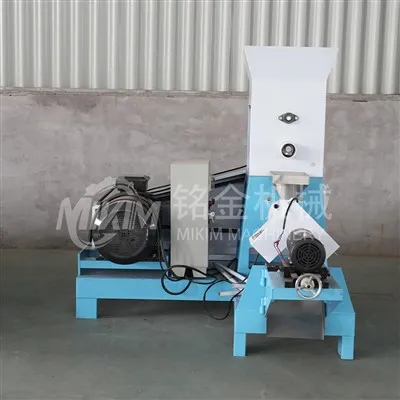
Drive system configuration also creates significant price differences. Small pellet mills typically use single-phase asynchronous motors of 2.2-5.5 kW with fixed speed, which cannot be adjusted to the raw-material characteristics; these machines are inexpensive and suit small-batch production. Medium and large pellet mills are equipped with variable-frequency motors of 11-37 kW that allow stepless adjustment of the screw speed, typically 50-300 r/min, adapting to raw materials with different moisture contents and particle sizes and avoiding blockage or poor pellet formation. Variable-frequency motors cost 30%-50% more than ordinary motors and require a dedicated frequency converter; the extra cost appears directly in the machine price, but the improved flexibility and efficiency give better long-term cost-effectiveness for mills running multiple formulations.
Auxiliary Configurations and Total Cost
Auxiliary components add the final layer of price difference. Extruders with automatic lubrication systems periodically add oil to the screw bearings, cutting manual maintenance labor, and this configuration typically increases the machine price by 5%-10%. Extruders with quick-change die devices can complete a die change within about 10 minutes, adapting production to different pellet sizes, and cost roughly 15% more than traditional manually changed dies. When comparing prices, purchasers should judge each option against their own production needs: a farm that produces one pellet size all year may not need a quick-change die, while a mill that runs several recipes daily will recover the premium quickly. The guiding rule is to avoid paying for unused functions while never skimping on the quality of the core configuration, so the equipment can reliably meet production requirements. When comparing offers, ask for the same specification sheet from each supplier, including screw type and L/D ratio, temperature-control zones and their accuracy, motor power and whether it is variable-frequency, die change time, and lubrication method. Convert all prices to the same currency and include the frequency converter, spare dies, and installation if they are part of the deal; then evaluate the long-term cost, including energy use, maintenance intervals, and rework rates, because a machine that is cheaper today can cost more per ton of feed within the first year if its temperature control drifts.
FAQ
What factor most affects the price of a fish feed machine?
The screw configuration. Single-screw machines typically cost 5,000-20,000 yuan, while twin-screw machines range from 20,000 to 80,000 yuan, depending on materials, machining precision, and processing capability.
How does the screw L/D ratio affect price and performance?
A higher length-to-diameter ratio means a larger extrusion chamber and stronger processing capacity, which typically increases the machine price by 10%-30%.
Why is multi-zone temperature control worth paying for?
Multi-zone PLC control holds each barrel section within plus or minus 2°C and keeps gelatinization above 85%, versus single-zone control with plus or minus 10°C fluctuation, which causes uneven maturation and nutrient loss.
Is a variable-frequency motor worth the extra cost?
For medium and large mills running multiple recipes, yes. Variable-frequency motors allow stepless screw speeds of 50-300 r/min, adapting to different moisture and particle sizes and avoiding blockage; they cost 30%-50% more but improve flexibility and long-term efficiency.
What do automatic lubrication and quick-change dies cost?
Automatic lubrication typically adds 5%-10% to the machine price, and a quick-change die device, which swaps dies in about 10 minutes, adds roughly 15% compared with manual die change.
How should price quotes be compared?
Compare identical specification sheets, including screw type and L/D, temperature control accuracy, motor type and power, die change time, and included accessories, in the same currency, then evaluate energy use, maintenance, and rework costs over the machine's life.