


Why fish Feed Pellet Machine Price Vary with Different Extruder Production Capacities?
Leave a message
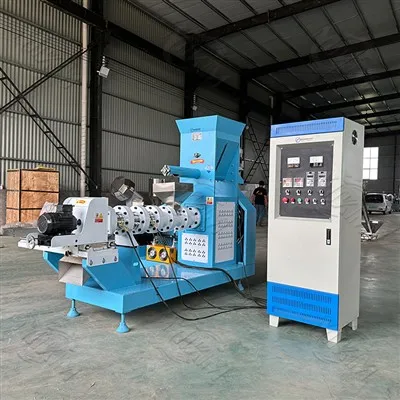
The production capacity design of fish feed production equipment is the core basis for the price grading of feed pellet mills. Extruders with different capacities differ fundamentally in structural design and material selection. Feed pellet mills paired with small extruders (capacity 50-200 kg/hour) typically cost between 3,000 and 15,000 yuan. These extruders have smaller extrusion chamber volumes, screw diameters of 30-50 mm, and are made of ordinary welded steel plates. They are suitable for family farms or small feed workshops. Their production capacity design focuses on "small-batch, flexible production," requiring no complex auxiliary equipment and resulting in relatively low costs. In contrast, pellet mills paired with medium-sized extruders (capacity 200-1000 kg/hour) cost between 15,000 and 50,000 yuan. These extruders have larger screw diameters (50-80 mm), use thickened wear-resistant materials for the extrusion chamber, and have a one-piece casting body, resulting in greater stability and meeting the daily production needs of small and medium-sized feed mills.
Large-scale floating fish feed making machines (with a capacity of over 1000 kg per hour) often require feed pellet mills, which typically cost over 50,000 yuan, with some high-end production lines reaching several million yuan. These extruders, designed for large-scale production, employ twin-screw or multi-screw structures, with screw lengths exceeding 1.5 meters, enabling them to process large quantities of raw materials simultaneously and achieve thorough mixing. Their bodies are made of high-strength alloy casting and equipped with internal cooling systems to prevent overheating during prolonged high-load operation. To match the high capacity, the extruder requires a large feeding system, dust removal equipment, and a finished product cooling system; these auxiliary equipment costs account for 40%-60% of the overall equipment price. For example, a feed pellet production line with a capacity of 5 tons per hour can cost 300,000 yuan just for the extruder and its associated variable frequency drive system; adding other auxiliary equipment easily pushes the total price over 500,000 yuan.
The power matching and capacity adaptability of small fish feed pellet extruders further amplify the price differences in feed pellet mills.
Production capacity is positively correlated with motor power; for every 100kg increase in hourly production capacity, the motor power needs to be increased by 1.5-2kW. Small extruders are equipped with 2.2-7.5kW motors, which are relatively inexpensive; however, large extruders can have motors with power ranging from 37-110kW, with motor costs alone tens of thousands of yuan higher than smaller equipment. Furthermore, high-capacity extruders require dedicated gearboxes and transmission systems to ensure stable power transmission and prevent component damage at high speeds. These transmission systems use precision gear designs, with manufacturing costs exceeding 50% compared to smaller equipment, which is a significant reason for the price difference.
It is important to note that higher production capacity in fish feed pellet processing is not always better. Blindly pursuing high capacity can lead to inflated equipment prices and wasted resources. For example, a small farm that only needs to produce 10 tons of feed per month would pay more than three times the price of a pellet mill with a capacity of 1 ton per hour compared to one with a capacity of 200kg per hour, and daily operating electricity and maintenance costs would also increase significantly. Producers should calculate their reasonable hourly capacity requirements based on factors such as their average monthly output and production cycle, and then select the appropriate extruder capacity to ensure that the equipment capacity matches the actual demand, achieving the highest cost-effectiveness at the best price.
Related equipment


about Us
MIKIM's fish feed pellet production lines and supporting machinery offer excellent value for money. Not only are they affordable, eliminating middlemen markups and allowing small and medium-sized enterprises (SMEs) and fish farmers to purchase complete sets of equipment at reasonable costs, but they also boast exceptional efficiency. The fully automated process, from raw material crushing and precise ingredient mixing to extrusion pelleting and maturation, is completed in one continuous flow. This results in high starch gelatinization rates and uniform pellet formation, significantly improving production efficiency and feed quality, truly achieving "low cost, high output." Choosing a MIKIM fish feed pellet production line means enjoying comprehensive pre-sales and after-sales service, including 24-hour online customer support, a one-year warranty on the entire machine, professional on-site installation, commissioning, and maintenance, and a stable supply of spare parts. Customers can buy with confidence and use with peace of mind, with both excellent value and service quality!
Customer visit

Certificate of Honor

FAQ
1. What is the price of the small fish feed pellet making machine?
The price ranges from approximately $1,500-$55,000
2. Do you provide maintenance services for your customers?
Yes, we offer comprehensive after-sales maintenance services to our customers.
If you would like to learn more about MIKIM machinery, please contact us. We offer one-stop service and welcome your inquiries!!!


