


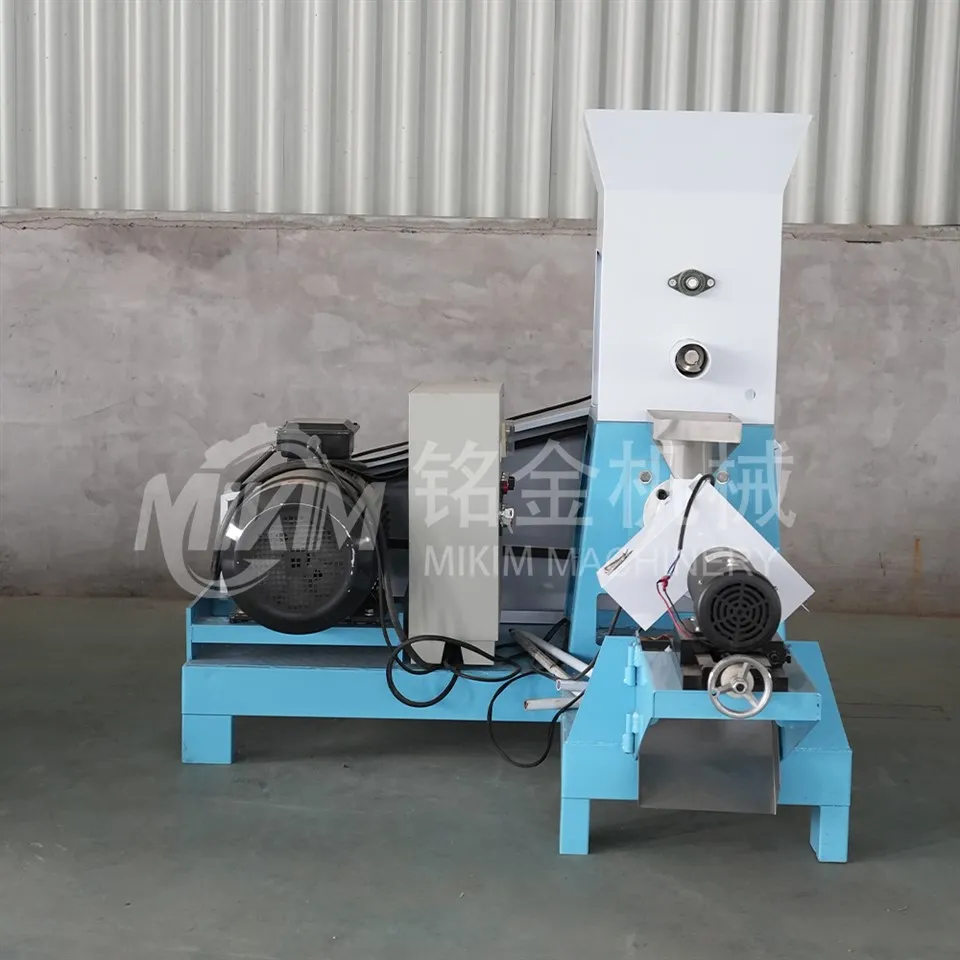


Dry Type Sinking Fish Feed Pellet Machine Line
Looking for a sinking fish feed pellet machine that runs without a steam boiler? The DGP dry-type single-screw extruder line produces dense, bottom-sinking aquafeed from 40 kg/h all the way up to 2,000 kg/h. If you raise catfish, carp, or shrimp, this matters more than it sounds: your fish feed at the pond floor, and a floating pellet is just expensive litter drifting out of reach.
Description
Most farmers never stop to ask why their feed floats. For bottom feeders, buoyancy is a defect, not a feature. A sinking fish feed pellet machine built on dry extrusion solves the real problem-getting nutrition to the fish that live on the bottom.
You already know feed is your single biggest farm cost. In fact, purchased feed accounts for 50-70% of total production cost in fish farming. We'll show you exactly how a dry extruder turns the same raw materials into sinking pellets, walk through every DGP model from a 40 mm screw to a 200 mm screw, and help you match capacity to your pond size. By the end, you'll know whether a DGP line beats a wet-type or a ring-die machine for your operation-and you'll have a clear path to a quote.


Key Takeaways
- A dry-type sinking fish feed pellet machine uses single-screw extrusion with no steam, producing dense pellets (density >1 g/cm3) that sink on contact.
- The DGP series spans Φ40-200 mm screws, covering 40 kg/h (DGP-40) up to 2,000 kg/h (DGP-200).
- Screw compression ratio, die-hole size, and raw-material moisture - not steam - decide whether the pellet sinks or floats.
- Compared with ring-die hard pellets, DGP extruded sinking feed stays intact 1-2 hours in water and gelatinizes more starch, cutting waste.
- MIKIM DGP lines ship CE/ISO certified with engineer on-site installation, operator training, and a 1-year warranty.
1. What Is a Dry-Type Sinking Fish Feed Extruder Line?
A dry-type sinking fish feed pellet machine line is a production system built around a DGP single-screw extruder. It converts powdered feed ingredients-fish meal, soybean meal, corn, wheat bran, and rice husk-into uniform, dense pellets that drop straight to the bottom of the pond.
The word "dry" is the key differentiator. A wet-type extruder forces steam into a preconditioner before the screw. A dry-type DGP skips the boiler entirely. It relies on mechanical shear and a controlled amount of added water to cook and shape the feed. Because there is no steam expansion, the pellet stays compact and heavy. That is precisely what makes it sink.
This is not the same as a ring-die pellet mill. A ring-die machine simply compresses meal through a rotating die at 80-90°C. It produces hard pellets that dissolve within about 30 minutes in water (feed pellet line technical data), polluting the pond and wasting nutrients. A DGP extruder, even in dry mode, exposes the mash to higher pressure and shear, raising starch gelatinization to roughly 80-90% and giving the pellet 1-2 hours of water stability.
The global aquafeed market was valued at about $72.4 billion in 2025 and is projected to reach $95.2 billion by 2034 at a 5.2% CAGR (Market Intelo). Fish feed alone holds the largest species segment at 42.5% market share, with Asia Pacific dominating at 48.3% of revenue. As feed demand climbs, producing your own sinking feed on a DGP line turns a recurring cost center into a controlled, in-house process.
Not sure a dry-type sinking fish food pellet making machine is right for your farm? Compare the DGP line with a wet system -> Our engineers will size it to your pond for free.
2. How Does a Sinking Fish Feed Pellet Machine Make Sinking (Not Floating) Feed?
"Extrusion" usually means expansion-and expansion means floating. When hot, pressurized mash exits the die into ordinary air, trapped steam flashes off and leaves a porous, low-density pellet that bobs on the surface. To make a dry-type sinking Aquatic feed pellet making machine instead, you suppress that expansion at four control points.
Screw Compression Ratio and Shear
The screw is the heart of density control. A higher compression ratio (the step-up from the feed-section diameter to the metering-section diameter) packs the mash tighter and pushes more air out the front. DGP screws are configured so the melt leaves the die dense rather than foamy. Tightening the compression is the first lever operators use to shift a recipe from floating toward sinking.
Die-Hole Diameter and Length
Smaller, longer die holes resist sudden expansion. They keep the melt under pressure longer, so less steam escapes as the pellet forms. A DGP line lets you swap dies to tune pellet size and sink speed for catfish fry versus adult carp.
Moisture and Fat Content
Dry-type sinking feed runs at lower conditioning moisture than floating feed-typically well below the 22-25% range used for steam-expanded extrusion. Less internal water means less flash-off and less puffing. A modest fat addition also weighs the pellet down and improves palatability without triggering buoyancy.
Cutting and Cooling
The rotary cutter sizes the strand at the die face. Gentle air cooling (not a water bath) sets the dense structure instead of loosening it. The result is a pellet with density above 1 g/cm³-heavy enough to sink immediately, yet cooked enough to hold together in water.
Key Takeaways
Illustrative scenario: Consider a typical mid-size catfish operation that has been buying ring-die hard pellets which turn to mush within 20 minutes and foul the pond. If this operator switches to a DGP-100 dry extruder and drops conditioning moisture to around 14%, the pellets sink cleanly and stay intact for over 90 minutes. The denser, slower-breaking feed means less wasted material settles on the bottom, which is the basic reason many bottom-feeder ponds run cleaner on extruded sinking feed than on compression pellets.
sinking fish feed pellet extruder machine test
I am interested in this product
3. DGP Series sinking Aquatic feed pellet making machine Models & Capacity Table
The DGP family covers nearly every farm size. Screw diameter is the clearest indicator of scale: a Φ40 screw serves a backyard trial, while a Φ200 screw feeds a commercial workshop.
| Model | Capacity (kg/h) | Main Power (kW) | Feeder Power (kW) | Cutter Power (kW) | Screw Dia. (mm) | Weight (kg) |
|---|---|---|---|---|---|---|
| DGP-40 | 40-50 | 5.5 | 0.4 | 0.4 | Φ40 | 320 |
| DGP-60 | 120-150 | 15 | 0.4 | 0.4 | Φ60 | 420 |
| DGP-70 | 200-250 | 18.5 | 0.4 | 0.4 | Φ70 | 550 |
| DGP-80 | 300-350 | 22 | 1.5 | 0.55 | Φ80 | 720 |
| DGP-90 | 400-450 | 30 | 1.5 | 0.55 | Φ90 | 1100 |
| DGP-100 | 500 | 37 | 1.5 | 1.5 | Φ100 | 1500 |
| DGP-120 | 600-700 | 55 | 1.5 | 1.5 | Φ120 | 1800 |
| DGP-135 | 800-900 | 75 | 1.5 | 2.2 | Φ135 | 2000 |
| DGP-160 | 1000-1200 | 90 | 2.2 | 2.2 | Φ160 | 2500 |
| DGP-200 | 1800-2000 | 132 | 3 | 3 | Φ200 | 3200 |
Notice the pattern: as the screw grows, capacity scales almost linearly while power rises more gently - a sign of mature, efficient screw design. A sinking Aquatic feed pellet maker machine at the DGP-120 level already delivers 600-700 kg/h on a 55 kW motor, enough for a mid-size farm or a village co-op buying ingredients in bulk.
Want help reading this table for your operation? Send us your daily feed need -> and we'll point to the right DGP model.


4. Dry-type vs. wet-type sinking fish food pellet extruder machine
Both dry and wet extruders can make sinking feed. The question is which fits your scale and budget.
Dry-type sinking fish feed making machine (DGP): No boiler, no preconditioner, lower capital and energy cost. You control density through screw compression, die, and moisture. It is the pragmatic choice for farms that need reliable sinking feed at 40-2,000 kg/h without a steam plant.
Wet-type sinking fish food extruder machine: Adds a steam preconditioner that lifts starch gelatinization and lets one machine swing between sinking and floating recipes. At feed-mill volumes (0.3-4 t/h), wet extrusion wins on consistency and throughput-but it costs more to buy and run.
For pure sinking feed at a small-to-medium scale, a dry-type sinking fish food pellet maker machine is the smarter buy. For a commercial mill serving many species, a high-efficiency sinking fish feed extruder line is the better long-term play. The honest answer: match the machine to your tonnage, not to a spec sheet you saw once.
| Factor | Dry Type (DGP) | Wet Type |
|---|---|---|
| Steam boiler required | No | Yes |
| Capital cost | Lower | Higher |
| Starch gelatinization | High (dry cook) | Very high (steam) |
| Recipe flexibility (sink/float) | Adjustable, skill-dependent | Easy switch |
| Best scale | 40 kg/h-2 t/h | 0.3-4 t/h+ |
5. Key Components of the Dry-Type Sinking Fish Feed Making Machine
Understanding the machine helps you maintain it and dial in sinking feed.
Feeding Hopper and Conditioner
Ground ingredients enter through a variable-speed feeder. In dry mode, a small water line adds just enough moisture for the screw to bind the mash. No steam jacket here - simplicity is the point.
Single Screw Shaft
The screw is a hardened, wear-resistant alloy with a profile tuned for compression. It is the component you will replace most often, so MIKIM stocks spares for every DGP size.
Barrel and Jacket
The barrel houses the screw and may carry a heating/cooling jacket. For sinking feed you typically run cooler than for floating, so the jacket helps hold the dense-cook window.
Die and Cutter
Interchangeable dies set pellet diameter (1-10 mm common). The rotary cutter chops the extruded strand to length. Both are quick to swap, which keeps changeovers short.
Control Cabinet
A centralized panel regulates feeder, main motor, and cutter speed. Operators learn it in an afternoon during on-site training.
6. Which DGP dry type sinking fish feed extruder machine Fits Your Farm?
- Backyard or trial (<=0.1 ha): DGP-40 at 40-50 kg/h. Enough to test recipes and feed a few ponds.
- Small pond (<2 ha): DGP-60 or DGP-70, 120-250 kg/h. Covers a family farm's daily need.
- Medium farm (2-10 ha): DGP-80/90/100, 300-500 kg/h. Supports several ponds or a local resale sideline.
- Large farm or co-op (10-50 ha): DGP-120/135, 600-900 kg/h. Bulk ingredient buying pays off here.
- Commercial feed workshop: DGP-160/200, 1,000-2,000 kg/h. Sell sinking feed to neighbors.
Key Takeaways
Illustrative scenario: A typical 12-member farmer group might pool funds for a shared DGP-135 dry extruder rated at 800-900 kg/h after calculating that bagged catfish feed eats the majority of their margin. With one shared machine, a group of this size can usually cover its own ponds and supply a few neighbors, turning a recurring purchase into a controlled in-house process. Because the capital is split and bagged-feed buying drops sharply, a shared unit of this capacity can shorten payback versus buying bagged feed, though the exact months depend on local ingredient and pellet prices.
7. Sinking Fish Feed Pellet Machine Applications: Catfish, Tilapia, Carp & Shrimp
Species feeding zone decides whether you need sinking feed at all.
- Catfish: Strict bottom feeders. Sinking pellets are non-negotiable; floating feed sits wasted at the surface.
- Carp and crucian carp: Bottom and mid-bottom omnivores that take dense feed readily.
- Shrimp and prawns: Benthic crustaceans that forage on the pond floor. Notably, roughly 90% of shrimp aquafeed was still produced by pelleting rather than extrusion as of 2020 (Wiley Reviews in Aquaculture), which means dense extruded sinking shrimp feed is a quality upgrade with room to grow.
- Tilapia: Naturally mid-water surface feeders that often get floating feed. But in dense polyculture ponds, a slow-sinking or sinking fraction reduces surface aggression and ensures bottom-dwelling tankmates eat. Many mixed catfish-tilapia ponds run a sinking base ration plus a floating top-up.
A sinking fish feed pellet maker machine earns its place wherever the fish live below the surface. Match pellet size to mouth gape: fry need 1-2 mm, adults 4-8 mm.

Farming Systems This Machine Suits
The dry type sinking fish feed processing machine fits earthen ponds, concrete tanks, cages, small recirculating aquaculture systems, and hatcheries. The key point is that it needs no steam boiler, so it slots into farms without a boiler room. A compact DGP unit sits in a farm workshop or a co-op shed and still turns out dense sinking feed on demand.
Feed Forms and Sizes
Dry extrusion handles the full sinking range. Sinking pellets typically span 1-12 mm, covering fry to adults. Crumbles and granules suit fry and nursery stages, while micro-extrudates serve shrimp and prawn post-larvae. A DGP line swaps dies to move between sizes, so one sinking fish food extruder machine feeds multiple growth stages from a single workshop.
Operational Scale Range
The DGP dry range of 40-2000 kg/h covers a family pond through a regional mill. A 40 kg/h mini serves a trial batch, while a 2000 kg/h DGP-200 supplies neighbors. Where daily need climbs past two tonnes, a wet-type line becomes the better long-term option. For small-to-mid farms, the boiler-free dry machine is the practical first buy.
8. sinking fish feed pellet making machine Installation & Spare Parts
MIKIM treats delivery as the start of the relationship, not the end of the sale.
- On-site installation: A MIKIM engineer travels to your site to install, level, and commission the DGP line, then runs a full production trial with your own ingredients.
- Operator training: Your team learns recipe setup, moisture tuning, die changes, and daily cleaning in person - no prior extrusion experience required.
- CE / ISO certification: Every DGP extruder is built to CE and ISO quality standards, documentation included for customs and compliance.
- 1-year warranty: Major components are covered for twelve months from commissioning.
- Spare parts: Screws, dies, cutters, and seals are stocked and shipped fast so a worn part never idles your line for weeks.
9. Request a sinking fish feed extruder machine Quote
Choosing the right sinking fish food pellet making machine starts with three numbers: your pond area, your target species, and your daily feed need. Send those to the MIKIM team and you'll get a sized recommendation - usually a specific DGP model plus a matched grinder, mixer, and dryer if you need a full line.
Ready to stop overpaying for bagged sinking feed? Request your DGP extruder quote -> Our engineers reply with capacity, power, and a landed-price estimate within two business days.
Related Fish Feed Equipment
- high-efficiency sinking fish feed extruder line
- low-price slow sinking fish feed machine
- aquafeed expander
- automatic feed pellet machine
Frequently Asked Questions
Q1: What is the difference between a sinking fish feed processing machine and a floating one?
A sinking machine (like the dry DGP extruder) produces dense pellets above 1 g/cm³ that drop to the bottom. A floating machine uses steam expansion to trap air, creating porous pellets below 1 g/cm³ that stay on the surface for 12-24 hours. The DGP dry line makes sinking feed by controlling screw compression, die size, and moisture instead of steam.
Q2: Can a DGP dry-type sinking fish food extruder machine make both sinking and floating feed?
Yes, within limits. By raising conditioning moisture and opening the die, a skilled operator can produce low-porosity floating feed. But the DGP series is optimized for sinking and slow-sinking output; for routine floating production at scale, a wet-type line is easier to run consistently.
Q3: How long does DGP sinking feed stay intact in water?
Properly conditioned DGP extruded sinking feed typically holds shape for 1-2 hours, far longer than ring-die hard pellets that dissolve in about 30 minutes. Longer stability means less nutrient leaching and better pond water quality.
Q4: What raw materials can I use in a DGP dry type sinking fish food pellet making machine?
Standard aquafeed inputs: fish meal, soybean meal, corn, wheat bran, rice husk, and vitamin/mineral premixes. You can also incorporate local by-products like cassava or spent grain, provided they are milled fine (around 80 mesh) before conditioning.
Q5: How much does a DGP dry type sinking Aquatic feed pellet making machine cost?
Equipment typically ranges from about US$3,500 for a mini DGP-40 up to US$55,000 for a large DGP-200 line with auxiliaries, depending on screw size and whether you include a grinder, mixer, and dryer (MIKIM price guidance). Contact us for a configured quote.
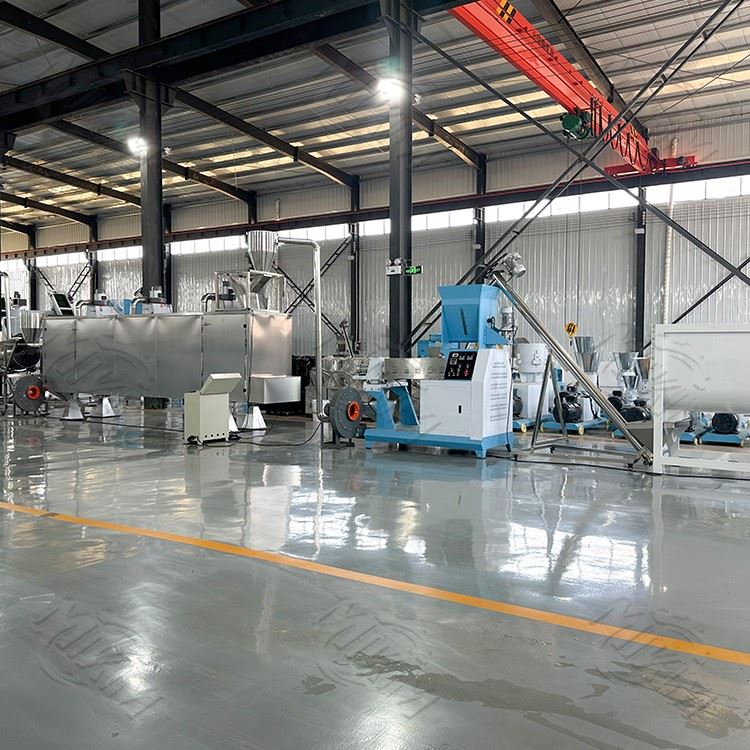
our factory


Hot Tags: Dry Type Sinking Fish Feed Pellet Machine Line, China Dry Type Sinking Fish Feed Pellet Machine Line manufacturers, suppliers, factory, fish feed manufacturing machine, Fish Feed Extruder Machine, automatic aquaculture feed forming machine, high efficiency fish feed production machine, advanced fish feed making equipment, durable fish feed extrusion equipment
Send Inquiry
You Might Also Like

