


Essential Safety Precautions for Operating a Pet Food Extruder machine
Leave a message
Operating a dog food pellet maker involves multiple specialized steps, including temperature setting, speed adjustment, and raw material feeding. Different models of equipment have different operating logics-for example, the feeding speed of a twin-screw extruder needs to be precisely matched with the screw speed, while single-screw extruders are more sensitive to raw material moisture content. Pre-job training should cover equipment structure (e.g., the function of the feed inlet, extrusion chamber, die head, and temperature control system), standardized operating procedures, the use of safety devices (e.g., the location and function of the emergency stop button and guardrails), and risk identification skills development, ensuring operators can clearly distinguish between "normal operating conditions" and "abnormal warning signals." Simultaneously, operators must ensure they have no physical conditions that would hinder operation, such as fatigue, dizziness, or hand injuries, to avoid accidents caused by inattention or physical limitations.
Pre-operation safety checks for fish feed pellet mill extruders are a crucial step in mitigating risks. First, the stability of the mechanical structure must be checked: ensure the extruder body is securely fixed, with no loose screws or connectors, especially at the connection between the high-speed rotating screw and the motor. Loose connections may lead to increased equipment vibration or even component detachment.
Secondly, safety protection devices must be intact-the protective grille at the feed inlet must effectively prevent foreign objects and human limbs from entering, and the splash guard at the discharge outlet must be properly installed to avoid burns from high-temperature material spray. Electrical system checks are equally important; power cords must be checked for damage or aging, grounding devices must be reliable, and the displays of instruments such as the temperature controller and tachometer must be normal. If any instruments are found to be zeroing or displaying abnormal readings, the machine must be stopped immediately for repair; do not attempt to restart it. Furthermore, the area around the equipment must be cleared, ensuring no unrelated debris accumulates in the operating area, and at least 1.5 meters of safe operating space must be provided for rapid evacuation in case of emergencies.
Safety monitoring during operation must be comprehensive and without blind spots. When the Dry Dog food making machine is running, operators must remain at their posts and not leave without authorization or engage in activities unrelated to operation. Hands and tools must not be placed inside the operating parts of the equipment. When observing the state of the raw materials in the extrusion chamber, the manufacturer-provided observation tools should be used; direct contact with the raw materials by hand is strictly prohibited. Temperature and pressure parameters during equipment operation are key monitoring targets. In the production of dry pet food, the extrusion temperature of the extruder is usually 120-150℃, and the pressure is maintained at 3-8MPa. If the temperature suddenly spikes or the pressure drops sharply, it may be due to raw material blockage or die head failure. In this case, the procedure of "first reduce speed, then reduce temperature, and then stop the machine" must be followed. Do not directly cut off the power to stop the machine, as this may cause the high-temperature material to solidify in the cavity, increasing the difficulty of subsequent cleaning. If abnormal noise (such as metallic friction sound), severe vibration, or odor occurs during operation, the emergency stop button must be pressed immediately. Troubleshooting should only proceed after the equipment has completely stopped running and the temperature has dropped to room temperature.
Safe operation after shutdown is equally important. After shutting down the small pet food making machine, the heating system must be turned off first. Cleaning and maintenance should only be carried out after the extrusion cavity temperature has dropped below 50℃ and the screw has completely stopped rotating. Special tools, such as high-temperature resistant nylon brushes and special scrapers, must be used for cleaning. Avoid using hard metal tools to scratch the screw and the inner wall of the cavity, which may affect the material forming in subsequent production. For residual sticky materials, use a method of "warm water soaking + soft brush cleaning". Do not directly rinse the electrical control system with water to prevent short circuits. In addition, promptly clean up material debris around the equipment, check whether the safety devices are reset, and keep good equipment operation records, noting the running time, parameter changes and any abnormalities, to provide a basis for subsequent maintenance.
Related equipment


about Us
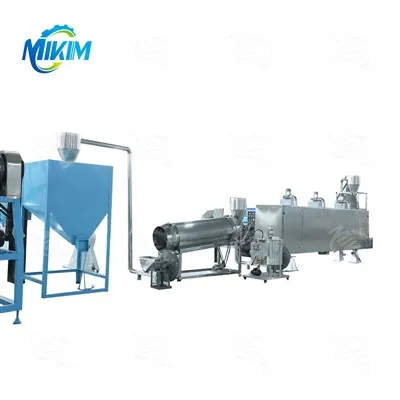
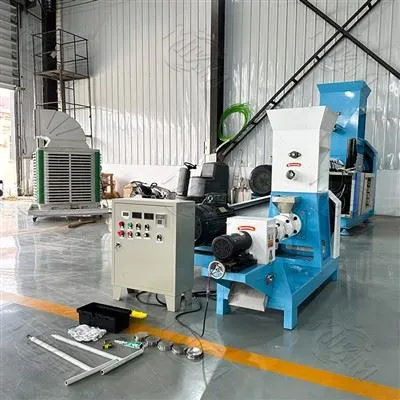
MIKIM's fish feed pellet production lines and supporting machinery offer excellent value for money. Not only are they affordable, eliminating middlemen markups and allowing small and medium-sized enterprises (SMEs) and fish farmers to purchase complete sets of equipment at reasonable costs, but they also boast exceptional efficiency. The fully automated process, from raw material crushing and precise ingredient mixing to extrusion pelleting and maturation, is completed in one continuous flow. This results in high starch gelatinization rates and uniform pellet formation, significantly improving production efficiency and feed quality, truly achieving "low cost, high output." Choosing a MIKIM fish feed pellet production line means enjoying comprehensive pre-sales and after-sales service, including 24-hour online customer support, a one-year warranty on the entire machine, professional on-site installation, commissioning, and maintenance, and a stable supply of spare parts. Customers can buy with confidence and use with peace of mind, with both excellent value and service quality!
Customer visit

Certificate of Honor

FAQ
1. What is the price of the small fish feed pellet making machine?
The price ranges from approximately $1,500-$55,000
2. Do you provide maintenance services for your customers?
Yes, we offer comprehensive after-sales maintenance services to our customers.
If you would like to learn more about MIKIM machinery, please contact us. We offer one-stop service and welcome your inquiries!!!


