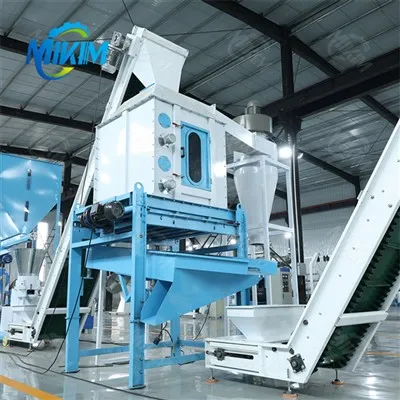
How to reduce the cost of conventional crushing processes in Floating Fish Feed Extruder Lines
Leave a message
Energy conservation and consumption reduction are the core of cost control, which can be addressed through two aspects: equipment selection and parameter optimization for floating fish feed pellet production lines. When selecting equipment, priority should be given to variable frequency energy-saving crushers, whose motor power is 15%-20% lower than ordinary equipment, and which can automatically adjust the speed according to the load, avoiding ineffective energy consumption. One feed mill reduced its electricity consumption per ton of raw material from 8 kWh to 6 kWh after replacing its ordinary hammer mill with a variable frequency model, saving 24,000 yuan in electricity costs per month. Regarding parameter optimization, a minimum effective speed should be set according to the hardness of the raw material. For example, when crushing corn, the speed can be reduced from 2500 r/min to 2000 r/min while still ensuring the particle size meets the standard, while reducing energy consumption. Production shifts should be rationally arranged, concentrating crushing operations during off-peak hours (0:00-8:00), taking advantage of the price difference between off-peak and peak electricity (0.4 yuan per kWh), saving 2.4 yuan in electricity costs per ton of raw material.
Raw material loss control is a crucial aspect of cost optimization in floating fish feed production lines. In crushing processes, raw material loss primarily stems from dust emissions and the waste of uncrushed materials, typically resulting in a loss rate of 2%-5%. Control methods include: installing sealed covers at the equipment's inlet and outlet to reduce dust leakage; employing a "graded crushing + circulating screening" system to return all large particles that do not meet standards to the crushing equipment, preventing waste; and installing a dust recovery device below the baghouse dust collector in the dust removal system, allowing the collected dust to be reused in the raw materials. A feed mill in Jiangsu province reduced its raw material loss rate from 4% to 1.2% through these measures, reducing monthly raw material waste by 12 tons and saving 30,000 yuan.
Green production focuses on environmental protection and emission reduction, with dust and noise pollution control being its core. In addition to installing dust collection systems, dust control can involve spraying environmentally friendly dust suppressants on the workshop floor to prevent secondary dust emissions. Noise control can be achieved by installing vibration-damping pads on the equipment base and attaching sound-insulating cotton to the inside of the machine casing, reducing noise levels from 85 decibels to below 70 decibels, meeting the "Industrial Enterprise Noise Hygiene Standard." For processing large amounts of dust generated from coarse fiber raw materials such as straw, "wet crushing" technology can be used. Spraying a small amount of water during the crushing process can reduce dust concentration by 60%, but the amount of water must be controlled to avoid excessive moisture in the raw materials.
Furthermore, extending the service life of fish feed processing line equipment can also reduce costs. Establishing equipment maintenance logs and regularly replacing easily worn parts such as hammers and bearings can prevent equipment failure due to excessive wear and tear, extending equipment life by 3 to 5 years and reducing depreciation costs. Through the dual optimization of green production and cost control, the crushing process not only meets environmental protection requirements but also creates significant economic benefits for enterprises.
Related equipment


about Us
MIKIM's fish feed pellet production lines and supporting machinery offer excellent value for money. Not only are they affordable, eliminating middlemen markups and allowing small and medium-sized enterprises (SMEs) and fish farmers to purchase complete sets of equipment at reasonable costs, but they also boast exceptional efficiency. The fully automated process, from raw material crushing and precise ingredient mixing to extrusion pelleting and maturation, is completed in one continuous flow. This results in high starch gelatinization rates and uniform pellet formation, significantly improving production efficiency and feed quality, truly achieving "low cost, high output." Choosing a MIKIM fish feed pellet production line means enjoying comprehensive pre-sales and after-sales service, including 24-hour online customer support, a one-year warranty on the entire machine, professional on-site installation, commissioning, and maintenance, and a stable supply of spare parts. Customers can buy with confidence and use with peace of mind, with both excellent value and service quality!
Customer visit

Certificate of Honor

FAQ
1. What is the price of the fish feed pellet production line?
The price ranges from approximately $1,500-$55,000
2. Do you provide maintenance services for your customers?
Yes, we offer comprehensive after-sales maintenance services to our customers.
If you would like to learn more about MIKIM machinery, please contact us. We offer one-stop service and welcome your inquiries!!!