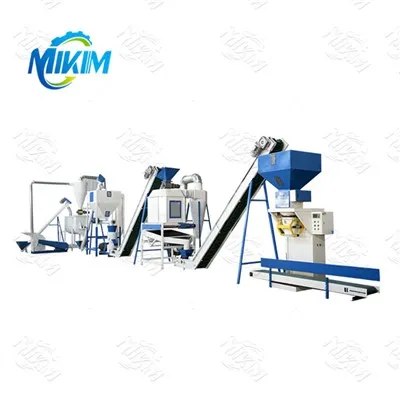
Industrial Fish Feed Making Machine and Pellet Processing
Leave a message
What Makes an Industrial Fish Feed Extrusion Line
Industrial fish feed extrusion lines are built to run around the clock and handle a variety of recipes, allowing manufacturers to create countless textures, shapes, colors, and flavors. The equipment is designed for scalable and adaptable production of nutritious, high-quality feed. All fish food equipment is made of stainless steel, which resists corrosion and keeps the product clean, and the whole line is fully continuous and automatic, so material moves from raw ingredient to finished pellet without manual handling between stages.
Equipment Flow and Automation
The fish food production line consists of: material processing machine, blender, vacuum conveyor, storage, conditioner, twin-screw extruder, air conveyor, multi-layer oven, roller, oil sprayer, flavor roller, cooling conveyor, and packaging machine. The extruder cooks and shapes the mash, the oven dries the pellets to the correct moisture, the oil sprayer and flavor roller add coating, and the cooling conveyor prepares the pellets for packaging. Because the line is fully automatic, staffing requirements stay low and production is repeatable at any hour of the day.
Flexible Product Output
The final fish food shapes and sizes can be varied by changing the mould, so the same line can serve different markets without new machinery. The line can make both floating and sinking fish feed, and the extrusion process advances the protein ratio so that the feed is digested easily by animals. This flexibility makes the line suitable for producers that supply multiple species, including carnivorous fish that need high protein levels and species that prefer sinking pellets.
Technical Specifications
| Model (Electric) | Capacity (kg/h) | Main Power | Cutting Blade Power | Cutting Power | Conditioner Power |
|---|---|---|---|---|---|
| 65 | 250-300 | 22 kW | 1.5 kW | 1.5 kW | 3 kW |
| 70 | 500-600 | 45 kW | 1.5 kW | 1.5 kW | 3 kW |
| 75 | 800-1000 | 55 kW | 1.5 kW | 1.5 kW | 3 kW |
| 85 | 1200-1500 | 90 kW | 3 kW | 2.2 kW | 5.5 kW |
| 95 | 2000-2500 | 110 kW | 3 kW | 3 kW | 11 kW |
| 120 | 3000-4000 | 160 kW | 5.5 kW | 3 kW | 15+7.5 kW |
| 136 | 5000-6000 | 200 kW | 7.5 kW | 5.5 kW | 22+7.5 kW |
Capacities range from 250-300 kg/h on model 65 to 5000-6000 kg/h on model 136, with main power from 22 kW to 200 kW. The power split between the main motor, cutter, and conditioner keeps pellet cutting accurate and gelatinization consistent at high throughput.
Precision Formulation for Different Fish Species
The line features precise formula execution. Through an intelligent proportioning system, it can mix raw materials such as fish meal, soybean meal, grains, minerals, and functional additives according to the growth stage requirements of different fish species, such as grass carp, sea bass, and salmon, with an error of less than 1%. This precision ensures uniform nutritional content in every pellet, preventing problems such as slow growth and decreased disease resistance caused by nutritional imbalances, and it allows rapid formula adjustment based on market demand. For example, protein or omega-3 fatty acid content can be raised for high-value fish, giving farmers customized feed solutions that protect aquaculture yield and product quality from the source.
FAQ
What materials are used to build the fish food equipment?
All fish food equipment is made of stainless steel, which provides corrosion resistance, easy cleaning, and a hygienic surface for feed production.
Can one line produce different feed shapes?
Yes. The final shapes and sizes are varied by changing the mould, so the same line can serve multiple markets and species.
Does the line make both floating and sinking fish feed?
Yes. The same processing line can make both floating and sinking fish feed by adjusting the extrusion process and mould configuration.
How accurate is the formula mixing system?
The intelligent proportioning system blends fish meal, soybean meal, grains, minerals, and functional additives with an error of less than 1%, so every pellet has consistent nutrition.
What capacity is available for large-scale production?
Models range from 250-300 kg/h up to 5000-6000 kg/h on model 136, with main power from 22 kW to 200 kW, covering both small plants and industrial-scale operations.
Why is stainless steel important in fish feed production?
Stainless steel resists rust and contamination, meets food-grade hygiene requirements, and holds up to continuous operation, which keeps the feed clean and the line reliable.