Floating Fish Feed vs Sinking Fish Feed: Key Differences, Advantages & How to Choose
Leave a message
🧠 Key Takeaways
Floating fish feed stays on water surface, while sinking feed drops to the bottom
Floating feed helps farmers monitor feeding and reduce waste
Sinking feed is better for bottom-feeding fish species
Choice depends on fish species, farming method, and water conditions
Extrusion technology is mainly used for floating feed production
🟡 1. What Is Floating Fish Feed?
Floating fish feed is produced using high-temperature and high-pressure extrusion technology. During processing, starch gelatinizes and expands, creating internal air pockets that allow the pellets to float on water.
✔ Key Characteristics:
- Stays on water surface
- Visible feeding behavior
- High digestibility
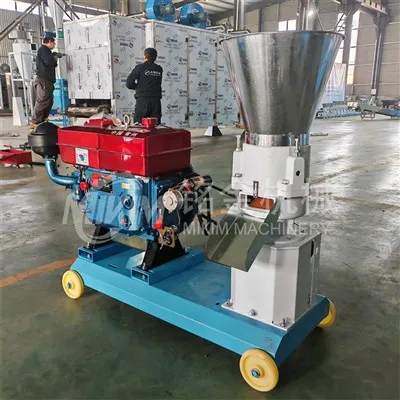
Produced by mini fish feed pellet making machine

🐟 Common Uses:
- Tilapia farming
- Catfish farming
- Carp farming
How 4 mm Floating Fish Feed Pellets Are Produced?
🟡2. What Is Sinking Fish Feed?
Sinking fish feed is produced through traditional pelletizing or low-expansion processing. The pellets are dense and sink to the bottom of the water.
✔ Key Characteristics:
- Sinks quickly in water
- Higher density
- No expansion structure
Both feed pellet mills and mini floating fish feed extruder machines are widely used in feed production

🐟 Common Uses:
- Shrimp farming
- Bottom-feeding fish
- Pond aquaculture with deep water
1 mm Sinking Shrimp Feed Pellet Production Process
🟡 3. Floating vs Sinking Feed: Key Differences
| Feature | Floating Fish Feed | Sinking Fish Feed |
|---|---|---|
| Production method | Extrusion | Compression pelletizing |
| Density | Low (expanded) | High |
| Water behavior | Floats | Sinks |
| Feed visibility | Easy to monitor | Hard to observe |
| Waste control | Better | Higher loss risk |
| Cost | Slightly higher | Lower |
🟡4. Advantages of Floating Fish Feed
✔ Better Feed Monitoring
Farmers can clearly see how much fish are eating.
✔ Reduced Feed Waste
Uneaten feed remains on surface and can be controlled.
✔ Improved Fish Growth
Extrusion cooking improves digestibility.
✔ Water Quality Protection
Less feed decomposition at bottom reduces pollution.
👉 This is why floating feed is widely used in commercial aquaculture.
🟡 5. Advantages of Sinking Fish Feed
✔ Suitable for Bottom Feeders
Ideal for shrimp and some deep-water species.
✔ Lower Production Cost
Simpler manufacturing process.
✔ Faster Sinking Behavior
Reaches bottom-feeding species efficiently.
👉 Best for specific farming environments.
🟡6. Which Fish Feed Should You Choose?
🐟 Choose Floating Feed if:
- You farm tilapia, carp, or catfish
- You want to monitor feeding behavior
- You want higher feed efficiency
🦐 Choose Sinking Feed if:
- You farm shrimp or bottom feeders
- Your pond is deep
- You prefer lower production cost
🟡 7. Production Equipment Difference
✔ Floating Feed Production:
Uses:
High temperature & pressure system
Expansion technology
✔ Sinking Feed Production:
Uses:
Pellet mill machine/Prawn feed making machine
Mechanical compression/High temperature & pressure system
No expansion system/Expansion technology
👉 Equipment choice determines feed type.
🟡 8. Cost and Efficiency Comparison
Floating feed has higher production cost due to:
- Energy consumption
- Extrusion process
- But it provides:
- Better feed conversion rate
- Lower waste
- Higher long-term profit
👉 Sinking feed is cheaper but less efficient in many farming systems.
🟡 9. Common Mistakes Farmers Make
❌ Choosing sinking feed for surface-feeding fish
→ leads to waste and low efficiency
❌ Using floating feed in deep-water shrimp farming
→ feed loss and poor utilization
❌ Ignoring feed formulation
→ affects growth rate and survival
🟡 10. FAQ
❓ Q1: Which fish feed is better?
It depends on fish species and farming method.
❓ Q2: Can floating feed sink?
If poorly produced, yes-but properly extruded feed should float.
❓ Q3: Is floating feed more expensive?
Yes, but it improves feed efficiency and reduces waste.
❓ Q4: Can one machine produce both types?
Only specialized systems can adjust, but usually machines are designed for one type.
❓ Q5: Which feed is more profitable?
Floating feed often gives better long-term ROI.
🟢 11. Conclusion: Choosing the Right Fish Feed Matters
Floating and sinking fish feed serve different aquaculture needs. Floating feed is ideal for monitoring and efficiency, while sinking feed is suitable for bottom-feeding species and cost-sensitive production.
👉 The best choice depends on your fish species, farming environment, and production goals.
Company Profile