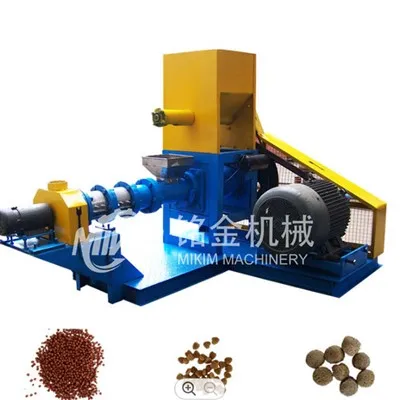
How to Produce 1.5mm Floating Fish Feed with Fish floating fish food extruder machine?
Leave a message
🧠 Key Takeaways
- Producing 1.5mm floating fish feed requires precise control of moisture, temperature, and formulation
- Fine grinding and uniform mixing are critical for small pellet formation
- High starch content improves expansion and floating performance
- Proper die size and cutter adjustment ensure uniform pellet diameter
- Stable extrusion conditions prevent blockage and ensure consistent output
🟡 1. Why 1.5mm Floating Feed Is Difficult to Produce?
Small pellets behave differently during extrusion.
❗ Main Challenges:
- Easy to break during cutting
- Lower expansion compared to larger pellets
- Higher risk of blockage
- Requires finer raw materials
👉 Without proper control, pellets may sink or become powdery.
🟡 2. Raw Material Requirements
✔ Particle Size
Must be ≤0.5 mm
Fine grinding is essential
✔ Moisture Content
20–25% before extrusion
✔ Recommended Formula
| Ingredient | Function |
|---|---|
| Corn flour | Starch for expansion |
| Soybean meal | Protein source |
| Fish meal | Nutrition |
| Wheat flour | Binding |
👉 Starch content is key to floating ability.

🟡 3. Step-by-Step Production Process of floating fish feed extruder machine
🔧 Step 1: Fine Grinding
Raw materials are ground into ultra-fine powder.
👉 Ensures smooth extrusion and prevents blockage.
🔧 Step 2: Mixing
Materials are mixed uniformly.
👉 Uneven mixing leads to unstable pellet quality.
🔧 Step 3: Conditioning
Water or steam is added to adjust moisture.
👉 Proper moisture improves expansion.
🔧 Step 4: Extrusion
Inside the floating fish feed pellet maker machine:
- High temperature cooks the feed
- Pressure builds up
- Starch gelatinizes
👉 This creates the floating structure.
🔧 Step 5: Die & Cutting Adjustment
Use 1.5mm die holes
Adjust cutter speed carefully
👉 Critical for pellet size consistency.
🔧 Step 6: Drying
- Reduce moisture to ≤10%
- Improve storage life
🔧 Step 7: Cooling
- Stabilizes pellet shape
- Prevents breakage
🟡 4. Key Parameters for 1.5mm Feed Production
| Parameter | Recommended Range |
|---|---|
| Particle size | ≤0.5 mm |
| Moisture | 20–25% |
| Temperature | 120–160°C |
| Screw speed | Medium-high |
| Starch content | ≥20% |
👉 These parameters directly affect floating rate and pellet strength.
🟡 5. How to Improve Floating Performance?
✔ Increase Starch Content
More starch = better expansion
✔ Control Temperature
Higher temperature improves puffing
✔ Maintain Proper Moisture
Too dry → poor expansion
Too wet → soft pellets
🟡 6. Common Problems and Solutions
❌ Problem 1: Pellets sink
✔ Solution: increase starch and temperature
❌ Problem 2: Pellets break easily
✔ Solution: improve grinding fineness
❌ Problem 3: Machine blockage
✔ Solution: ensure uniform particle size See detailed solutions
❌ Problem 4: Uneven pellet size
✔ Solution: adjust cutter speed View detailed solutions
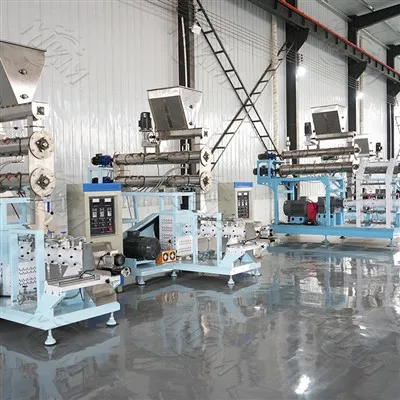
🟡 7. Equipment Configuration Recommendation
For stable 1.5mm production:
Floating fish feed pellet extruder machine
Dryer
👉 Proper equipment setup ensures consistent quality.

🟡 8.Application of 1.5mm Floating Fish FeedJuvenile fish feeding
Hatchery operations
High-value aquaculture species
👉 Smaller pellets improve feeding efficiency and growth rate.
🟡 9. FAQ
❓ Q1: Why is 1.5mm feed harder to produce?
Because it requires finer materials and precise extrusion control.
❓ Q2: Can all machines produce 1.5mm pellets?
No, it requires proper die size and stable extrusion conditions.
❓ Q3: What affects floating performance the most?
Starch content, temperature, and moisture.
❓ Q4: How to prevent blockage?
Use fine grinding and uniform raw materials.
❓ Q5: Is 1.5mm suitable for all fish?
Mainly for juvenile fish and early growth stages.
🟢10 Conclusion: Mastering Small Pellet Production
Producing 1.5mm floating fish feed requires precise control of raw materials, machine parameters, and production processes. With proper setup and optimization, it is possible to achieve stable production, high floating rate, and excellent pellet quality.
👉 Mastering these details can significantly improve feed efficiency and aquaculture profitability.
Company Profile