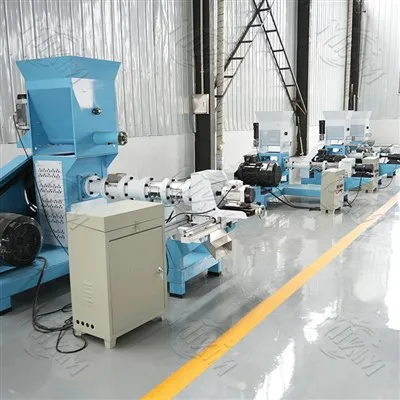
180-200kg per hour small floating fish feed making machine working video
Leave a message
🧠 Key Takeaways
- 180–200kg/h small floating fish food pellet maker machine is a stable medium-capacity solution
- Real factory test confirms consistent output and floating performance
- Suitable for growing fish farms and small feed businesses
- Feed quality depends heavily on formula and moisture control
- Ideal balance between cost and productivity
🐟 Introduction: Why 180–200kg/h small fish food pellet making machines Are Popular
The 180–200kg/h small fish feed pellet making machine is one of the most commonly selected medium-scale aquaculture feed production solutions. It sits between small home-use machines and large industrial production lines, making it ideal for growing fish farms and small feed businesses.
Before purchasing, most buyers want to know:
- Is the output really 180–200kg/h in real production?
- Is the machine stable during continuous operation?
- Can it produce high-quality floating fish feed?
This article is based on a real factory working video test, combined with performance data and practical analysis.
🎥 Real Working Video Test: How the Machine Performs in Factory?
The small floating fish feed pellet extruder mill was tested under real production conditions before shipment.
Test setup:
- Raw materials: corn flour, fish meal, soybean meal, wheat bran
- Moisture content: 20%–25%
- Pellet size: 2–6 mm
- Operation mode: continuous production test
- Operator: trained technician
What we observed during testing:
- Stable feeding system without interruption
- Continuous extrusion without clogging
- Smooth pellet cutting process
- Consistent discharge of finished pellets
Pellet quality performance:
- Uniform shape and size
- Good floating performance in water
- Low breakage rate
- Clean and smooth surface
💡 Key insight:
The machine maintains stable output even under continuous load, which is critical for commercial fish feed production.
⚙️ Machine Overview: How the 180–200kg/h small floating fish food pellet making machine Works?
This small floating fish food pellet making machine uses a single-screw extrusion system to process raw materials under high temperature and pressure, forming expanded floating fish feed pellets.
Main specifications:
- Output capacity: 180–200 kg/h
- Power: 15–22 kW
- Structure: single-screw extruder
- Pellet size range: 2–8 mm (adjustable die)
- Heating system: electric heating or friction heat
Working principle:
- Raw materials are fed into the hopper
- Screw pushes material forward under pressure
- High temperature and pressure cause gelatinization
- Material expands and is cut into pellets
- Finished pellets are discharged and cooled
🧪 Real Test Data: Output & Stability Performance
| Item | Result |
|---|---|
| Output Capacity | 180–210 kg/h |
| Pellet Size | 2–6 mm |
| Floating Rate | 90–100% |
| Running Stability | Continuous stable operation |
| Power Load | Medium |
| Surface Quality | Smooth and uniform |
👉 Conclusion:
The machine achieves near-rated output under real operating conditions.
★Click to learn more details about the floating fish feed pellet mill.
🐠 Fish Feed Pellet Quality Analysis
1. Is the output stable?
Yes, the machine maintains consistent production during continuous operation.
2. Are pellets suitable for aquaculture use?
Yes, pellets are fully suitable for fish farming applications.
3. Do pellets float well?
Yes, floating rate can reach up to 90–100% depending on formula.
💡 Industry insight:
Pellet quality depends more on formulation and moisture control than machine size.


🥩 Raw Materials & Feed Formula Requirements
The small floating fish feed pellet mill supports common fish feed ingredients:
- Fish meal
- Corn flour
- Soybean meal
- Wheat bran
- Vitamin and mineral premix
Key production factors:
- Fine grinding improves extrusion stability
- Balanced protein improves floating performance
- Moisture control (20–25%) is critical

🔍 Who Should Use the small floating fish feed pellet maker machine?
✅ Ideal for:
- Medium-sized fish farms
- Small feed production businesses
- Aquaculture cooperatives
- Commercial startup feed factories
❌ Not suitable for:
- Home use small ponds
- Large industrial feed plants
- Fully automated high-capacity production lines
👉 This machine is designed for growth-stage businesses.
⚖️ 180–200kg/h vs Small & Large Machines
| Feature | 180–200kg/h Machine | 100kg/h Machine | 500kg/h Line |
|---|---|---|---|
| Output | Medium | Low | High |
| Investment | Medium | Low | High |
| Stability | Good | Good | Excellent |
| Usage | Business growth | Starter | Industrial |
🧰 Operation Tips for Stable Production
Based on factory experience:
1. Keep moisture at 20–25%
Ensures stable extrusion and floating performance.
2. Preheat machine before feeding materials
Helps stabilize internal temperature.
3. Avoid sudden formula changes
Maintains consistent pellet quality.
4. Clean machine before shutdown
Prevents material buildup inside screw chamber.
💡 Industry insight:
Around 70% of final pellet quality depends on formula, 30% depends on machine operation.
🌍 Real Application Scenario
This small fish feed pellet maker machine is widely used in:
- Medium fish farming operations
- Local feed production workshops
- Aquaculture cooperatives
- Small commercial feed factories
Typical results:
- Reduced feed cost
- Stable daily production
- Better control of feed quality
❓ FAQ: Common Buyer Questions
1. Is 180–200kg/h real output or theoretical?
It is real output under stable operating conditions with proper raw material preparation.
2. Can it produce floating fish feed?
Yes, it is designed for floating fish feed production.
3. Is the machine difficult to operate?
No, it is suitable for operators with basic training.
4. Can pellet size be adjusted?
Yes, by changing the die.
5. What is the delivery time?
Usually 7–15 working days depending on configuration.
🔗 Related Topics
Dry Type vs. Wet Fish Feed Pellet Extruder Machines Comparison
How to Properly Assemble a Single-Screw Floating Fish Feed Pellet Maker Machine
Single screw vs twin screw extruder comparison
🎯 Final Insight
The 180–200kg/h mini fish feed pellet making machine is not just a piece of equipment-it is a bridge between small-scale farming and commercial feed production.
When properly operated, it can deliver stable, high-quality floating fish feed suitable for real commercial aquaculture use, making it a strong choice for businesses ready to scale up.
Company Profile