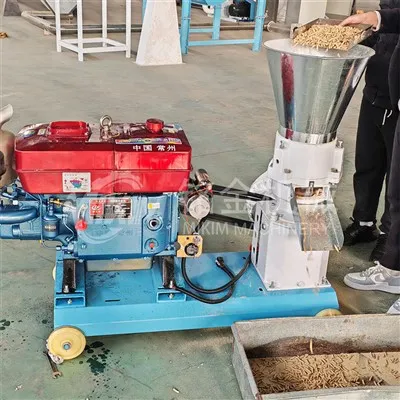
Why Pellet Mill Prices Vary So Widely and How to Judge Quality Before Purchase
Leave a message
Why Quotations for the Same Output Differ So Much
Two ring die pellet mills both advertised at 2 t/h can differ in price by a factor of two or more. The difference is not marketing. It comes from the motor and reducer class, the materials and heat treatment of the die and rollers, the fabrication tolerance of the ring die seat, and the depth of the after-sales network. Buyers who compare only the headline output and the headline price are comparing two different machines.
The first step in any honest comparison is to fix the specification before asking for prices: pellet diameter range, formula type, power supply, motor efficiency class, reducer type, die compression ratio, control panel scope and warranty terms.
Cost Structure: Where the Money Goes
| Component | Share of machine cost | What separates cheap from durable |
|---|---|---|
| Motor and drive train | 25-35% | Efficiency class, insulation class, hardened reducer versus belt drive |
| Ring die and rollers | 15-25% | Alloy composition, heat treatment depth, hole taper accuracy |
| Main frame and housing | 15-20% | Plate thickness, welded stress relief, machining tolerance |
| Conditioner and feeder | 10-15% | Stainless or mild steel, steam injection design |
| Electrical control | 8-12% | Component class, overload protection, interlock completeness |
| Assembly and testing | 5-10% | Run-in test hours and documentation supplied |
Motor nameplate ratings should be read against IEC 60034-1, because a machine sold on intermittent duty data can look more powerful on paper than a correctly rated continuous-duty unit. Insulation class and temperature rise limits in the same standard are the figures that predict how the machine behaves in an eight-hour shift.
How Quality Shows Up in Service Life
Quality is not visible in a photograph. It appears in three places during operation. First, the ammeter: a well-built machine runs at a steady current for the whole shift, while a poorly aligned one drifts upward as the die heats. Second, the die life: a correctly heat-treated die holds its hole taper for several hundred tonnes of feed, whereas a case-hardened die with shallow depth loses its compression ratio much earlier. Third, the vibration reading at the main bearing housing, which should stay low and stable; rising vibration usually means bearing clearance grew because the frame was not stress-relieved after welding.
Specification Discipline: Buy by Rated Output and Current
The practical way to compare offers is to norm them to a single figure: tonnes per hour at a stated pellet diameter and formula, at a stated motor current. Ask for the factory test record showing output, die specification and current draw on a typical formula. Where the record is not supplied, the output figure in the brochure should be treated as a nominal value, not a guarantee. Power supply, ambient temperature and formula composition all shift real output by 10-20%, so the same machine can honestly be quoted at two different capacities for two different customers.
Five-Year Cost of Ownership
Purchase price is only part of the cost. A machine that costs less but consumes 8% more energy at the same output, and needs a die replacement twice as often, is usually the more expensive choice over five years. Energy, dies and rollers, bearings and downtime should be estimated per tonne of feed produced, and the comparison made on that basis. Availability matters equally: a shutdown of two days because a die set has to be imported costs more than the price difference between a cheap unit and a properly supported one.
Frequently Asked Questions
Q: Is a higher price always a sign of better quality?
A: No. Price only becomes meaningful once the specification is fixed; the same machine can be quoted at two prices with different dies, motors and control scope included.
Q: Which specification items should be fixed before requesting prices?
A: Pellet diameter range, formula type, required output at a stated current, motor efficiency and insulation class, die compression ratio, control panel scope and warranty period.
Q: How long should a ring die last?
A: Several hundred tonnes of feed at a steady current draw for a properly heat-treated die; the working life depends mainly on formula abrasiveness and on correct roller-to-die clearance.
Q: What does a rising ammeter reading during a shift indicate?
A: Usually that the die is heating and compressing material less efficiently, or that roller clearance has grown; it is a maintenance signal rather than a reason to slow the feeder.
Q: How much can ambient conditions change real output?
A: By 10-20% for the same machine and formula, so a factory test record stating formula, pellet size and ambient temperature is worth more than a nominal figure.
Q: Which motor standard should be written into the order?
A: IEC 60034-1, with the duty cycle, efficiency class and insulation class stated explicitly, so that the delivered motor can be verified against the nameplate on arrival.