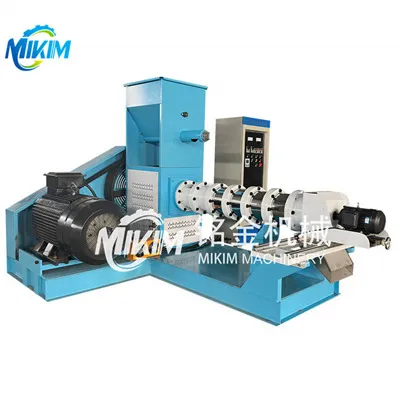
Homemade Feed with a Feed Pellet Machine: Low-Cost Guide
Leave a message
Why Make Homemade Feed?
Many smallholders and backyard keepers consider producing their own feed to reduce cost and control quality. Making feed at home is not difficult: with a feed pellet machine, the process is simple and repeatable. A small pellet mill converts local raw materials into pressed pellets at a fraction of the cost of purchased feed, and the operator controls exactly what goes into every batch.
What a Feed Pellet Machine Can Process
A feed pellet machine can process straw, rice straw, grains, and similar materials into feed pellets. The processed pellets come out hot-pressed and partially cooked, which improves handling and palatability compared with loose mash. It is important to remember that fibrous plants such as straw and rice straw cannot be pressed directly; they must be crushed first. A grass chopper and kneading machine are sufficient for this task, so there is no need to invest in large equipment such as a wood crusher.
Choosing a Model: Capacity and Power
Five common models cover outputs from 80 to 800 kg/h. The table below summarizes capacity, power, and dimensions.
| Model | Capacity | Power | Dimension |
|---|---|---|---|
| 125 | 80-100 kg/h | 3 kW | 110 x 35 x 70 cm |
| 150 | 120-150 kg/h | 4 kW | 115 x 35 x 80 cm |
| 210 | 200-300 kg/h | 7.5 kW | 115 x 45 x 95 cm |
| 260 | 500-600 kg/h | 15 kW | 138 x 46 x 100 cm |
| 300 | 700-800 kg/h | 22 kW | 130 x 53 x 105 cm |
Household and small-farm users usually start with the 125 or 150 model, while larger operations choose the 260 or 300 model. Check that the available single-phase or three-phase supply matches the motor rating.
How to Prepare Raw Materials
It is possible to make pellets from a single raw material such as straw alone, but the nutrition of such pellets is too monotonous, and long-term feeding is not good for small animals. The more varied the raw material mix, the richer the nutrition. In practice, several materials should be mixed together: a base of grain or bran for energy, a protein source such as soybean meal, and chopped straw for fiber. After the raw materials are mixed evenly, feed them into the pellet machine to press the pellets.
Practical Tips for First-Time Users
Crush fibrous material to a consistent fineness before mixing; uneven particles cause die blockage. Adjust moisture: material that is too dry produces dusty, crumbly pellets, while overly wet material slips in the die. Start the machine with a small feed rate until the die warms up and pellets flow steadily, then increase to the rated output. Clean the die after each run so the holes stay open for the next batch.
FAQ
Is it difficult to make feed at home?
No. With a feed pellet machine, the process is simple: crush fibrous material, mix the ingredients, and press them into pellets; the machine does the rest.
What materials can a feed pellet machine process?
Straw, rice straw, grains, and similar materials, usually combined into a mixed formula rather than used alone for better nutrition.
Can I press straw directly into pellets?
No. Straw and rice straw must be crushed first, for example with a grass chopper and kneading machine, before they can be pressed into pellets.
Which model suits a small farm?
Models 125 (80-100 kg/h) and 150 (120-150 kg/h) suit household and small-farm use; the larger 260 and 300 models reach 500-800 kg/h for bigger operations.
Why should I mix several raw materials?
A single raw material produces monotonous nutrition that is not ideal for long-term feeding; mixing grain, protein sources, and chopped straw gives animals a more balanced diet.
Why do the pellets come out hot?
The die and roller friction heat the material during pressing, so the pellets emerge hot-pressed and partially cooked, which improves their stability and palatability.