


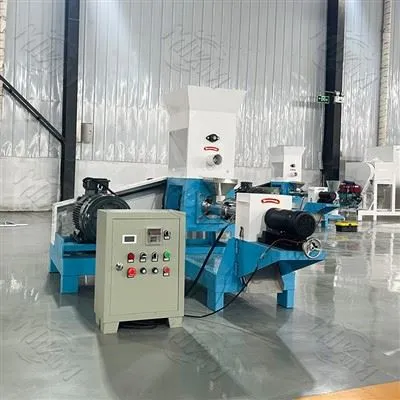
How can a dog food extruder machine balance nutrition and palatability when making dog food?
Leave a message
Making dog food with a dog pellet making mill is fundamentally about making it "edible." The core goal is to optimize the process to make it "tasty" and "health-promoting." This requires precise control over nutrient retention and flavor enhancement, while mitigating risks that could compromise quality.
The key to achieving nutritional balance lies in optimizing process parameters to minimize nutrient loss. Heat-sensitive nutrients in dog food (such as Vitamin A, taurine, and probiotics) are easily destroyed by high temperatures. The optimization of the dog pellet maker machine focuses on "short-duration high temperature + precise temperature control." On one hand, the residence time of raw materials in the high-temperature zone is shortened by increasing the screw speed to 200-250 rpm, controlling the residence time of raw materials in the extrusion chamber to 3-5 seconds, minimizing nutrient loss. On the other hand, segmented temperature control is used, raising the temperature to 100-110℃ only in the discharge section, while maintaining 70-80℃ in the feeding and compression sections, preventing overall nutrient loss due to continuous high temperatures. For active ingredients such as probiotics and enzymes, a "post-addition" process is used.
After the extruded granules are cooled to below 40°C, they are evenly adhered to the granule surface via spraying, ensuring their activity is not destroyed.
Improving palatability requires optimization in both flavor enhancement and texture shaping. Regarding flavor, the Maillard reaction of dry-type dog meal extruders is used to enhance the natural meat aroma. Appropriate amounts of glucose or lactose are added to the raw materials, reacting with amino acids in the meat meal at high temperatures to generate flavor substances similar to roasted meat. This natural flavor is more appealing to dogs than artificial flavorings. Simultaneously, the extrusion temperature is controlled at 100-110°C to prevent the flavor substances from carbonizing and producing a burnt or bitter taste. Regarding texture, granule hardness is controlled by adjusting the die orifice size and pressure. Small dog food uses a 2-2.5mm orifice size and a pressure of 4-5MPa to produce soft granules; large dog food uses a 4-5mm orifice size and a pressure of 6-7MPa to create a crisp texture. In addition, spraying 5%-8% chicken or fish oil onto the surface of the kibble not only enhances the flavor but also makes the texture smoother, further improving palatability.
When balancing nutrition and palatability, three key points need to be considered. First, the ingredient ratio must be scientific, with animal protein accounting for no less than 25% to ensure adequate amino acid supply; add 5%-10% dietary fiber (such as beet pulp or chicory root) to promote intestinal motility; avoid using too much corn, wheat, or other grains to prevent allergies in dogs.
Second, avoid over-expansion. Excessive expansion will make the kibble too loose, prone to crumbling, and will also destroy some nutrients. The expansion degree needs to be maintained at 1.2-1.5 times by controlling pressure and temperature.
Third, conduct thorough testing of the finished product. Each batch of dog food should be sampled and inspected. Use sensory evaluation to assess flavor and texture, and use professional instruments to test the content of nutrients such as protein and fat to ensure it meets the nutritional needs of dogs. For families making homemade dog food, it is recommended to make small batches each time, observe the dog's eating habits and physical reactions, and adjust the formula and processing parameters as needed.
Related equipment


about Us
Customer visit

Certificate of Honor

FAQ
1. What is the price of the automatic dog food making mill?
The price ranges from approximately $4,500-$35,000
2. Do you provide maintenance services for your customers?
Yes, we offer comprehensive after-sales maintenance services to our customers.


