


What are the differences between a flat die pellet mill and a ring die pellet mill?
Leave a message
In the feed pellet mill market, flat die pellet mills and ring die pellet mills are the two most common types, and many farmers and small feed mills confuse the two when selecting a model. In fact, the core difference lies in their structural design. Flat die pellet mills use a "flat die + pressure roller compression" structure, while ring die pellet mills use a "ring die + pressure roller extrusion" structure. These different structural designs result in drastically different working methods and performance characteristics.
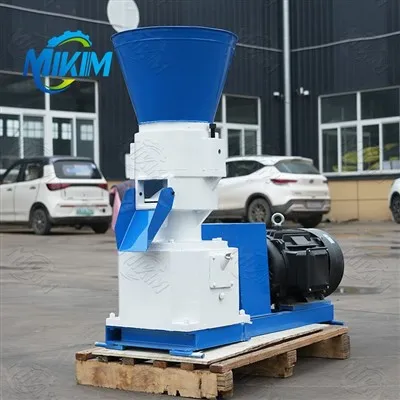
The structural difference in the core components is the most obvious distinction. The core component of a flat die pellet mill is a horizontally placed circular flat die (referred to as "flat die"). Cylindrical die holes are evenly distributed on the die surface, with hole diameters typically between 2-8mm, and can be replaced as needed. Pressure rollers are mounted above the flat die, usually 2-3 in number, rotating around a central axis. The core component of a ring die pellet mill is a cylindrical ring die (referred to as "ring die"). Die holes are evenly distributed on the sidewalls of the ring die. Pressure rollers are installed inside the ring die, usually 2-4 in number, tightly fitted against the inner wall of the ring die. In terms of materials, flat dies are mostly made of ordinary alloy steel or cast iron, resulting in lower costs; ring dies, on the other hand, are mostly made of high-strength alloy steel, nitrided to achieve a hardness of HRC60 or higher, offering superior wear resistance.
The difference in their force-bearing principles and operating methods determines their extrusion effects. In a flat die pellet mill, the motor drives the pressure rollers to rotate via a transmission system. Raw materials fall from the hopper between the flat die and the pressure rollers. Under the crushing action of the rollers, the raw materials are squeezed into the die holes of the flat die and extruded from below to form pellets. This "crushing" force-bearing method has the advantages of simple structure and convenient operation, but the extrusion pressure is relatively low, typically between 3-5 MPa, and the pressure distribution is uneven, with lower pressure on materials closer to the central axis and higher pressure on materials farther from the central axis. When a ring die pellet mill is working, the motor drives the ring die to rotate, while the pressure rollers, fixed to the shaft, passively rotate with the ring die. Raw material falls from the hopper inside the ring die. Under the centrifugal force generated by the rotating ring die and the squeezing action of the pressure rollers, the raw material is forced into the die holes of the ring die, extruded from the outside of the holes, and then cut into pellets of a set length by a cutter. This "extrusion" force method results in higher pressure, reaching 8-15 MPa, and the pressure distribution is uniform, allowing the raw material to be fully extruded and shaped.
Differences in the forming process lead to differences in pellet quality. Flat die pellet mills typically have a pellet formation rate between 85% and 90%, with relatively rough surfaces, lower density, and poor foam resistance, making them suitable for short-term storage and use. Ring die pellet mills can achieve a pellet formation rate of over 95%, producing denser pellets with smoother surfaces. Their density is 1.2-1.5 times that of flat die pellets, and they have strong foam resistance; the foam resistance time for aquatic feed can reach over 40 minutes, making them more suitable for long-term storage and large-scale aquaculture.
Related equipment



about Us
Customer visit

Certificate of Honor

FAQ
1. What is the price of the food pellet making machine?
The price ranges from approximately $1,500-$35,000
2. Do you provide maintenance services for your customers?
Yes, we offer comprehensive after-sales maintenance services to our customers.


