How Can Efficient Feed Production Equipment Help the Development of the Breeding Industry?
Leave a message
Introduction
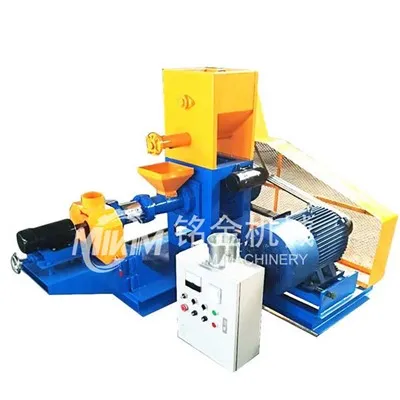
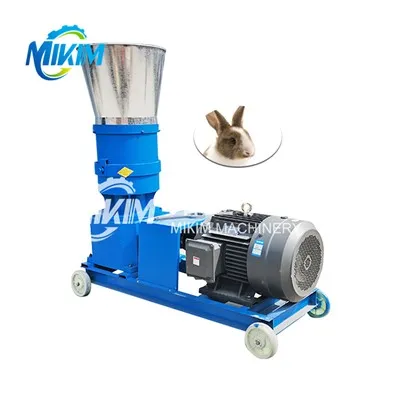
High-efficiency feed production equipment is the machinery that turns the breeding industry's feed cost from a fixed burden into a controllable variable. It refers to equipment that uses advanced machinery and automation technology to quickly, continuously and stably process raw materials into feed products that meet the needs of breeding, including mechanical equipment for multiple links such as raw-material crushing, mixing, granulation, drying and cooling. This article explains the four ways it helps the livestock industry and the four technical features that deliver the results.
Improves production efficiency through continuous automated operation.
Ensures uniform feed quality through precise batching and controlled processing.
Saves production costs by reducing labor, waste and energy per ton.
Promotes scale development by making larger flocks manageable.
Key features: intelligent control, modular design, environmental protection and easy maintenance.
1. Improve Production Efficiency
Efficient feed equipment processes raw materials continuously through crushing, mixing, granulation, drying and cooling without the pauses that manual processing requires. The same crew produces more feed per shift, and the line can run beyond daytime hours when demand requires. Production efficiency is the foundation of the other benefits, because every cost reduction is calculated per ton of output.
2. Ensure Uniform Feed Quality
Uniform feed quality is the result of precise batching and controlled processing. Every batch follows the same formula, the same conditioning and the same pressing parameters, so the animals receive identical nutrition day after day. Uniform quality reduces the growth variation within a flock, which is one of the most direct contributors to profitability, because the weakest animals cost as much to feed as the strongest.
3. Save Production Costs
Efficient equipment saves costs in three places at once: labor, because automation replaces manual handling; waste, because precise batching eliminates over- and under-dosing; and energy, because modern drives and insulated processes consume less per ton. For farms feeding thousands of animals, these savings compound into a significant share of annual operating cost.
4. Promote the Scale Development of Livestock Farms
Feed production capacity is usually the constraint on farm expansion. Efficient equipment removes that constraint: a farm that can produce its own feed reliably can grow its flock without depending on purchased feed availability or price. This is why the adoption of efficient feed equipment and the scale development of livestock farms move together.
Key Technical Features in Practical Application
Four technical features make the equipment effective. The intelligent control system monitors and adjusts the process automatically, keeping quality stable with minimal operator intervention. The modular design lets farms expand capacity or change product lines by adding modules instead of replacing machines. Environmental protection and energy saving reduce emissions and power cost, which matters for compliance and for the operating margin. Easy maintenance keeps the line in service: accessible wear parts and simple service procedures mean less downtime and lower maintenance cost. Together these four features are what distinguish high-efficiency equipment from simply larger equipment.
Frequently Asked Questions
What counts as high-efficiency feed production equipment? Equipment using advanced machinery and automation to process raw materials quickly, continuously and stably, covering crushing, mixing, granulation, drying and cooling.
How does it improve production efficiency? Continuous automated operation removes the pauses of manual processing, producing more feed per shift with the same crew.
How does it ensure feed quality? Precise batching and controlled processing deliver identical nutrition batch after batch, reducing growth variation within the flock.
Where do the cost savings come from? Labor, because automation replaces manual handling; waste, because precise batching prevents over- and under-dosing; and energy, because modern drives consume less per ton.
Why is modular design valuable? It lets farms expand capacity or change product lines by adding modules instead of replacing machines, protecting the original investment.
How does efficiency help farm expansion? Feed capacity is usually the constraint on growth; efficient equipment removes it, letting farms expand without depending on purchased feed availability.