How does a diesel floating fish feed pellet maker machine work?
Leave a message
🧠 Key Takeaways
- Diesel engine replaces electric motor to drive fish feed extruder
- Mechanical energy is converted into extrusion pressure and heat
- Floating feed is formed through high temperature and expansion
- Ideal for off-grid and rural aquaculture environments
- Stable engine speed directly affects pellet quality
★Click to learn more about the diesel-powered floating fish feed processing machine.
🔍 Introduction: Why diesel floating fish feed pellet extruder machines Are Important
In many aquaculture regions around the world, electricity supply is unstable or completely unavailable. For fish farmers in these areas, production cannot depend on grid power.
This is where the diesel floating fish feed pellet extruder machine becomes a practical and reliable solution. Instead of using electricity, it relies on a diesel engine to drive the entire extrusion system, enabling continuous floating fish feed production in remote or off-grid locations.
👉 But how exactly does a fish feed extruder work when powered by a diesel engine? Let's break it down step by step.
⚙️ Working Principle: How Diesel Power Becomes Feed Pellets
🔄 Energy Conversion Process Explained
A diesel engine fish feed extruder works by converting fuel energy into mechanical motion:
- Diesel fuel is burned inside the engine
- The engine produces rotational mechanical power
- Power is transmitted through a belt or coupling system
- The screw shaft inside the extruder rotates
- Raw materials are pushed, compressed, and heated
- Expanded floating pellets are formed at the die outlet
💡 In simple terms:
Diesel energy → Mechanical rotation → High pressure extrusion → Floating fish feed pellets
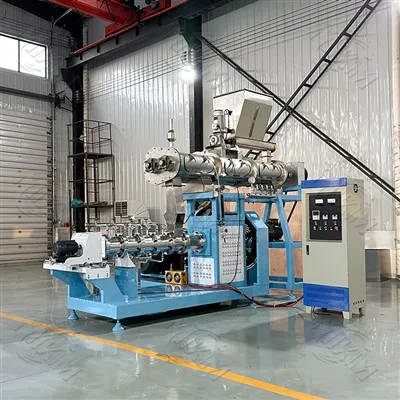
🧩 Machine Structure: Key Components of diesel floating fish feed pellet making machine
⚙️ Main System Components
A diesel-powered fish feed extruder typically includes:
- Diesel engine: Primary power source replacing electric motor
- Transmission system: Belt or direct coupling for power transfer
- Feeding system: Controls raw material input
- Extrusion chamber (screw & barrel): Core processing unit
- Heating & friction system: Generates cooking temperature
- Die head & cutter system: Shapes and sizes pellets
💡 Each part works together like a mechanical "feed factory in motion."
🔥 Extrusion Process: How Floating Fish Feed Is Formed
🌊 High Temperature & High Pressure Transformation
Inside the extrusion chamber:
- Raw materials are compressed by the rotating screw
- Friction generates heat naturally
- Starch is gelatinized under pressure
- Moisture expands rapidly when exiting the die
- Feed becomes porous and lightweight
👉 This process allows pellets to float on water for 12–24 hours, making feeding more efficient and reducing waste.
🚜 Why Diesel Engine Is Used Instead of Electricity
⚡ Practical Advantages in Real Farming Conditions
Diesel engine extruders are widely used because they:
- Operate without electricity
- Work in remote or rural farms
- Provide stable torque output
Are suitable for mobile production setups
💰 Key Benefits:
- Independent from power grid
- Reliable in emergency situations
- Suitable for field production
- Lower infrastructure dependency
💡 This makes diesel floating fish feed making machines especially valuable in developing aquaculture regions.
🐟 Application Scenarios in Aquaculture Industry
🌍 Where This Machine Is Commonly Used
- Small and medium fish farms
- Tilapia, catfish, carp farming
- Remote pond aquaculture systems
- On-site feed production projects
👉 It is especially popular in Africa, Southeast Asia, and rural South America.
⚙️ Operation Process: Step-by-Step Guide
🛠️ How to Run a diesel fish feed pellet maker machine
- Check diesel engine oil, fuel, and cooling condition
- Start the diesel engine and allow stable idle speed
- Adjust engine RPM to working level
- Start feeding raw materials gradually
- Observe extrusion pressure and pellet shape
- Adjust cutter speed for pellet length control
💡 Stable engine speed = stable pellet quality.
⚠️ Common Problems and Practical Solutions
❗ 1. Uneven Pellet Size
Cause: unstable engine speed
Solution: stabilize throttle and maintain consistent RPM
❗ 2. Machine Blockage
Cause: high moisture or improper raw material ratio
Solution: adjust formulation and reduce moisture content
❗ 3. Low Floating Performance
Cause: insufficient starch gelatinization
Solution: increase cooking temperature and improve raw material balance
❗ 4. Excessive Fuel Consumption
Cause: overloaded operation
Solution: reduce feeding rate and optimize screw load
❓ FAQ:
❓ How does a diesel engine drive a fish feed extruder?
The diesel engine produces mechanical rotation power, which is transmitted through belts or couplings to rotate the screw inside the extruder, enabling extrusion and pellet formation.
❓ Is a diesel fish feed pellet making machine efficient for commercial production?
Yes, it is highly efficient in areas without electricity and can produce stable floating fish feed for small to medium-scale aquaculture operations.
❓ What type of fuel is required?
Standard diesel fuel is used. Fuel consumption depends on machine size and production load.
❓ Can pellet quality match electric extruders?
Yes, if engine speed is stable and raw materials are properly formulated, pellet quality can be comparable to electric models.
❓ What is the biggest advantage of diesel extruders?
The main advantage is independence from electricity, making it ideal for remote farms and unstable power regions.
Company Profile