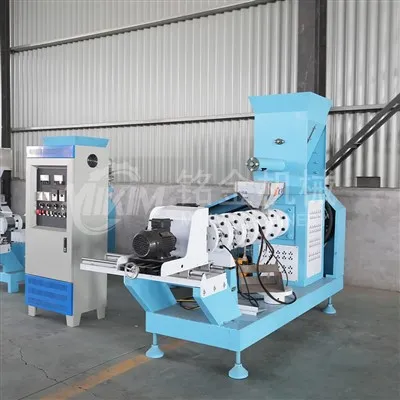
How is a tiny fish feed extruder machine structured?
Leave a message
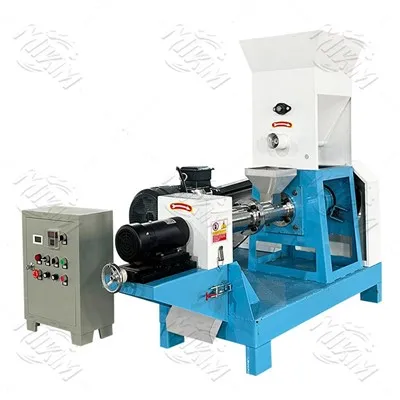
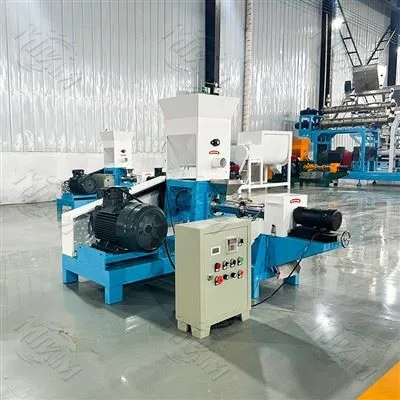
The core design principle of a small-scale floating fish feed machine is "space optimization and functional integration." It integrates multiple systems from traditional large-scale equipment, forming a unified layout of "feeding-conditioning-expansion-pelletizing-cooling." The total floor space is typically 1-2 square meters. The core structure includes an integrated hopper, a mini conditioner, a single-screw extruder, and a combined pelleting and cooling module, while also accommodating multiple feed production capacities.
The integrated hopper is the "first step" in space optimization, combining the feed hopper, storage bin, and feeding device into one unit with a total capacity of 30-50L, sufficient for small-scale production needs (100-300 kg/hour). The hopper's inner wall features a 30° inclined design to prevent raw material accumulation. The feeding device uses a miniature screw feeder with a diameter of only 80mm, driven by a variable frequency motor. The feeding rate can be adjusted within the range of 5-30 kg/h, ensuring stable delivery of both fishmeal mixtures for aquatic feed and corn and soybean meal for livestock feed. The top of the hopper is equipped with a dust cover to prevent dust from flying during production and keep the workshop clean.
The mini conditioner adopts a horizontal single-shaft design, only 600mm in length, 40% shorter than large equipment, but its optimized agitator structure ensures excellent conditioning results. The agitator uses a "blade + spiral" composite design, which both propels the raw materials forward and achieves thorough mixing. The steam interface is adjustable, allowing for adjustments to the steam supply based on the moisture content of the raw materials, controlling the moisture content to 15%-17%. For commonly used raw materials such as corn and wheat bran, the conditioner can quickly raise the raw material temperature to 80-90℃, preparing it for puffing; for high-protein raw materials such as fishmeal, the steam supply can be reduced to avoid over-conditioning and nutrient loss.
The single-screw puffing device is the core of the fish pellet machine. The screw diameter is 80-120mm, and it adopts an integral structure for easy disassembly and cleaning by farmers. The screw sleeve surface is treated with a wear-resistant coating, with a service life of over 800 hours, capable of withstanding the wear of different raw materials. The puffing chamber uses a jacketed temperature control system, heated electrically, with a temperature range of 70-140℃. This is more suitable for farmers than steam heating (eliminating the need for a steam boiler). The puffing pressure is adjusted via the die orifice diameter. A 4.0mm orifice die is used for chicken feed production, maintaining a pressure of 3-5MPa; a 2.0mm orifice die is used for fish feed production, increasing the pressure to 5-7MPa, meeting the puffing requirements of different feeds.
The combined pelleting and cooling module is an innovative design for this small fish feed pellet machine, integrating pelleting and cooling functions into a single module, saving space compared to a separate cooling unit. The pelleting section uses high-speed rotating blades, and the gap between the blades and the die can be adjusted via a knob, ensuring precise control of pellet length. The cooling section uses air cooling with a built-in small fan. The air duct design ensures full contact between the pellets and the cold air, cooling the high-temperature puffed pellets to room temperature within 2-3 minutes. The cooled pellets are discharged directly from the outlet without additional transfer.
The control system uses a simple button-style control panel instead of a complex touchscreen, which is more in line with farmers' operating habits. The panel features three core buttons: "Livestock Mode," "Aquaculture Mode," and "Pet Mode." Pressing the corresponding button automatically adjusts parameters such as speed and temperature. It also includes overload protection and abnormal temperature alarms to ensure safe operation of the equipment. The transmission system uses a geared motor for direct drive, reducing the number of transmission components, resulting in a more compact structure and simpler maintenance; farmers only need to add lubricating oil periodically.
Related equipment
about Us
Customer visit
Certificate of Honor

FAQ
1. What is the price of the fish pellet making machine?
The price ranges from approximately $4,500-$35,000
2. Do you provide maintenance services for your customers?
Yes, we offer comprehensive after-sales maintenance services to our customers.