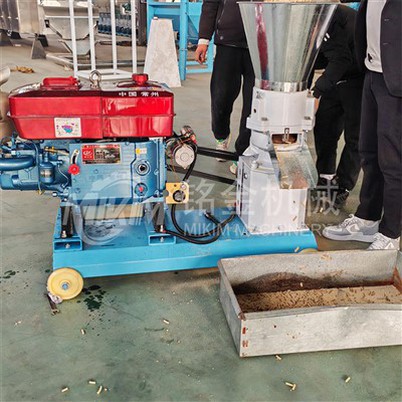
Chicken Feed Equipment Selection: Capacity, Mixing and Metering Guide
Leave a message
Define the Flock, Formula and Output Before Comparing Machines
Chicken feed equipment can only be selected once the production brief is written down: flock size and growth plan, the feed types to be made, expected daily output, and the market the eggs or meat are sold into. A farm mixing one batch a week for its own birds needs a different machine from a commercial mill running two shifts, and the brief also fixes the automation level. Automatic weighing, proportioning and mixing cost more at the point of purchase than a manual line, but retrofitting them later costs considerably more, because the frame, motors and control cabinet all have to be reworked.
Write down four numbers before comparing suppliers: kilograms per hour required at peak, the number of formulas produced each week, the batch size that matches the mixer, and the maximum particle size the birds can take at each growth stage. These four figures eliminate most unsuitable machines immediately and make every later comparison objective.
Performance Metrics That Separate Good Machines From Cheap Ones
Compare every offer on the same five metrics. Production efficiency, stated as tonnes per hour at a defined particle size and moisture content rather than as a catalogue maximum. Energy consumption, expressed as kWh per tonne instead of motor nameplate power. Stability, meaning how little output and pellet quality drift across a shift. Durability, dominated by the wear life of hammers, screens and dies. And the degree of automation, which determines how many operators are needed and how much of the production cost sits in labour rather than in the machine. Asking every supplier to complete one common specification sheet keeps the comparison honest.
Three process details matter more than headline capacity in poultry feed. Grind fineness first: chicks need a finer mash than broilers, so the hammer mill must accept quick screen changes and its rotor should allow a larger motor later. Mixing uniformity second, because a broiler premix is a small fraction of the batch and uneven distribution appears as uneven growth. Metering accuracy third, because salt, limestone, minerals and vitamin premixes are dosed in small quantities, where a small error becomes a large nutritional error.
Reference Specifications of Common Feed Machine Models
The table below lists typical specifications for small and medium feed machines. Use it as a reference when sizing equipment to the expected output; real capacity depends on raw material, moisture, screen and die configuration.
| Model | Capacity | Power | Dimension | Weight |
|---|---|---|---|---|
| 125 | 80-100 kg/h | 3 kW | 110 x 35 x 70 cm | 95 kg |
| 150 | 120-150 kg/h | 4 kW | 115 x 35 x 80 cm | 100 kg |
| 210 | 200-300 kg/h | 7.5 kW | 115 x 45 x 95 cm | 300 kg |
| 260 | 500-600 kg/h | 15 kW | 138 x 46 x 100 cm | 350 kg |
| 300 | 700-800 kg/h | 22 kW | 130 x 53 x 105 cm | 600 kg |
| 360 | 900-1,000 kg/h | 22 kW | 160 x 67 x 150 cm | 800 kg |
| 400 | 1,200-1,500 kg/h | 30 kW | 160 x 68 x 145 cm | 1,200 kg |
Read the table as a starting point for the electrical and civil work as much as for the purchase. Dimension and weight determine floor space, maintenance access and the lifting gear needed at installation, while motor power determines the supply cable, breaker and any generator backup. Two models with the same nominal capacity can differ substantially in footprint, so check the drawing against the actual building.
Mixing Uniformity and Metering Accuracy
Mixing uniformity is the single most important quality indicator in a farm feed line. The better the mixer distributes micro-ingredients, the more consistent the nutrient content of every pellet, and that consistency translates directly into flock growth performance and feed conversion. Batch mixers should be sized so that a full batch fills roughly 60-80% of the working volume; overfilling shortens mixing time and leaves dead zones, while chronic underfilling wastes mixing energy and cycle time.
Metering accuracy is the second indicator worth insisting on. The batching system decides how faithfully the formula is reproduced, and a system with a documented accuracy specification is worth the premium. For poultry feed, errors in salt, limestone, minerals or vitamin premix have an outsized effect on performance, so specify a batching system with a stated accuracy figure, calibrate it on installation, and check it at fixed intervals. Where medicated or additive-containing feeds are produced alongside plain feed, plan the flushing and sequencing routine into the operating procedure so carry-over stays within the tolerance the market requires.
Installation, Spare Parts and Room to Grow
Look beyond the machine itself. Confirm the availability of wear parts such as hammers, screens, dies and belts, the supplier's installation and operator training service, and the time a typical maintenance job will take. Wear parts of a widely used, easily procured type protect the operation during breakdowns; obscure parts turn a two-hour repair into a two-week stoppage.
Choose equipment that leaves room for expansion: a crusher whose rotor can accept a larger motor later, a mixer that can be upgraded with an additional premix inlet, a pellet mill that accepts alternative die thicknesses. A growing farm then upgrades individual machines instead of replacing an entire line, and the initial investment is protected. Keep simple records of output, energy use, downtime and wear-part replacement intervals, because those figures show whether the equipment performs as promised and provide the evidence for the next upgrade decision.
Frequently Asked Questions
Q: What capacity is needed for a farm with 5,000 broilers?
Feed demand of that flock is modest, and a machine in the 200-300 kg per hour class is normally sufficient when feed is mixed two or three times a week. Size the mixer to the batch, not to the daily total, and keep a storage bin sized for one week of consumption.
Q: Should I choose a flat die or a ring die pellet mill?
Flat die machines suit outputs up to about 500-600 kg per hour and are simpler to maintain, which makes them common on farms. Ring die machines hold up better in continuous, high-volume duty and produce a more uniform pellet, but they cost more and need more careful die handling.
Q: How often should mixing uniformity be tested?
Test after installation, after any change to the mixer, and then at a fixed interval as part of routine quality control. Sampling several points across the batch and comparing the marker content shows whether the mixer still performs to its original specification.
Q: Why is metering accuracy so critical in poultry feed?
Salt, limestone, minerals and vitamin premix are dosed in small quantities relative to grain and protein, so a small weighing error becomes a large nutritional error. A batching system with a documented accuracy figure, calibrated on site, keeps the delivered formula inside tolerance.
Q: How much space and power does a small line need?
A single machine in the 200-300 kg per hour class occupies only a few square metres and runs on 7.5 kW, but a full line needs space for raw material storage, a crusher, a mixer, the pellet mill and finished bag storage. Check the largest dimension in the specification table against access doors before ordering.
Q: How can future expansion be planned into the first purchase?
Buy machines with upgrade paths rather than sealed designs: a crusher whose rotor accepts a larger motor, a mixer with spare premix inlets, a pellet mill that accepts different die thicknesses. Individual upgrades then cost far less than replacing a complete line when the flock or the market grows.