


How to clean a dry floating fish feed making machine?
Leave a message
The process of Best Pet Food Pelter Machine producing dog food
content
I. External Cleaning: Keeping the Dry Type Fish Feed Pellet Processing Machine Clean and Extending its Service Life
While external cleaning is simple, it is crucial for the long-term stable operation of the equipment. First, wipe the machine body, motor, control panel, feed hopper, and other parts with a dry cloth to remove surface dust, raw material residue, and oil stains, keeping the equipment's appearance clean. Pay special attention to cleaning accumulated powder around the feed inlet to prevent dust from entering the motor or bearings, causing wear or malfunction. Be especially careful with the control panel area; do not rinse it directly with water.
Only wipe it gently with a slightly damp cloth to prevent moisture from entering the circuit and causing short circuits. After external cleaning, the equipment is not only cleaner but also reduces dust entering the internal structure, lowering the failure rate. This is also an important step in extending the service life of the dry type floating fish feed pellet processing machine.


II. Cleaning the Internal Core Components of the Dry Type Floating Fish Feed Pellet Making Machine: Key Points for Screw, Barrel, and Die Head Cleaning
Internal cleaning is key to ensuring the quality of the floating feed and smooth feed output. Focus on cleaning the three core components: screw, barrel, and die head. First, disassemble the die head and use a soft brush to clean any remaining raw material clumps from the die holes, ensuring each hole is clear and unobstructed. If the raw material is severely hardened, it can be lightly soaked in warm water before cleaning. Do not use steel needles or hard objects to poke the holes, as this may deform them.
Next, disassemble the screw, gently scrape off any adhering raw material with a small scraper, and then thoroughly clean it with a brush, being careful not to scratch the screw surface. Clean the inside of the barrel with a rotating brush to completely remove any remaining gelatinized material, ensuring the inner wall is smooth and residue-free. The more thorough the internal cleaning, the more uniform the output will be in the next production run, and the better the quality and floating stability of the floating feed pellets will be guaranteed.
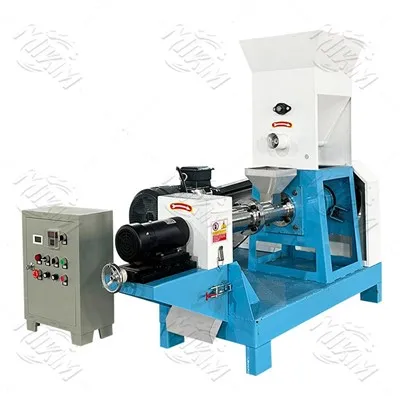

III. Cleaning the Cutting System and Discharge Port: Ensuring Neat and Non-sticky Pellet Production
If there is too much residual raw material in the cutting system and discharge port of the Dry Type fish feed making machine, it will cause uneven cutting, inconsistent lengths, and pellet sticking together, affecting the appearance and performance. During cleaning, first remove any residual powder around the cutter blades to ensure smooth blade rotation and prevent them from being jammed by raw material. Use a brush to unclog the discharge channel, removing accumulated debris and dust to ensure smooth discharge.
After cleaning, manually rotate the cutter to check its flexibility; if it gets stuck, clean it again or add a small amount of lubricating oil. Keeping the cutting system clean ensures that the produced floating feed pellets are uniform and aesthetically pleasing, without sticking or deformation, thus improving the finished product qualification rate.
Finished Product Display


about Us
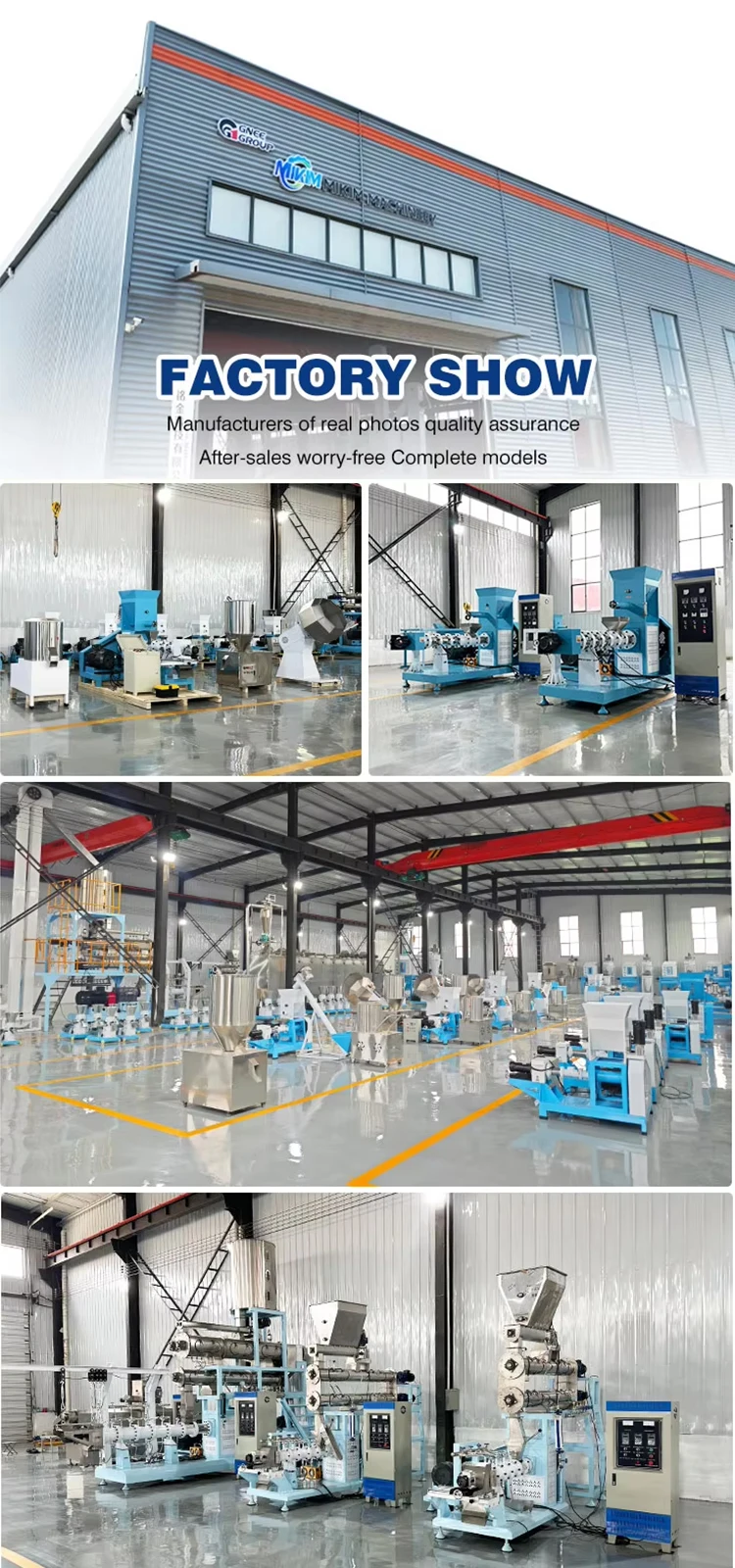
MIKIM's fish feed pellet production lines and supporting machinery offer excellent value for money. Not only are they affordable, eliminating middlemen markups and allowing small and medium-sized enterprises (SMEs) and fish farmers to purchase complete sets of equipment at reasonable costs, but they also boast exceptional efficiency.
Choosing a MIKIM fish feed pellet production line means enjoying comprehensive pre-sales and after-sales service, including 24-hour online customer support, a one-year warranty on the entire machine, professional on-site installation, commissioning, and maintenance, and a stable supply of spare parts. Customers can buy with confidence and use with peace of mind, with both excellent value and service quality!!!


FAQ
1. What is the price of the Twin screw fish feed extruder machine?
The price ranges from approximately $1,500-$55,000
2. Do you provide maintenance services for your customers?
Yes, we offer comprehensive after-sales maintenance services to our customers.
To explore which twin screw pet food machine model is suitable for your product line, view our full range of equipment or contact our team for a customized production plan.


