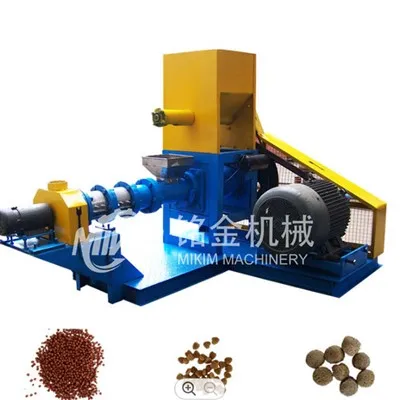
How to Make Fish Feed at Home Using a Small Fish Feed Pellet Machine?
Leave a message
A small floating fish feed pellet extruder machine is ideal for home or small-scale aquaculture due to its compact size, low cost, and ease of operation. Even without professional experience, users can produce nutritionally balanced and uniform fish feed by combining proper ingredients and following simple processing techniques.
Featured Snippet (Quick Answer)
How can I make fish feed at home using a small pellet mill?
To make fish feed at home: choose a small fish feed maker machine, prepare a balanced formula, grind and mix raw materials, control moisture at 15%–25%, extrude into uniform pellets, then dry and cool them. Store in a dry, ventilated place and adjust feeding based on fish behavior
👉Small electric fish feed extruder machine, factory trial run, packaging and shipping.
Step-by-Step Guide
I. How to Choose the Right small fish feed making machine
Selecting the right machine is the first step for home feed production.
- Small extruder: ideal for better floating performance
- Pellet mill: cost-effective and simple
Choose equipment with stable structure, easy operation, and low maintenance to ensure smooth home production
II. How to Prepare a Balanced Fish Feed Formula
The formula determines feed quality and fish growth.
- Common ingredients: corn flour, soybean meal, fish meal, wheat bran, vitamins
- Adjust protein and energy ratios based on fish species:
- Juvenile fish: higher protein
- Adult fish: balanced nutrition
- A proper formula reduces waste and promotes healthy growth
III. How to Grind and Mix Raw Materials
Proper raw material preparation ensures pellet stability.
- Grind materials to fine powder (60+ mesh)
- Mix thoroughly and add water to reach suitable moisture for extrusion
- Uniform mixing improves pellet quality and consistency
IV. How to Control Moisture and Conditioning
Moisture is key to pellet formation.
- Recommended moisture content: 15%–25%
- Low moisture: pellets may crumble
- High moisture: pellets may deform or stick
- Adjust moisture dynamically according to small floating fish feed making machine for best results
V. How to Form Pellets with Extrusion
Pellet forming is critical for feed quality.
- Feed mixed material into the machine for extrusion or expansion
- Control speed and temperature:
- Extruders: higher temperature can improve buoyancy
- Pellet mills: maintain stable pressure for dense pellets
- Stable operation ensures uniform pellet size and density
VI. How to Dry and Cool Pellets
Drying and cooling enhance shelf life.
- Methods: sun drying or small-scale dryers
- Cool pellets to stabilize hardness
- Proper drying prevents spoilage, breakage, or mold
VII. How to Store and Use Homemade Fish Feed
Proper storage maintains quality.
- Keep in dry, ventilated environment
- Produce in batches to maintain freshness
- Adjust feeding quantity, pellet size, and formula according to fish behavior
VIII. Key Tips to Improve Home Production Efficiency
Efficiency improvements reduce time and cost.
- Prepare raw materials in advance
- Schedule production and maintain equipment regularly
- Stable operation allows the small fish food making machine to continuously output consistent feed, acting as a "mini factory core"
FAQ Section (Boost SEO & Featured Snippet)
1. What is the best Floating fish feed pellet extruder machine for home fish feed production?
A small extruder for floating feed or a small pellet mill for cost efficiency, both with stable and easy-to-use designs.
2. How fine should raw materials be for home fish feed?
Raw materials should be ground to 60 mesh or finer for smooth extrusion and stable pellets.
3. What moisture content is ideal for forming pellets?
Maintain moisture between 15%–25% to ensure good pellet plasticity and density.
4. How should homemade fish feed be stored?
Store in a dry, ventilated area and produce in small batches to maintain freshness.
Company Profile