How to Make Pellet Feed? Complete Production Process
Leave a message
Introduction
Pellet feed is one of the compound feed products: a granular feed made from a complete mixture or a single feed such as forage or cake, through extrusion. Usually cylindrical in shape, it is available in various sizes depending on the species of animal being fed, and it is easy to store, package and transport. This article explains what happens during pelleting and the four benefits that make pellet feed the standard for modern animal feeding.
After forming, pellet feed volume is about one third smaller than powdered feed, easing storage, packaging and transport.
Pelleting heat destroys toxic substances and inhibitory factors such as trypsin inhibitors and hemagglutinins.
Pelleting can kill 90% of Salmonella in the feed.
High density and high nutrient concentration increase feed intake, digestion and utilization.
Process: formula design, crushing, mixing, conditioning and pelleting, cooling, packing.
What Is Pellet Feed?
Pellet feed is one of the compound feed products, made from a complete mixture or a single feed such as forage or cake, through extrusion. It is usually cylindrical in shape and available in various sizes depending on the species of animal being fed. After the feed is formed, the volume of pellet feed is about one third smaller than that of powdered feed, making it easier to store, package and transport, which is the logistical foundation of its commercial value.
The Production Process: Five Stages
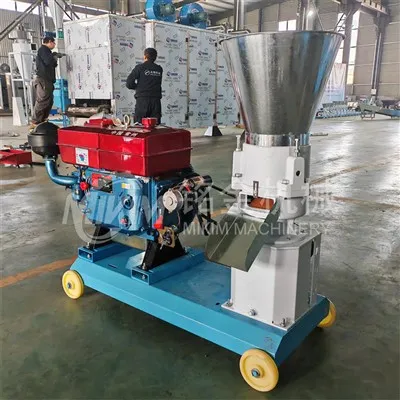
Making pellet feed follows a defined sequence. First, formula design: determine the nutrient specification for the target animal and growth stage. Second, crushing: reduce grain and other ingredients to a uniform particle size so the pellets bind evenly. Third, mixing: combine all ingredients into a homogeneous mixture, because a pellet is only as uniform as the mix that formed it. Fourth, conditioning and pelleting: steam conditions the material to gelatinize starch, and the pellet mill extrudes it through die holes into cylinders. Fifth, cooling and packing: hot pellets cool to harden, then are packed for storage and transport.
Sterilization and Disinfection During Pelleting
During the pelleting process, certain toxic substances or inhibitory factors in the feed, such as trypsin inhibitors and hemagglutinins, are destroyed by heat. At the same time, pelleting can kill 90% of Salmonella. This hygienic improvement is one of the strongest arguments for pelleting in feed safety programs, because it reduces the pathogen load the animals are exposed to at the trough.
Improved Palatability and Feed Intake
Pelleting improves the palatability of livestock and poultry feed and increases feed intake. Due to the high density, reduced volume and high nutrient concentration of pellet feed, the feed intake of animals increases accordingly. Animals spend less energy sorting and eating, and more energy growing.
Better Digestion and Utilization
It is easier for animals to digest and absorb pellet feed, and the utilization rate of feed is improved. Through pelleting, the physical and chemical properties of certain nutrients in the feed are improved, the utilization rate of the feed is improved, and the utilization rate of nutrients is also improved accordingly. Starch gelatinization is the main mechanism: cooked starch is far more digestible than raw starch, so the animal converts more of the same ration into gain.
Frequently Asked Questions
What is pellet feed? granular feed made from a complete mixture or a single feed such as forage or cake through extrusion, usually cylindrical and sized to the species fed.
How much smaller are pellets than powder? about one third smaller in volume after forming, making storage, packaging and transport easier.
Does pelleting sterilize the feed? Heat destroys toxic factors such as trypsin inhibitors and hemagglutinins, and can kill 90% of Salmonella.
Why do animals eat more pellet feed? High density, reduced volume and high nutrient concentration increase intake, and pelleting improves palatability.
How does pelleting improve feed utilization? Starch gelatinization makes nutrients more digestible, so the animal converts more of the same ration into gain.
What are the production stages? Formula design, crushing, mixing, conditioning and pelleting, then cooling and packing.