How to Match a Feed Pellet Machine with Support Equipment
Leave a message
The Small Machine and the Full Line
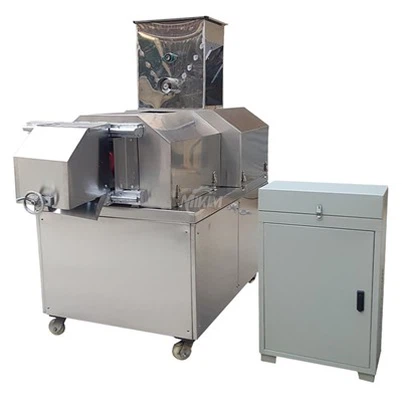
A small household feed pellet machine compresses crushed materials such as corn, soybean meal, straw, grass and rice hulls into pellets. It is widely used by large, medium and small farms, livestock and poultry units and individual farmers. The pellets it produces have a smooth surface and moderate hardness, and additives can be included with limited nutritional loss. The heat generated during pressing reduces the load of pathogenic microorganisms and parasites, although the actual effect depends on the conditioning temperature and the time the mash spends in the conditioner.
For a larger farm, one machine is no longer enough, because feeding, crushing, mixing and pelleting all compete for the same operator and the same hour. At that point the pellet machine must be matched with support equipment to form a fully automatic production line, and the whole line has to be sized from the pellet machine outwards rather than machine by machine.
Raw Material Storage
A fully automatic small-scale feed production line is mainly composed of raw material storage, crushing, mixing, granulation, cooling and packaging. Every link uses automated equipment, which allows unattended or low-management operation and keeps the process efficient and stable. In the storage stage the line is equipped with a group of silos that hold different ingredients such as corn, soybean meal, vitamins and minerals separately. Separation is not cosmetic: a premix contaminated by a high-fat meal loses its potency, and a silo used for two ingredients makes every batch unrepeatable.
Silos and the connecting chutes are typically made of stainless steel or coated carbon steel, which offers good corrosion resistance and keeps the stored material dry. Each silo should have its own discharge device, a level indicator and an inspection hatch, and the discharge angle must suit the material, because bridging at the silo outlet is the most common cause of a starved pellet machine.
Grinding
Grinding is a crucial step in feed production. Fully automated lines use efficient grinders that quickly pulverise large raw materials into fine powder, increasing the surface area available for mixing and digestion. Modern grinders generally use hammer or knife milling technology, and the screen and rotor settings can be adjusted to suit the characteristics of each raw material, so the grinding result is optimal for each formula.
The grinder should be sized about 20 to 50 percent above the pellet machine, measured in tonnes per hour on the same raw material. An undersized grinder forces pellet production to wait for mash, and the extra waiting time costs more than the larger motor would have.
Mixing and Pelleting
In the mixing stage the feed ingredients are blended evenly to ensure a nutritionally balanced finished feed. After mixing, the feed enters the pelleting stage, where the pelletizer presses the mixed ingredients through a die under high temperature and pressure. The heat gelatinizes the starch, which improves digestibility, and the pellets are easier to store and transport while also increasing feed intake.
| Support equipment | Typical sizing for a small line | Function |
|---|---|---|
| Silo storage | 3-6 bins, stainless or coated steel | Keep each ingredient separate and dry |
| Hammer mill | 1.2-1.5 times pellet mill output | Reduce grain to a 2-3 mm mash |
| Mixer | 500-1,000 kg per batch, 3-6 min cycle | Uniform ration, coefficient of variation at or below 5 percent |
| Conditioner and pelletizer | Die holes 2.5-6 mm | Gelatinize starch and form durable pellets |
| Counter-flow cooler | Within 3-5 degrees Celsius of ambient | Lower temperature and bring moisture to about 12.5 percent |
| Automatic packer | 5-8 bags per minute, 25-50 kg | Quantitative bagging without manual weighing |
The figures above are typical reference ranges for a small line. The final selection follows the pellet machine nameplate, the formula and the number of working hours available each day, and it should be confirmed against the technical data of the chosen equipment.
Cooling and Packaging
Pellets leave the pelletizer hot and soft, and they must be cooled before storage to reduce the temperature and prevent mould. The cooler uses air or water cooling to bring the temperature down quickly while preserving the nutritional value of the feed. Cooling too fast cracks the pellet surface, while cooling too slowly leaves the core wet, so the air flow is set against the pellet load rather than at a fixed speed.
After cooling, the finished feed is weighed and packed. A fully automatic line is equipped with an automatic packaging machine that completes quantitative bagging according to demand, so the route from raw grain to bagged feed runs without manual weighing. Dust collection at the packing spout and a sealed sewing section keep the working area clean and reduce product loss.
Frequently Asked Questions
Q: At what farm size does a pellet machine need support equipment?
The usual trigger is daily demand: when the herd or flock consumes more feed than a single machine can produce in the hours available, storage, grinding, mixing, cooling and packing equipment should be added. Below that point a single machine with manual loading is often more economical.
Q: Why should silos be made of stainless steel?
Stainless steel resists corrosion from moist meals, mineral premixes and molasses residues, and it is easier to clean between ingredients. Coated carbon steel is acceptable for dry grain, but the coating must be inspected because a damaged lining contaminates the feed.
Q: How fine should the mash be before pelleting?
For poultry and small pellets, a 2 to 3 mm screen is common; larger pellets for cattle tolerate a coarser mash. Finer grinding improves pellet durability and digestibility but lowers the grinder output and raises power consumption, so the screen is a compromise.
Q: What is the purpose of the conditioner in the line?
The conditioner injects steam into the mash before the die. It gelatinizes starch, lubricates the die, lifts pellet durability and reduces the microbial load. Its effect depends on steam temperature, added moisture and retention time, not on the machine being present at all.
Q: How do I know whether the cooler is correctly sized?
Measure pellet temperature and moisture immediately after cooling. Pellets should be within about 3 to 5 degrees Celsius of ambient and at or below roughly 12.5 percent moisture. Hot or damp pellets after cooling mean the cooler is too small or the air flow is set too low.
Q: Can the automatic packaging stage handle different bag weights?
Yes. Most automatic packers allow the target weight to be changed within their design range, usually 25 to 50 kg. Each change should be followed by a calibration check, because a drifting scale quietly ships overweight bags.