How to quickly unclog the feed blockage in a feed extruder?
Leave a message
The most common problem with feed extruders is "material blockage"-the raw material piles up at the feed inlet or in the barrel, unable to be extruded or extruded, causing the machine to either run very slowly or get completely stuck. Forcing the machine to start and extrude can easily burn out the motor, making repairs more complicated. In fact, as long as the cause of the blockage is identified, it can be cleared in just ten minutes.
I.find the cause of the blockage (3 common situations)
1. Problem with the raw materials: For example, large hard lumps (caused by moisture and clumping) may be mixed in with the corn or soybean meal, or there may be debris such as plastic bags or ropes stuck in the feed inlet or barrel;
2. Feeding too fast: The feeder speed is set too high, and too much raw material is piled up at once, which the screw in the barrel cannot handle, causing blockage below the feed inlet;
3. Insufficient barrel temperature: For example, when making plastic or aquatic feed, the barrel is not heated to the set temperature (e.g., required to be 120℃, but actually only 80℃), and the raw material is too hard to squeeze out, piling up in the barrel.
II.Unblocking Procedure (Stop the machine first!)
1. Emergency Shutdown: Immediately turn off the power to the extruder and feeder, and hang a "Do Not Operate" sign to prevent others from accidentally turning on the machine and injuring you;
2. Clean the Feed Inlet: Use your hand or a small scraper to remove any material that hasn't entered the feed inlet, then check inside for any hard lumps or debris stuck in it. Remove any visible debris directly (do not insert your hand too deeply to avoid being scratched by the screw);
Unblock the Barrel: If the blockage is in the barrel, first open the barrel's access door (some machines have a dedicated cleaning port), and use a long wooden stick or a special unblocking rod to slowly loosen and remove the material inside (if the material is hard and clumped together, you can slightly heat the barrel). 50-60℃ (avoid excessively high temperatures to prevent burns);
3. Screw Inspection: After removing the raw material, manually rotate the screw pulley to check for smooth rotation (no jamming indicates no problem). If it doesn't rotate, there may still be debris remaining; check carefully. Trial Run: After cleaning, run the extruder empty for 30 seconds, then slowly start the feeder (adjust the speed slightly) and observe if the raw material enters smoothly. If there's no blockage, normal production can begin.
III.Preventing Next Blockage
1. Pre-screening of raw materials: Break up any clumps of raw material, screen out impurities, and dry raw materials with high moisture content first (e.g., keep the moisture content of corn below 14%).
2. Don't feed too fast: Adjust the feeder speed according to the extruder's capacity (e.g., if the extruder produces 1 ton per hour, feed the material at a rate of 1 ton per hour; do not exceed this).
3. Preheat before starting: Before production, heat the barrel to the set temperature and maintain this temperature for 10 minutes before feeding.



Why Choose Us
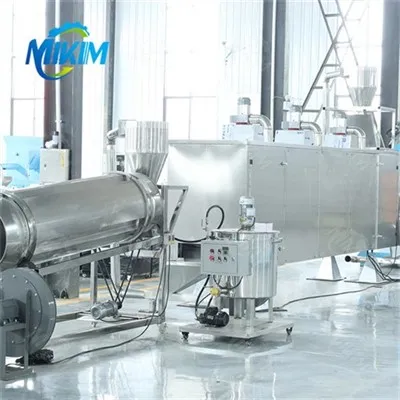
MIKIM boasts extensive experience in poultry feed pellet production lines, significantly reducing the incidence of poultry diseases. Its equipment is not only widely used across various industries domestically but also exported to Southeast Asia, Europe, Africa, and South America, earning a high reputation internationally. This global presence not only demonstrates the adaptability and competitiveness of its products, but also demonstrates the company's experience in adapting to diverse market standards and logistics conditions, enabling it to provide a stable supply chain for its overseas customers. Whether serving large domestic farms or cross-border feed companies, MIKIM can leverage its global service network to ensure a consistent, high-quality experience.
For more information on process flow design, equipment layout, factory construction plans, individual equipment pricing, or turnkey project proposals, please feel free to contact us!!!