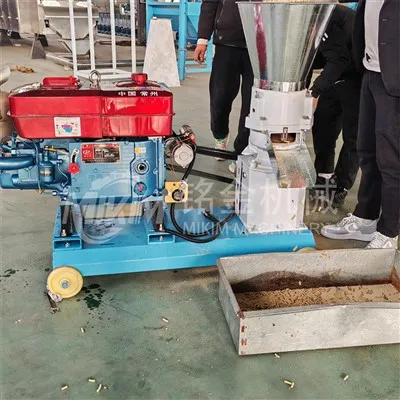
If the feed is irregular—sometimes too much, sometimes too little—how can the feed rate of an extruder be adjusted?
Leave a message
Sometimes the extruder isn't clogged, but the feed rate fluctuates wildly-sometimes the raw material piles up at the inlet, and sometimes no material goes in at all. This results in inconsistent product coarseness (such as plastic profiles or feed pellets), leading to poor quality and wasted raw materials. In most cases, this is due to an improperly adjusted feeding mechanism, which can be easily fixed with a few simple adjustments.
I.Find the causes of uneven feeding (4 common types)
1. Unstable feeder speed: For example, if the feeder is frequency converter, the speed may fluctuate, resulting in uneven feeding of the raw material.
2.Poor raw material flowability: For example, if the raw material is too fine (like flour) or too moist, it is prone to clumping and "bridging" in the feeder (the raw material piles up and cannot fall down), causing inconsistent feeding.
3. Incorrect feed inlet height: If the feeder's outlet and the extruder's inlet are not aligned, the raw material may fall outside or pile up at the interface, resulting in uneven feeding.Mismatched screw speed: If the extruder screw speed is too fast and the feeding speed cannot keep up, or if the screw speed is too slow, the raw material may pile up in the barrel, making the feed appear to be inconsistent.
II.Adjustment Steps (Observe While Adjusting)
1. Check the Feeder: First, check the feeder's tachometer. If the pointer fluctuates, the frequency converter may be faulty. Replace the controller or manually adjust the speed (use a wrench to adjust the feeder's pulley to stabilize the speed). If the material is "bridging" in the feeder, tap the feeder hopper to let the material fall down, or install a small stirring motor in the hopper (to prevent clumping).
2. lign the Feed Inlet: Adjust the feeder's position so that its outlet is directly opposite the extruder's inlet. Seal the interface with a soft cloth or sealing strip to prevent material leakage.
Match the Screw Speed: If the screw is spinning too fast, slow down the screw speed (e.g., from 300 rpm to...). (250 rpm) Then increase the feeder speed until the raw material enters the barrel evenly; if the screw rotates too slowly, increase the screw speed appropriately and adjust the feed rate simultaneously to match the two.
3. Add a guide plate (optional): If the raw material is too fine and easily floats, install an inclined guide plate inside the feed inlet to guide the raw material to the middle of the screw and prevent it from piling up on one side
III. Trial Run and Observation
1. After adjustment, turn on the feeder and extruder and observe the raw material at the feed inlet-if a small amount of raw material is consistently maintained (no piling up, no shortage), the adjustment is complete.
2. Observe the product, such as feed pellets. If the size is uniform and there are no sudden changes in coarseness, normal production is possible. If there are still problems, fine-tune the feed rate or screw speed.


Why Choose Us
MIKIM boasts extensive experience in poultry feed pellet production lines, significantly reducing the incidence of poultry diseases. Its equipment is not only widely used across various industries domestically but also exported to Southeast Asia, Europe, Africa, and South America, earning a high reputation internationally. This global presence not only demonstrates the adaptability and competitiveness of its products, but also demonstrates the company's experience in adapting to diverse market standards and logistics conditions, enabling it to provide a stable supply chain for its overseas customers. Whether serving large domestic farms or cross-border feed companies, MIKIM can leverage its global service network to ensure a consistent, high-quality experience.
For more information on process flow design, equipment layout, factory construction plans, individual equipment pricing, or turnkey project proposals, please feel free to contact us!!!