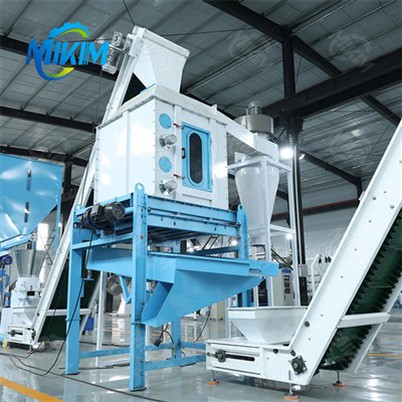
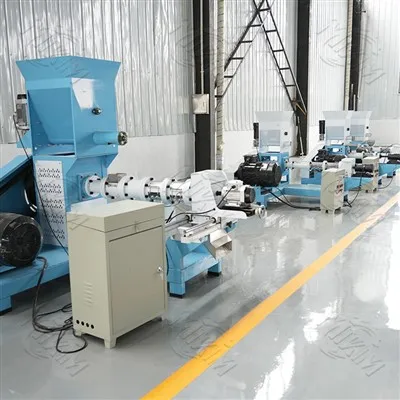
How to reduce the failure rate of a wet fish feed extruder machine?
Leave a message
content
Routine Cleaning: Preventing Corrosion and Blockage from Residual Raw Materials. After the wet floating fish feed machine finishes production, it is necessary to thoroughly clean the internal materials to prevent them from drying and clogging the channels, and to prevent mold growth and corrosion of parts. Cleaning Steps: First, turn off the power and wait for the equipment to cool down to below 50℃. Disassemble the die head and screw, soak them in warm water for 10-15 minutes to soften the residual raw materials, and then use a nylon brush to clean the screw groove, the inner wall of the extrusion chamber, and the die head aperture. Do not use steel wool or other sharp tools to scrape, as this may damage the parts. Second, clean the steam pipes and feeding system. Use a high-pressure water gun to flush away condensate and impurities from the steam pipes, empty the remaining raw materials from the feed hopper, and wipe the vibrating feeder. Third, clean the cooler and dryer. Clean the cooler filter to remove dust and debris, and wipe the inner wall of the dryer drum. After cleaning all parts, rinse them thoroughly with clean water, dry them, and reinstall them, or apply food-grade anti-rust oil for storage.
Core Component Maintenance: Extending Service Life.
The screw and extrusion chamber are the core transmission components of the wet fish feed pellet processing machine. They require regular wear checks, every 500 hours of operation. If the screw thread wear exceeds 2mm or the inner wall of the extrusion chamber wears more than 1mm, they must be replaced immediately; otherwise, the extrusion pressure will decrease, affecting the puffing effect. The die head needs to be replaced according to usage frequency, typically every 1000 hours of operation, to prevent orifice deformation leading to uneven pellet size. The steam system requires regular inspection. The steam boiler requires annual inspection, steam pipelines require regular leak checks, and valves require regular lubrication to ensure sensitive operation. The drive motor and transmission belt require regular inspection. Motor bearings require lubrication every 500 hours of operation. Belts with cracks or aging must be replaced immediately, and insufficient tension must be adjusted to prevent slippage and unstable speed. Furthermore, the electrical system requires regular wiring inspection to prevent short circuits caused by aging wiring. Pressure and temperature instruments require regular calibration to ensure accurate monitoring data.
Common Fault Prediction: Proactively mitigate production risks. Predict malfunctions by monitoring the operating status and product quality changes of the wet pet food processing machine: Insufficient pellet expansion or a lighter color may indicate low extrusion temperature or insufficient steam pressure, requiring inspection of the heating element and steam valve; abnormal noises or vibrations may suggest screw wear or a loose drive belt, necessitating machine shutdown and inspection; feed blockage may indicate excessive raw material moisture or uneven particle size, requiring adjustment of raw material pretreatment parameters; a sudden decrease in pellet water resistance may indicate insufficient starch gelatinization, requiring increased extrusion temperature or extended residence time. Establish an equipment operation log to record running time, parameter adjustments, and troubleshooting information to facilitate tracing the root cause of problems. For example, conduct a comprehensive inspection of the equipment every 200 hours of operation to identify potential malfunctions early.
Related equipment



about Us
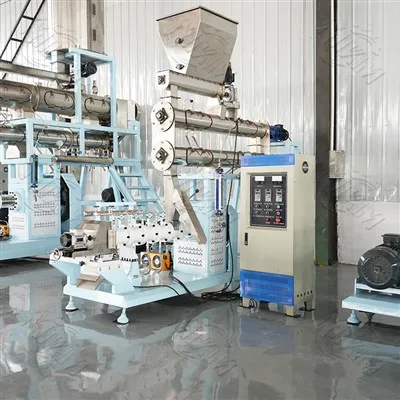
MIKIM's fish feed pellet production lines and supporting machinery offer excellent value for money. Not only are they affordable, eliminating middlemen markups and allowing small and medium-sized enterprises (SMEs) and fish farmers to purchase complete sets of equipment at reasonable costs, but they also boast exceptional efficiency. The fully automated process, from raw material crushing and precise ingredient mixing to extrusion pelleting and maturation, is completed in one continuous flow. This results in high starch gelatinization rates and uniform pellet formation, significantly improving production efficiency and feed quality, truly achieving "low cost, high output." Choosing a MIKIM fish feed pellet production line means enjoying comprehensive pre-sales and after-sales service, including 24-hour online customer support, a one-year warranty on the entire machine, professional on-site installation, commissioning, and maintenance, and a stable supply of spare parts. Customers can buy with confidence and use with peace of mind, with both excellent value and service quality!!!
Customer visit

Certificate of Honor

FAQ
1. What is the price of the Pet food manufacturing Machine?
The price ranges from approximately $1,500-$55,000
2. Do you provide maintenance services for your customers?
Yes, we offer comprehensive after-sales maintenance services to our customers.
If you would like to learn more about MIKIM machinery, please contact us. We offer one-stop service and welcome your inquiries!!!