


How to Use the best cat food making machine
Leave a message
content
The core principle of using a small cat food making machine is "simplified processes and adaptation to the capacity of a mini extruder." The complete operation process is simplified into four stages: raw material pretreatment, simple mixing, extrusion molding, and natural cooling and packaging. The first stage, raw material pretreatment, requires no complex equipment for small-scale production. A small hammer mill (2.2-5.5kW) can be used to crush the raw materials to 80 mesh, followed by manual sieving to remove impurities. Moisture content is adjusted by natural air drying or a small amount of warm water spray, controlled at 12%-15%. The material should clump together when squeezed but crumble easily when released. It is recommended to pretreatment 5-10kg of raw materials at a time, adapting to the small capacity of the mini extruder (50-100kg per hour), to avoid raw material accumulation and spoilage.
The second stage, simple mixing, uses a small vertical mixer (50-100kg capacity). Raw materials and auxiliary materials are manually added according to the formula ratio. After mixing for 5-8 minutes, a manual sample is taken to check the mixing uniformity, ensuring there is no obvious separation of raw materials. For producing small quantities of customized cat food (e.g., 1-2 kg), manual stirring in a stainless steel bowl is sufficient, extending the stirring time to 10 minutes to reduce equipment investment. Note that liquid additives (such as fish oil) should be added last, stirring continuously to prevent clumping.
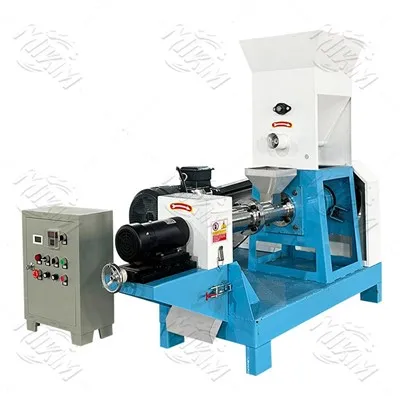
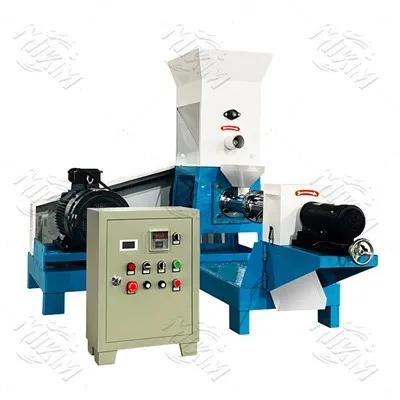
The third stage is extrusion molding, the core of small-scale equipment operation. Cat food extrusion equipment operation requires a "slow and meticulous" approach. First, preheat the extruder to 120-130℃ for 10 minutes, including a 2-minute no-load run to check for smooth operation. Feed the material manually at a uniform rate to avoid clogging from excessive material. Control the feeding speed at 3-5 kg/h, combined with a screw speed of 300-350 rpm. The mini extruder's die head is easy to change, allowing quick switching between 1-3 mm apertures to produce different granule sizes. Dedicated personnel are required to monitor the granule status during operation. If any abnormalities occur, stop the machine immediately for adjustments to avoid material waste.
The fourth stage involves natural cooling and packaging. For small-scale production, a professional cooling machine is not required. The freshly extruded kibble can be spread on a clean drying rack, with a thickness of 2-3 cm, and cooled to room temperature using a fan (approximately 30 minutes). After cooling, use a manual sieve to remove broken kibble. If adding probiotics, mix the probiotics with a small amount of vegetable oil, manually spray it onto the kibble surface, and stir well. Finally, use a small manual packaging scale to pack the qualified kibble into sealed bags, completing production.
Key tips for using the cat food extrusion machine: First, conduct small-batch trial production. Before each production run, produce 1 kg to adjust the extruder parameters before mass production. Second, recycle raw materials. The screened-out broken kibble can be re-crushed and mixed back into the raw materials to improve utilization. Third, regularly maintain the mini extruder. Clean it promptly after each use and check the screw and die head wear monthly to ensure stable equipment operation. With these simplified operations, even beginners can easily produce cat food that meets their needs using a small cat food extrusion machine.
Related equipment


about Us
MIKIM's fish feed pellet production lines and supporting machinery offer excellent value for money. Not only are they affordable, eliminating middlemen markups and allowing small and medium-sized enterprises (SMEs) and fish farmers to purchase complete sets of equipment at reasonable costs, but they also boast exceptional efficiency. The fully automated process, from raw material crushing and precise ingredient mixing to extrusion pelleting and maturation, is completed in one continuous flow. This results in high starch gelatinization rates and uniform pellet formation, significantly improving production efficiency and feed quality, truly achieving "low cost, high output." Choosing a MIKIM fish feed pellet production line means enjoying comprehensive pre-sales and after-sales service, including 24-hour online customer support, a one-year warranty on the entire machine, professional on-site installation, commissioning, and maintenance, and a stable supply of spare parts. Customers can buy with confidence and use with peace of mind, with both excellent value and service quality!!!
Customer visit

Certificate of Honor

FAQ
1. What is the price of the cat food extrusion equipment?
The price ranges from approximately $1,500-$55,000
2. Do you provide maintenance services for your customers?
Yes, we offer comprehensive after-sales maintenance services to our customers.
If you would like to learn more about MIKIM machinery, please contact us. We offer one-stop service and welcome your inquiries!!!


