


Impact of key process steps on extruded fish feed production
Leave a message
Many feed mills focus only on the extruder itself, neglecting the "pre-treatment" and "post-treatment" processes. If the raw materials are not mixed evenly, the extruded pellets will have uneven nutrition; if cooling is not timely, the pellets will clump and be wasted. These process loopholes may not seem to directly "produce feed," but they quietly lower the quality and output, making the production line "work hard but get no reward."
Impact of Raw Material Pretreatment
Uneven Mixing: Poor pellet nutrition, slow fish and shrimp growth.
Impact on Quality: Insufficient mixing of fishmeal, vitamins, and other additives with the main ingredients (corn, soybean meal) can result in pellets with varying protein content (40% in some pellets, only 25% in others). This leads to uneven growth in fish and shrimp (some large, some small) and increased susceptibility to disease.
Impact on Yield: Unevenly mixed raw materials can form localized hardening within the extruder, clogging the die holes. This requires cleaning twice daily, resulting in a loss of 1 ton of material per batch.
Solution: Use a twin-shaft mixer (30% higher uniformity than a single-shaft mixer), controlling the mixing time to 15-20 minutes. After mixing each batch, sample and test (take samples from 3 different locations to measure protein content; an error of no more than 2% is acceptable). Remix any batch that fails to meet the standard.
Impurities not removed: Equipment breaks down quickly, output drops drastically. Impact on quality: Stones and metal shavings in raw materials (such as small pebbles in corn or iron wire in fishmeal) can scratch the extruder mold, causing scratches on the pellet surface and reducing water resistance (from 2 hours to 1.5 hours).
Impact on output: Impurities can jam the screw, requiring disassembly and repair of the barrel in severe cases, taking 4-6 hours per repair, directly halving the daily output.
Solution: Before raw materials enter the production line, pass them through a vibrating screen (to remove stones and clods) and a magnetic separator (to remove metal shavings). Clean the screen and magnetic separator once a day to prevent impurity accumulation.
The Impact of Cooling and Screening on Feed
Untimely cooling: Granules clump together, mold, and suffer from poor quality.
Impact on quality: Extruded granules are at a temperature of 60-70℃ and have a moisture content of 18%-20%. If not cooled promptly, they will clump together (clumping rate increases from 5% to 20%) and are prone to mold growth (especially in summer, mold can appear within 24 hours).
Impact on output: Clumped granules require manual breaking and re-screening, wasting 0.5-0.8 tons of raw material daily. The breaking process also generates more debris, reducing the qualified material rate from 95% to 85%.
Solution: Use a multi-layer vibrating cooler (twice as efficient as a single-layer cooler), controlling the cooling time to 15-20 minutes to lower the granule temperature to room temperature (around 25℃) and moisture content to 12%-14%. After cooling, immediately proceed to the screening stage.


about Us
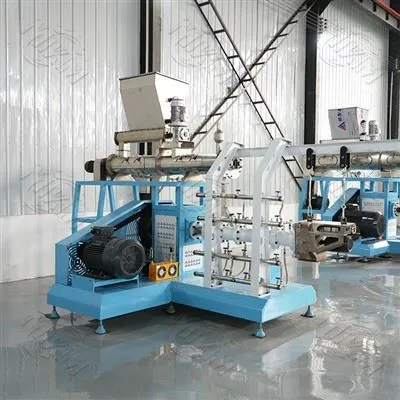
MIKIM boasts extensive experience in poultry feed pellet production lines, significantly reducing the incidence of poultry diseases. Its equipment is not only widely used across various industries domestically but also exported to Southeast Asia, Europe, Africa, and South America, earning a high reputation internationally. This global presence not only demonstrates the adaptability and competitiveness of its products, but also demonstrates the company's experience in adapting to diverse market standards and logistics conditions, enabling it to provide a stable supply chain for its overseas customers. Whether serving large domestic farms or cross-border feed companies, MIKIM can leverage its global service network to ensure a consistent, high-quality experience.
For more information on process flow design, equipment layout, factory construction plans, individual equipment pricing, or turnkey project proposals, please feel free to contact us!!!
FAQ
1. What is the price of the pet floating meal production line?
The price ranges from approximately $10,000-$36,000
2. Do you provide maintenance services for your customers?
Yes, we offer comprehensive after-sales maintenance services to our customers.


