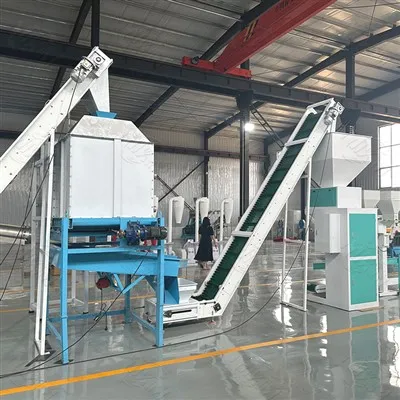
Is it more cost-effective to produce feed by equipment or manually?
Leave a message
Advantages and Disadvantages of Artificial Feed
Advantages:
Low cost: The cost of artificial feed is relatively low, there is no large amount of machinery and equipment investment, and the labor cost is low.
High flexibility: Artificial feed can be precisely adjusted and changed according to needs, with high flexibility and strong adaptability.
Safe and reliable: Artificial feed can effectively avoid unforeseen safety accidents such as mechanical failure and power outages, and the production process is safer and more reliable.

| Model | Capacity | Power | Dimension | Weight |
| 125 | 80-100kg/h | 3kw | 110*35*70 cm | 95 kg |
| 150 | 120-150kg/h | 4kw | 115*35*80cm | 100 kg |
| 210 | 200-300kg/h | 7.5kw | 115*45*95cm | 300 kg |
| 260 | 500-600kg/h | 15kw | 138*46*100cm | 350 kg |
| 300 | 700-800kg/h | 22kw | 130*53*105cm | 600 kg |
| 360 | 900-1000kg/h | 22kw | 160*67*150cm | 800 kg |
| 400 | 1200-1500kg/h | 30kw | 160*68*145cm | 1200 kg |
Disadvantages:
Low production efficiency: Artificial feed requires manual operation, the production efficiency is relatively low, and it is difficult to produce on a large scale due to the influence of manpower.
Unstable feed quality: Artificial feed is difficult to ensure the accuracy of feed ingredients and mixing uniformity, resulting in unstable feed nutrients and quality.
Manual operation is easily affected by fatigue and mental state, and it is difficult to ensure the stability and quality of the production process.
Comparison between feed machinery complete sets and artificial feed
Compared with artificial feed, feed machinery complete sets have the following advantages:
High production efficiency: Feed machinery complete sets can realize automated production, with high production efficiency, and can quickly produce large quantities of feed to meet market demand.
Stable feed quality: Complete sets of feed machinery can achieve precise batching and mixing, ensure stable nutritional content and quality of feed, avoid unevenness when mixing feed manually, and thus ensure the health and growth of livestock and poultry.
Cost saving: Complete sets of feed machinery can reduce labor and material costs, improve production efficiency, and are more cost-effective in the long run.