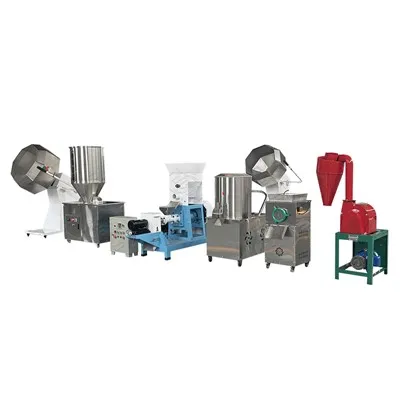
machine testing for client, 200-300kg/h Dry Type dog food pellet making machine
Leave a message
Why This 200–300kg/h Dry Type dog food pellet extruder machine Was Tested Before Delivery
This machine testing for client (200–300kg/h Dry Type dog food pellet machine) is a real factory commissioning process completed before shipment. The goal is to verify whether the equipment can produce stable dog food pellets under continuous working conditions using real raw materials and real operating parameters.
What Is a Dry Type dog food pellet maker machine?
A Dry Type dog food pellet mill uses frictional heat generated by the screw extrusion system to cook and expand raw materials, without needing a steam boiler.
This structure is widely chosen by startup factories because it offers:
- Lower investment cost
- Simple installation
- Easy operation
- Compact production setup
Suitable for small-scale commercial production (200–300kg/h)
What Was Included in the Factory Test?
During the client test, engineers ran the full system using real production conditions, including:
- Raw material grinding and mixing
- Feeding system operation
- Extrusion process
- Cutting system adjustment
- Pellet drying behavior check (if included in line)
- Final pellet quality inspection
This ensures the entire production flow works as a stable system, not just a single machine.
Raw Materials Used in the Test
To simulate real customer production conditions, common dog food ingredients were used, such as:
- Corn flour
- Wheat flour
- Soybean meal
- Fish meal
- Meat powder
- Rice bran
- Vitamin and mineral premix
These materials reflect typical formulas used in commercial dog food production.
Key Performance Checks During Testing
1. Production Capacity (200–300kg/h Verification)
The Dry Type dog food manufacturing machine was tested under continuous operation to confirm it can maintain stable output within the 200–300kg/h range without fluctuation or feeding interruption.
2. Pellet Shape and Uniformity
Engineers checked whether the pellets were:
- Consistent in size
- Smooth in surface
- Properly cut without excessive breakage
- Stable in shape during continuous production
Uniform pellets help improve branding and packaging quality for dog food businesses.
3. Extrusion Stability
The screw extrusion system was evaluated for:
- Stable pressure output
- No material blockage
- Smooth feeding transition
- Consistent cooking performance
This is key for long-term machine reliability.
4. Final Dog Food Quality
The finished pellets were tested for:
| Quality Item | Purpose |
|---|---|
| Hardness | Ensure transport durability |
| Expansion effect | Improve palatability for dogs |
| Moisture level | Prevent storage issues |
| Powder rate | Reduce waste during production |
Why Client Testing Before Shipping Matters
This type of factory test is not only technical inspection-it is also a confidence step for buyers.
It helps customers confirm:
- Real production performance
- Raw material compatibility
- Pellet quality consistency
- Machine stability under continuous operation
- Suitability for their local production needs
In short, it turns "specifications" into real, visible production results.
Common Problems This Testing Helps Avoid
Without proper testing, small-scale pet food machines may face:
- Unstable output capacity
- Uneven pellet size
- Excess powder in final product
- Feeding blockage issues
- Poor pellet cooking performance
Factory testing helps eliminate these risks before delivery.
Suitable Users for This Machine
The 200–300kg/h Dry Type pet food making machine is ideal for:
- Startup pet food factories
- Small commercial dog food producers
- Farm-based feed processing units
- Pet food brand testing production lines
It is especially suitable for businesses entering the pet food industry for the first time.
Conclusion
The machine testing for client: 200–300kg/h Dry pet food manufacturing process demonstrates real production performance before shipment, ensuring stable capacity, consistent pellet quality, and reliable extrusion behavior.
For pet food manufacturers, this testing process reduces uncertainty, improves production confidence, and ensures the equipment is ready for real commercial operation from day one.
Company Profile