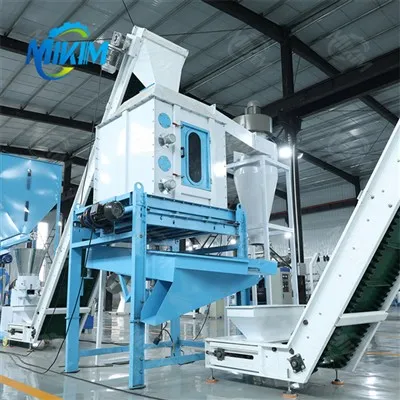
Diesel Engine Floating Fish Feed Extruder for Remote Farms and Off-Grid Sites
Leave a message
What Is a Floating Fish Feed Extruder?
A floating fish feed extruder is a machine used in aquaculture to produce high-quality feed pellets for fish and other aquatic animals. It produces pellets of various sizes, shapes and nutritional contents that improve growth, health and the overall quality of the stock. The floating property is the key feature: it keeps the feed visible on the water surface so that farmers can see how much the fish eat and avoid wasting feed at the pond bottom.
Because the pellet is expanded rather than merely pressed, it also holds its shape in water for longer, which reduces leaching of water-soluble nutrients and keeps the pond cleaner.
How the Extrusion Process Works
The main parts of a fish feed extruder are the screw and the die. Extrusion cooks and compresses the raw materials under pressure and temperature to create pellets of the desired density and texture.
Screw and barrel: the screw rotates inside the barrel and pushes the mash forward while subjecting it to heat and pressure.
Cooking: heat, moisture and mechanical shear gelatinize starch and condition the proteins in the mash.
Die: the cooked dough is shaped into pellets as it is forced through the die openings.
Expansion: the sudden pressure release at the die exit makes the pellet expand, and that expansion is what makes the pellet float.
Pellet density and therefore buoyancy are set by the moisture, the temperature and the screw speed. Once those three are stable, pellet size and shape are changed simply by fitting a different mould and adjusting the cutter.
Why Choose a Diesel-Powered Extruder
A diesel engine fish feed extruder is powered by a diesel engine instead of an electric motor. The operating principle is identical to that of an electrically driven machine, and it still produces fish feed pellets from a mixture of ingredients. The difference is the drive: a diesel engine turns the extruder through a belt or gear transmission.
This type of machine is particularly useful where the electricity supply is unreliable or unavailable, such as rural or remote locations, and it is also a practical option where fuel is cheaper or easier to obtain than a stable grid connection. Two further advantages matter to farm operators:
Mobility: a self-contained unit can be moved between ponds or between villages without waiting for a power connection.
Independence: daily output no longer depends on the reliability of the local grid, so feeding schedules can be kept.
Applications and Pellet Sizes
The diesel engine fish feed extruder is used for aquaculture and animal feed pellet making. Typical products include floating fish feed for catfish and tropical fish, shrimp feed, crab feed, dog and cat pet food, tortoise feed and frog feed. By changing the machine mould, the operator can make pellets of many different shapes, and the pellet size can be adjusted from 0.4 mm to 15 mm. One machine can therefore feed fish from the baby stage up to large fish, which suits farms that raise several species or several growth stages at the same time.
Model Range and Technical Parameters
The diesel series is offered in five models.
| Model | Capacity (kg/h) | Main motor (HP) | Screw diameter (mm) | Weight (kg) |
|---|---|---|---|---|
| DGP-40 | 40–50 | 12 | 40 | 360 |
| DGP-60 | 120–150 | 25 | 60 | 560 |
| DGP-70 | 200–250 | 30 | 70 | 740 |
| DGP-85 | 300–350 | 35 | 80 | 850 |
| DGP-90 | 400–450 | 50 | 90 | 1200 |
Capacity spans 40–450 kg/h and machine weight runs from 360 kg to 1200 kg. When selecting a model, match the capacity to the planned daily output and check the available space, because the machine footprint ranges from about 1.4 m by 1.25 m for the smallest model to 2.2 m by 2 m for the largest. The screw diameter in the table above is the nominal value for each frame size, and the drive power rises with it so that the throughput per revolution stays consistent across the range.
FAQ
Q: What is the difference between a diesel and an electric extruder?
The extrusion principle is the same. The difference is the drive: a diesel engine replaces the electric motor, which makes the machine independent of the grid and suitable for remote farms where power is weak or absent.
Q: What pellet sizes can be produced?
Pellet size is set by the mould and can be adjusted from 0.4 mm to 15 mm, covering feed for fry through to large adult fish. Shapes can also be changed by fitting a different mould.
Q: How much feed does a small unit make per hour?
The smallest model in the range produces 40–50 kg/h, which suits a single small farm or a few ponds. The largest produces 400–450 kg/h for larger operations feeding several species.
Q: Where should the machine be installed?
Place it on firm, level ground with enough space for raw material loading and pellet discharge, and allow for the smallest footprint of about 1.4 m by 1.25 m and the largest of about 2.2 m by 2 m. Good ventilation is needed for the engine.
Q: Can the same machine make pet food as well as fish feed?
Yes. With a suitable mould the machine also produces shrimp and crab feed, tortoise, frog and dog or cat pellets, so a single unit can serve several product lines.
Q: Does a diesel engine change the pellet quality?
No. Pellet quality is set by the raw material, the moisture, the temperature and the die, not by the type of drive. A diesel unit that is correctly tuned produces pellets of the same density and water stability as an electric one.