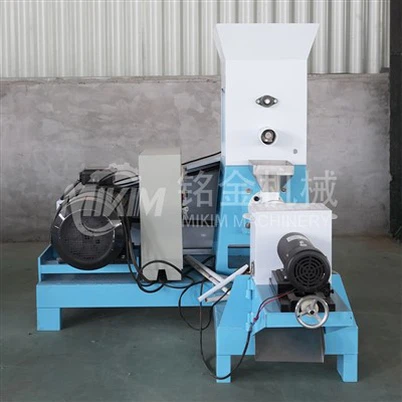
Animal Feed Pellet Production Line for Poultry and Livestock
Leave a message
What Is an Animal Feed Pellet Production Line?
An animal feed pellet production line is a set of interconnected machines that convert raw feed ingredients into uniform pellets for poultry, livestock, and other farm animals. The core unit is a ring-die pellet mill, in which rollers press conditioned mash through a rotating ring die to form dense, durable pellets. Around the mill, the line typically includes a feeder, a conditioner, and supporting equipment such as coolers and conveyors. Pelleted feed reduces ingredient separation, improves feed conversion, and makes handling and storage easier compared with loose mash.
Technical Specifications by Model
Ring-die pellet mills for poultry and livestock are offered in several sizes so buyers can match capacity to herd or flock size. The following table lists the main parameters of five common models.
| Model | Capacity | Main Motor Power | Screw Feeder Power | Conditioner Power | Ring Die Inner Diameter | Ring Die Speed (RPM) | Dimension (LxWxH) |
|---|---|---|---|---|---|---|---|
| 320 | 2-5 T/H | 37 kW | 0.55 kW | 2.2 kW | 320 mm | 305 | 2300x1000x2100 mm |
| 350 | 1.5-8 T/H | 55 kW | 0.75 kW | 2.2 kW | 350 mm | 336 | 3200x1100x1700 mm |
| 400 | 2-10 T/H | 75/90 kW | 0.75 kW | 2.2 kW | 400 mm | 307 | 3200x1300x1900 mm |
| 420 | 3-12 T/H | 110 kW | 1.5 kW | 5.5 kW | 420 mm | 287 | 3500x1300x2800 mm |
| 508 | 4-20 T/H | 132/160 kW | 1.5 kW | 7.5 kW | 508 mm | 287 | 3500x1500x2900 mm |
Larger models deliver higher throughput but also require more power, more floor space, and a stronger electrical supply. The capacity range shown depends on formula, moisture content, and die hole configuration, so actual output varies with the raw materials used.
Key Components That Affect Pellet Quality
Several design details determine how well a pellet mill performs. High-precision gear drives are used for the main drive train, which suppliers state improves output by roughly 20% compared with belt drives. Imported bearings and oil seals help keep operation stable and quiet, while an air suction temperature-reducing system in the granulating chamber prevents the material from overheating. A variable-frequency, variable-speed feeder motor ensures a steady flow of mash into the mill, which is essential for consistent pellet density. Ring dies are available with different bore diameters, and the choice of die hole size directly affects pellet diameter and production rate. A jacket-style or larger conditioner can further improve the conditioning stage, where steam is mixed into the mash to gelatinize starch and soften the material before pressing.
Application Scenarios for Poultry and Livestock Farms
The line is designed to adapt to the needs of different poultry breeds and ages. Chicks typically need fine 2-3mm pellets with high protein content of about 20-22%. Broilers in the finishing stage require medium 3-4mm pellets with high energy density around 3.2-3.4 Mcal/kg ME. Laying hens need 4-6mm pellets with high calcium levels of about 3.5-4.0%. The mill supports quick die changes of roughly 20-60 minutes, one-click recall of preset recipes with storage for more than 100 recipes, and adjustable conditioning temperatures, for example 80°C for starter feed and 85°C for finisher feed. This makes it possible to switch between feed types for chicks, broilers, laying hens, ducks, and geese without buying extra machines, which is especially useful for small and medium feed mills and integrated farms.
Common Mistakes When Choosing a Feed Pellet Line
One common mistake is sizing the line to peak demand instead of average demand, which leaves a large machine running at low load most of the time. Another is ignoring the electrical supply: high-power models may need a dedicated transformer or heavier cabling. Buyers also underestimate the space required, since the dimension figures cover the complete line and room is still needed for raw material storage, cooling, bagging, and maintenance access. Finally, conditioning quality is often overlooked: adding a proper conditioner and checking steam quality can improve pellet durability more than upgrading the die alone.
FAQ
What is the price of a farm feed pellet production line?
According to the supplier, prices for complete lines range from approximately US$4,500 to US$19,980, depending on model, configuration, and factory requirements. Buyers should treat quoted prices as a starting point and confirm the final scope, including installation and shipping, before ordering.
How do I choose the right capacity for my farm?
Estimate the total daily feed required by all animals, add a safety margin for growth and peak seasons, then select a model whose rated capacity range covers that figure. For example, a 320 model rated at 2-5 T/H suits small farms, while the 508 model at 4-20 T/H is intended for large operations.
How long does it take to change the ring die?
The mill is designed for quick die changes of about 20-60 minutes. With preset recipes stored in the control system, switching between product types such as starter feed and finisher feed becomes a short operation.
What conditioning temperature should I use?
As a general guide from the supplier, starter feed can be conditioned at about 80°C and finisher feed at about 85°C. The optimum temperature also depends on the formula and steam quality, so it should be adjusted while monitoring pellet quality.
Can one line produce feed for different poultry breeds?
Yes. With interchangeable dies and adjustable conditioning, the same line can produce pellets for chicks, broilers, laying hens, ducks, and geese by changing the die hole diameter and recipe settings, without requiring additional machines.
Do you provide maintenance services?
The manufacturer states that comprehensive after-sales maintenance services are provided. Routine maintenance such as checking bearings, oil seals, and die wear is also described in the operation manual and should follow a fixed schedule.