


Professional Fish Production Line Small Pelletizer Processing Machines Animal Feed Pellet Feed Pellet Line
Leave a message
Product introduction
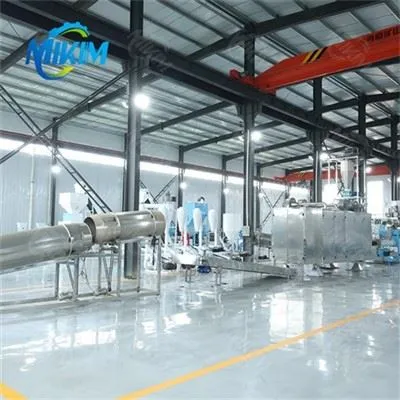
Fish feed complete production lines:
1, MIKIM Fish feed production machine is used to produce the fish food with novel shape, particular taste and color.
2, This Fish feed production machine is used to produce catfish feed, aquarium fish feed and so on.
3, Our Fish feed machine can produce a premium quality special fish feed. This fish feed processing line can do floating and sinking fish feed.
The products which can produced from the Fish feed processing line:
Raw material for fish feed: Corn powder, wheat flour, fish meal, and so on, we can provide basal formulation as your requirement.



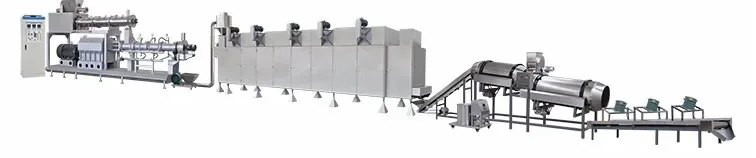
Flow chart of the fish feed processing line
Mixer --- Screw conveyer --- Twin-screw extruder ---Air conveyer --- Layers Dryer --- Hoister---Oil sprayer --- Flavoring Roller --- Cooling conveyer --- sifter

Product parameters
| MODEL | INSTALLED POWER | REAL POWER | OUTPUT(KG/H) | DIMENSION(MM) |
| 60 | 16.5KW | 15KW | 100-150 | 1200*600*1500 |
| 80 | 23.5KW | 22KW | 200-300 | 1400*800*1700 |
| 120 | 66KW | 55KW | 500-600 | 2600*900*1900 |
| 65-P | 80KW | 50KW | 100-150 | 2600*900*1900 |
| 70-P | 110KW | 80KW | 200-250 | 2600*900*1900 |
| 85-P | 150KW | 100KW | 350-500 | 3900*900*1900 |
| 90-P | 170KW | 120KW | 700-1000 | 4200*900*2500 |
| 95-P | 190KW | 150KW | 800-1500 | 4200*900*2500 |
Product advantages
1. Precisely Controlling Nutritional Ratios to Ensure Fish Health
Fish require significantly different amounts of protein, fat, vitamins, and minerals at different growth stages (e.g., fry and adult fish feeds require 35%-45% protein, while adult fish require 25%-30%). The pellet production line is equipped with an automated batching system (e.g., high-precision weighing sensors with a batching error of ≤0.5%) that mixes ingredients such as fish meal, soybean meal, fish oil, and multivitamins according to the exact recipe. This ensures consistent nutritional composition in each pellet, preventing nutritional imbalances caused by picky fish (e.g., segregation of feed). Furthermore, the high temperatures applied during the pelleting process kill harmful microorganisms such as Vibrio and mold spores (kill rate ≥90%), reducing the incidence of diseases such as enteritis and gill rot in fish, lowering mortality by 8%-12%, and reducing medication costs on the aquaculture side.
2. Reduce Water Pollution and Protect Aquaculture Ecosystems
When feeding traditional powdered feed, uneaten feed can settle at the bottom of the pond or spread with the water, leading to eutrophication (increased ammonia nitrogen and nitrite levels) and disrupting water quality. Pellets, however, have a low solubility and high ingestion rate, significantly reducing residual feed (from 10%-15% of powdered feed to 2%-3% of pellets), thus lowering the organic matter load in the water. Furthermore, functional ingredients such as probiotics and enzymes can be added to pelleted feed (uniformly added during the mixing stage of the production line). These ingredients, when ingested by fish along with the pellets, improve their intestinal flora and reduce nitrogen and phosphorus excretion in their feces (reducing nitrogen content by 15%-20% and phosphorus content by 10%-15%). This slows the eutrophication process, extends the lifespan of aquaculture water, and reduces the frequency of water changes and water resource consumption.
Finished product display


FAQ
1. What is the price of the fish feed pellet production line?
The price ranges from approximately US$11,000.00 - 69,000.00.
2. Do you provide maintenance services for your customers?
Yes, we offer comprehensive after-sales maintenance services to our customers.
For more information on process flow design, equipment layout, factory construction plans, individual equipment pricing, or turnkey project proposals, please feel free to contact us!!!


