


The effect of temperature on the solubility and nutrient retention of feed in small fish food making machines
Leave a message
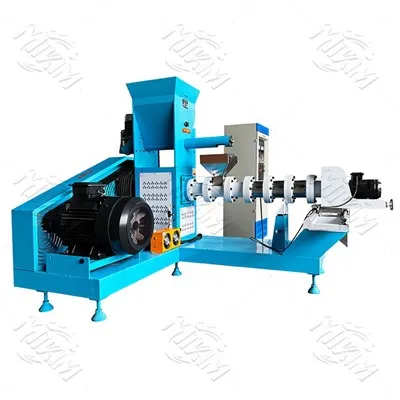
Temperature has a more significant impact on the operation of fish feed pellet making machines, particularly in the production of specialty aquatic feeds. Shrimp, crab, and sea cucumber feeds often contain high-protein ingredients (such as imported fishmeal and squid meal) and functional components (such as immunomodulatory polysaccharides). The extruder barrel temperature needs to be precisely controlled between 115-130℃. Below 110℃, the raw material is not fully plasticized, increasing the flow resistance of the melt within the die orifice, causing drastic fluctuations in the extruder load, and in severe cases, die blockage. Cleaning this blockage takes 2-3 hours, significantly impacting production efficiency. Above 135℃, the functional components undergo chemical denaturation, and the melt flow becomes abnormal, causing a sharp drop in extruder discharge pressure. The pellet formation rate drops from 95% to below 70%, resulting in substantial raw material waste.
Solubility is a core indicator for specialty aquatic feeds, and temperature influences this by affecting the feed structure. Shrimp and crab feeds need to remain in water for 2-3 hours without disintegrating, while sea cucumber feeds require more than 4 hours. This necessitates the formation of a dense, cross-linked structure within the feed. When the temperature is between 120-125℃, the viscous substances produced by starch gelatinization combine with proteins to form a stable network structure, firmly locking in nutrients. After the feed is placed in water, a protective film forms on the surface, effectively delaying nutrient dissolution. If the temperature is too low, the network structure cannot form, and the feed disintegrates rapidly after entering the water, with a nutrient dissolution rate exceeding 40%. If the temperature is too high, the structure becomes excessively loose, reducing its anti-dissolution properties and producing charred substances, affecting the feeding of shrimp, crabs, and sea cucumbers.
Precise nutrient retention is another key aspect of specialty aquatic feeds, and temperature control directly determines the integrity of nutrient components. Chitosan, essential for shrimp and crab growth, and saponins, required by sea cucumbers, are easily decomposed at high temperatures. Therefore, the temperature of the fish floating feed machine must be strictly controlled below 130℃ to ensure that the retention rate of these functional components is above 90%. At the same time, excessively high temperatures will destroy heat-sensitive vitamins such as vitamin C and vitamin E, which are crucial for enhancing the immunity of specialty aquatic animals. During production, a "gradient temperature control + real-time monitoring" mode should be adopted, with the feeding section at 85-95℃, the compression section at 105-115℃, the extrusion section at 120-125℃, and the discharge section at 115-120℃. At the same time, an infrared thermometer and a rapid nutrient analyzer are installed at the extruder discharge port, and samples are taken every 30 minutes to ensure that both temperature and nutrient indicators meet the standards.
Related equipment



about Us
Customer visit

Certificate of Honor

FAQ
1. What is the price of the fish food pellet making machine?
The price ranges from approximately $3,500-$55,000
2. Do you provide maintenance services for your customers?
Yes, we offer comprehensive after-sales maintenance services to our customers.


