


What are the effects of temperature on the pellet characteristics and storage stability of floating fish pellet maker machines?
Leave a message
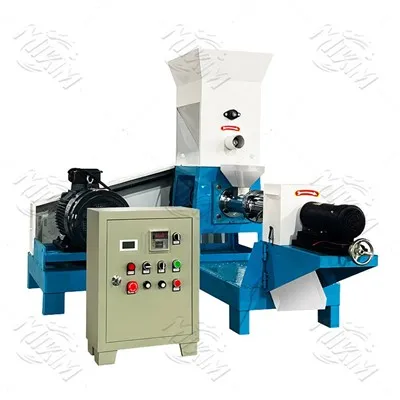
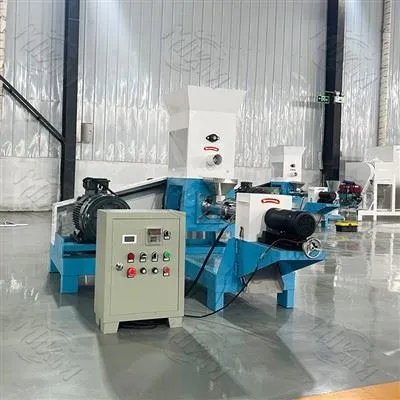
The impact of temperature on the operation of floating fish food pellet makers is mainly reflected in equipment wear and production efficiency. Dog food ingredients often include corn, rice, chicken meal, and beet pulp. When the extruder barrel temperature is within the range of 115-135℃, the raw materials can achieve sufficient plasticization and expansion, the melt flows smoothly within the die, and the extruder reaches peak production efficiency, stably producing 800-1000 kg of dog food per hour. If the temperature is below 110℃, insufficient plasticization of the raw materials will form "hard clumps" inside the barrel, causing intense friction with the screw and barrel inner wall, resulting in a more than twofold increase in screw wear and a 40% decrease in production efficiency. If the temperature is above 140℃, the raw materials will adhere to the screw and die, forming "carbon deposits," requiring frequent shutdowns for cleaning and scratching the screw surface, shortening the equipment's lifespan.
The impact on dog food pellet characteristics is concentrated on hardness, density, and water absorption. The hardness of dog food pellets needs to be controlled between 20-30N, which is convenient for dogs to chew and helps clean their teeth. When the temperature is too low, the internal structure of the kibble is loose, with a hardness of less than 15N, making it easily breakable and producing dust. At a suitable temperature, the starch gelatinizes fully, resulting in a dense kibble structure and a stable hardness of around 25N. When the temperature is too high, the kibble over-expands, creating excessive internal honeycomb structures, reducing hardness, and increasing water absorption, making it prone to softening and absorbing moisture. Density and water absorption are directly related to storage stability. Dog food produced at suitable temperatures has a density of 1.2-1.3 g/cm³, with a moisture content controlled at 10%-12%, and a shelf life of over 6 months under sealed storage conditions. Excessively high temperatures cause the moisture content of the dog food to plummet to below 8%, making the kibble brittle and easily breakable. Excessively low temperatures result in a moisture content exceeding 14%, making it prone to mold growth during storage and shortening the shelf life to less than 2 months.
The temperature requirements for dog food also differ depending on the dog's size. Small breed dog food pellets are small (3-5mm in diameter), and the temperature should be controlled at 120-125℃ to ensure uniform pellets that are not easily broken. Large breed dog food pellets are larger (8-10mm in diameter), and the temperature can be increased to 125-135℃ to enhance the internal structural stability of the pellets. During production, an online moisture meter and hardness tester should be used to monitor the dog food characteristics in real time. Based on the test results, the extruder temperature should be fine-tuned to achieve the dual goals of efficient equipment operation and stable dog food quality.
Related equipment


about Us
Customer visit

Certificate of Honor

FAQ
1. What is the price of the floating fish meal extruder?
The price ranges from approximately $3,500-$55,000
2. Do you provide maintenance services for your customers?
Yes, we offer comprehensive after-sales maintenance services to our customers.


