Why Pelleted Feed Outperforms Powder Feed on Modern Farms
Leave a message
A feed pellet mill converts a loose, blended ration into dense, uniform pellets. At first glance that looks like a simple change of shape, but in daily operation it changes storage behaviour, transport economics, feeding accuracy and animal intake. Feed mills and livestock farms that compare the two feed forms side by side almost always standardise on pellets, and the reasons are practical rather than cosmetic.
Why Powder Feed Loses Value Before It Is Eaten
Powder feed is a mixture of ingredients with very different particle sizes and densities. Meal, bran, mineral premix and protein concentrate do not stay mixed in a bag or a silo: heavier particles settle, fines rise or become airborne, and the ration that reaches the trough at the end of a batch is no longer the ration that was blended at the start. Pelleting removes that risk, because every pellet carries the same proportion of each ingredient as the original formula.
Dust is the second loss. Fine particles are blown away during unloading and along the feeding passage, and they are inhaled by both animals and workers. A pelleted ration releases far less airborne material, which is why pelleted feed is preferred in confined housing and in automated feeding systems where fines clog hoppers and sensors.
What a Feed Pellet Mill Changes in Practice
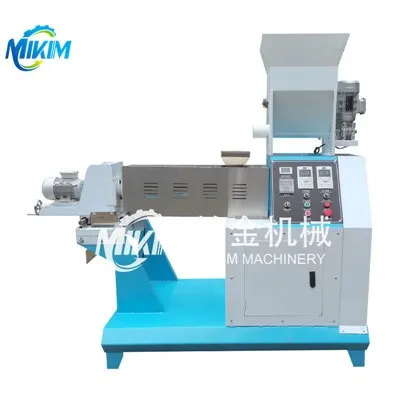
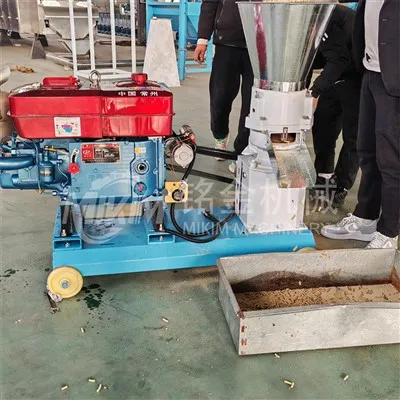
A pellet mill compresses conditioned mash through a ring die. Heat, moisture and mechanical pressure soften the starch and protein in the meal, and the die aperture sets the final diameter. The finished pellet is compact and free-flowing, with a higher bulk density than the original mash, so more nutrients fit into the same silo, trailer or bag. Because the particles are locked together, the pellet also survives conveying through augers, chain conveyors and pneumatic lines with little breakdown.
| Property | Powder feed | Pelleted feed |
|---|---|---|
| Ingredient separation | Occurs during storage and transport | Every pellet holds the full formula |
| Dust level | High, fines become airborne | Low, minimal fines |
| Bulk density | Lower | Higher, more nutrients per unit volume |
| Storage and freight volume | Larger for the same tonnage | Reduced |
| Ration delivered to each animal | May vary through the batch | Uniform from first bag to last |
| Waste at the trough | Higher, especially where fines collect | Lower, pellets are easy to pick up |
Operational Benefits on the Farm
Consistent nutrition, because the formula cannot separate once it is locked into a pellet.
Cleaner air in the barn, which supports animal respiratory health and worker comfort.
Lower storage footprint and better trailer utilisation for the same tonnage.
Reliable flow through augers, hoppers and automatic feeders without bridging or dust build-up.
Simpler dosing, because the same volume of feed always carries the same nutrient load.
Less handling loss during loading, unloading and transfer between silos.
Matching the Pellet Mill to the Production Scale
Selection starts with the target animal and the required throughput, not with the largest machine available. The die chosen for a poultry grower ration is not the die chosen for a cattle finishing ration, and the durable pellet for a young animal is usually softer and smaller than the pellet for a mature one.
Confirm the required output per hour and the hours available each day before sizing the mill.
Match die aperture and thickness to the species and to the durability the ration must survive.
Check that mash conditioning, cooling and drying capacity are matched to the mill, not added later.
Plan conveying, storage and dosing as part of the same line, because a good pellet can still be broken after the die.
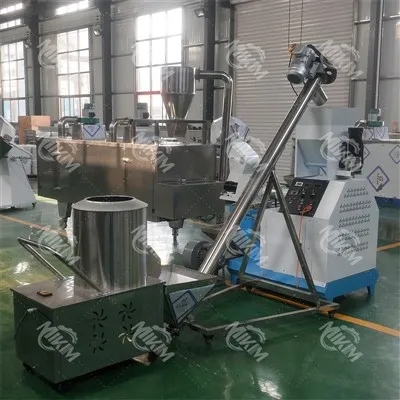
Small farms can begin with a mixer and a single pellet mill. Larger feed mills add a conditioner, a counter-flow cooler, a crumbler and a bagging section to form a complete line, because pelleting at scale is as much about conditioning, cooling and moisture control as it is about the die itself. A pellet that leaves the die too hot or too wet will crumble in the silo, so cooling capacity should be decided at the design stage.
Common Misunderstandings About Pelleted Feed
One common misunderstanding is that pelleting changes the formula. It does not: it preserves the proportions of the ingredients while improving their physical form. Another is that pellets always need chemical binders to hold together. In many rations the natural stickiness of conditioned starch and protein, combined with die pressure, is sufficient, and added binders are reserved for rations with a specific durability target. A third misunderstanding is that harder always means better. A well-made pellet should be firm enough to survive conveying but still comfortable for the animal to chew, and excessive hardness usually points to over-conditioning or a badly matched die rather than to quality.
Frequently Asked Questions
Q: Does pelleting change the nutritional value of the feed?
No. Pelleting keeps the proportions of the ingredients and only changes their physical form, so the nutrient content of the ration stays the same while its handling properties improve.
Q: Can a farm produce pellets without added binders?
Yes. The heat, moisture and pressure of conditioning activate the natural stickiness of starch and protein, which is enough to bind many common rations without a separate binder.
Q: How should the pellet diameter be selected?
Match the aperture to the animal and its age. Small pellets suit young stock and small species, while larger diameters suit mature animals and reduce the energy needed per ton of feed.
Q: Is a pellet mill only useful for dry mash?
Dry mash is the most common feed, but the same equipment is also used with wet materials where the line is designed for them, with conditioning and drying capacity sized accordingly.
Q: How much storage space can pellets save?
Because pellets are denser and contain fewer fines, the same tonnage occupies less silo or warehouse volume and loads more efficiently into trucks, which matters most where storage is tight.
Q: Which parts of a feed pellet mill wear first?
The die and the rollers wear first because they carry the forming load. Tracking their condition together with the surface finish of the pellet is the simplest way to plan replacement.