


The role of premix equipment in modern breeding
Leave a message
1. Improve production efficiency: Premix equipment can quickly mix various feed raw materials evenly through efficient stirring and mixing systems, saving mixing time and improving production efficiency. This is especially important for large-scale farms, which can achieve batch production and reduce labor costs.
2. Ensure feed quality consistency: The consistency of feed quality is crucial to the growth and health of animals. Premix equipment can ensure the uniform mixing of various ingredients in the feed, and the precise ratio system can ensure the consistency of the ingredients of each batch of feed, thereby improving the consistency of feed quality.
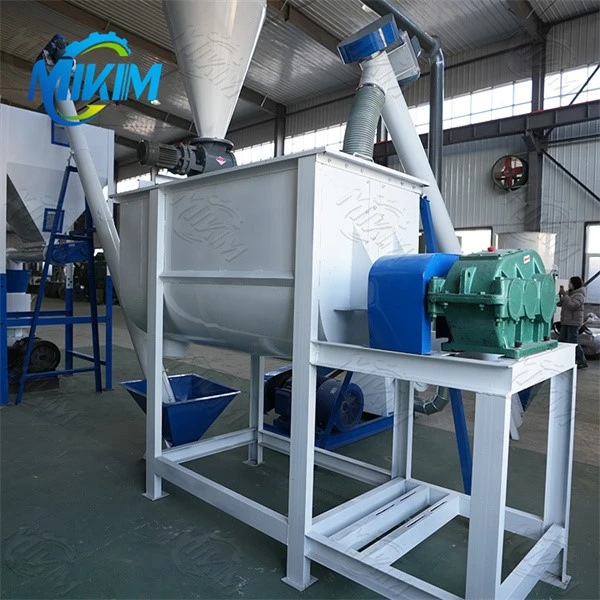
|
Model |
Capacity |
Dimension |
Weight |
|
MK-125 |
80-100kg/h |
110*35*70 cm |
95 kg |
|
MK-150 |
120-150kg/h |
115*35*80cm |
100 kg |
|
MK-210 |
200-300kg/h |
115*45*95cm |
300 kg |
|
MK-260 |
500-600kg/h |
138*46*100cm |
350 kg |
|
MK-300 |
700-800kg/h |
130*53*105cm |
600 kg |
|
MK-360 |
900-1000kg/h |
160*67*150cm |
800 kg |
|
MK-400 |
1200-1500kg/h |
160*68*145cm |
1200 kg |
| 1.Used for making animal feed pellets
2.Used for making wood pellets as fuel 3.Raw material size need 3-5mm ; Humidity :10-12% |
|||
3. Meet the needs of animals at different stages: The flexibility of premix equipment makes it easy to adjust the feed formula for animals at different stages in feed production. This is crucial to adapt to the nutritional needs of animals at different growth stages and improve production efficiency.
4. Reduce the waste of raw materials: The waste of raw materials in the feed production process is a cost that needs to be avoided. Premix equipment reduces the possibility of raw material waste through an efficient mixing system, ensuring that every portion of raw materials is fully utilized, thereby improving production efficiency.
5. Automated production: Advanced premix equipment is usually equipped with an automated control system that can automatically monitor and adjust the entire production process. This makes the production process more intelligent, reduces the interference of manual operations, and improves the stability and controllability of production.