Top 10 Advantages of Wet-type Twin screw floating fish feed pellet extruder machines
Leave a message

Why Twin-Screw Technology Dominates the Market?
In modern commercial aquaculture, the Wet-type Twin screw floating fish feed pellet making machine is the definitive solution for high-quality feed production. By utilizing two intermeshing shafts and external steam conditioning, it achieves over 95% starch gelatinization. This technical edge allows producers to handle complex, high-energy formulas while achieving a lower Feed Conversion Ratio (FCR) compared to traditional single-screw systems.
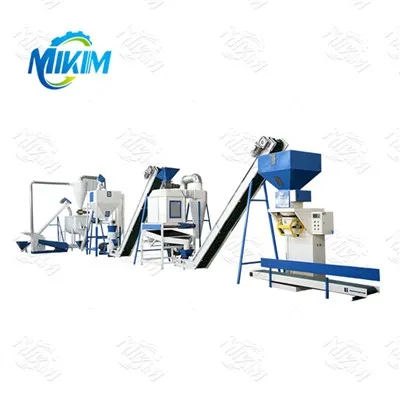
200-4000 kg/h Twin screw floating fish feed pellet maker machine test
The Top 10 Advantages of Wet-type Twin-Screw floating fish feed extruder
1. Superior Starch Gelatinization (>95%)
The intensive mixing and uniform shear of the Wet-type Twin-Screw floating fish feed extruder machine ensure deep cooking of starches. This high gelatinization rate breaks down complex carbohydrates into easily digestible sugars, maximizing nutrient bioavailability and accelerating fish growth.
2. High-Fat Formulation Capability (Up to 18%)
Wet-type Twin screw floating fish food pellet maker machines can process formulas with 12–18% internal lipid content. Unlike single-screw machines that suffer from "screw slip" when oil levels exceed 8%, the intermeshing screws maintain a stable "pump" effect to emulsify fats directly into the pellet matrix.
3. Positive Displacement & Stable Output
The intermeshing design functions as a positive displacement pump. This ensures a constant volumetric flow, meaning your production output remains stable even when using "difficult" materials with varying viscosity or high moisture.
4. Self-Cleaning Mechanics (60% Less Downtime)
The co-rotating screws continuously "wipe" each other during operation. This eliminates "dead zones" where material might char or rot, reducing the time required for flavor changes and deep cleaning by up to 60%.
5. Homogeneous Shear & Precise Size Control
Every gram of feed passes through the same shear zone between the screws. This results in extreme physical uniformity, with pellet diameter and length deviations of less than 2%, which is critical for specialized fry and fingerling feed.
6. Enhanced Energy Efficiency (Lower kWh/Ton)
While Wet-type Twin screw floating fish food extruder machines have larger motors, they are more efficient per ton of output. The combination of steam conditioning (thermal energy) and the high transport efficiency of the screws means the electrical energy consumption per ton (kWh/t) is often lower than that of a single-screw machine struggling with high-density formulas.
7. Unrivaled Raw Material Versatility
Twin-screw technology effortlessly handles high-fiber ingredients (like rice bran or agricultural byproducts) and sticky materials that would clog other systems. This allows producers to optimize their formulations using lower-cost local raw materials without sacrificing pellet quality.
8. 100% Buoyancy & Water Stability
The uniform internal micro-porous structure created by twin-screw expansion ensures a 100% floating rate for 12–24 hours. This superior water stability prevents "nutrient leaching," keeping the pond environment clean and reducing feed waste.

9. Modular Design & Lower Maintenance Costs
Our Wet-type Twin screw floating fish machines feature modular screw segments. Instead of replacing an entire expensive shaft, you only replace the specific sections (conveying, kneading, or shearing) that are worn. This reduces long-term spare parts expenditure by approximately 40%.
10. Total Pathogen Elimination (Biosecurity)
The combination of high-pressure steam conditioning (90°C) and short-time high-temperature extrusion (120-160°C) ensures 100% elimination of Salmonella and other pathogens, meeting international biosecurity standards for feed export.
Comparison: Twin-Screw vs. Single-Screw floating fish food maker machine Performance
| Feature | Twin screw fish feed extruder machine | Single screw floating fish extruder machine |
| Mixing Efficiency | Excellent (Co-rotating) | Moderate (Drag flow) |
| Max Fat Inclusion | 12 - 18% | 6 - 8% |
| FCR Impact | Maximum Optimization | Standard |
| Self-Cleaning | Yes | No |
| Material Flexibility | High (Handles high-fiber) | Low (Requires standard formula) |
| Energy Efficiency | Higher (Lower kWh/ton) | Lower (Higher friction heat) |
FAQ:
1. Why is a Wet-type Twin screw floating fish feed pellet maker machine better for high-energy diets?
Direct Answer: High-energy diets (like those for Salmon or Catfish) require high oil content. Single-screw extruders lose the friction needed for expansion when oil is added. Twin-screw machines use mechanical intermeshing to push the dough forward, ensuring the machine never "slips" even with 18% fat.
2. Can I produce sinking shrimp feed with this machine?
Direct Answer: Yes. The Wet-type Twin screw floating fish feed pellet millr is the industry standard for shrimp feed. By adjusting the screw configuration to reduce shear and "venting" the steam, you can produce high-density sinking pellets with the extreme water stability required for bottom-feeders.
3. Does the higher price of a Wet-type Twin screw fish feed pellet maker machine offer a good ROI?
Direct Answer: Absolutely. Most commercial operators see a Return on Investment (ROI) within 12–18 months. This is achieved through lower ingredient costs (using more fiber/byproducts), lower electricity bills per ton, and the ability to sell "Premium Grade" feed at a higher price point.
4. What maintenance is critical for 24/7 industrial production?
Direct Answer: Monitoring the screw-to-barrel clearance is key. We recommend an inspection every 1,000–1,500 hours. Because the screws are modular, maintenance is a simple "swap-and-go" process that minimizes production halts.
Expert Recommendations for Commercial Scaling
If you are currently limited by pellet inconsistency or the inability to use cheaper local ingredients, upgrading to a Wet-type Twin screw fish feed making machine is the most effective way to scale. It ensures your product meets international aquaculture standards for stability, digestibility, and appearance.
Ready for a Technical Layout?
Contact our engineering department for a customized 1–10 t/h production line blueprint and a detailed raw material ROI analysis.
Company Profile